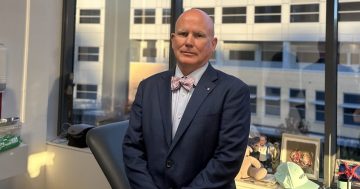
Professor Dominic Rowe, Helen Dalton MP and Health Minister Ryan Park celebrate the new MND register launch. Photo: Supplied.
The mystery of why the Riverina has seven times the rate of deadly motor neurone disease (MND) compared to the national average is a step closer to being solved, with NSW set to become the first place in the world to formally track and monitor each case.
Under a landmark new framework, NSW Health will establish a statewide motor neurone disease register, requiring diagnoses to be formally notified and recorded. It means, for the first time, health authorities will be able to systematically track where MND is appearing, identify patterns, and support research into the disease.
MND is a progressive and fatal condition that affects the nerves in the brain and spinal cord. Over time, it stops messages from reaching the muscles, leading to increasing weakness. People gradually lose the ability to walk, speak, swallow and eventually breathe. There is no cure.
A 2015 Macquarie University study indicated Wagga, Griffith and Leeton had MND rates seven times higher than those in cities. It’s not known why this is the case, but overseas studies suggest exposure to a toxic bacteria known as blue-green algae in waterways over a long period could be a factor that triggers the illness.
Frequent algal blooms in Wagga’s Lake Albert and Griffith’s Lake Wyangan has led to speculation that this may be a reason for high Riverina rates, but no link has been conclusively proven.
A formal register is seen as a key step in testing those theories properly. By recording every diagnosis across NSW in a consistent way, researchers will be able to compare where cases are occurring with environmental data, including water quality and exposure risks. Until now, much of the discussion around possible causes has been based on isolated studies and anecdotal patterns, rather than a complete statewide dataset that can show clear trends over time.
The register has been developed after a seven-year campaign led by Member for Murray Helen Dalton, working alongside Australia’s leading MND specialist Professor Dominic Rowe, NSW Health experts and Griffith-based advocates such as MND sufferer Tania Magoci.
“In some communities we are seeing rates of MND that simply cannot be ignored,” Ms Dalton said.
“Yet until now there has been no mechanism to systematically identify cases, monitor trends or investigate whether there are common factors linking them.
“You cannot solve a problem if you are not collecting the evidence.”
Professor Rowe said one of the biggest obstacles in research had been the absence of systematic surveillance data.
“Despite decades of research, we still know remarkably little about why most people develop MND,” Professor Rowe said.
“To the best of my knowledge, no jurisdiction anywhere in the world has established a legislative notification and surveillance framework for motor neurone disease of this kind
“That makes this a genuine world first.”
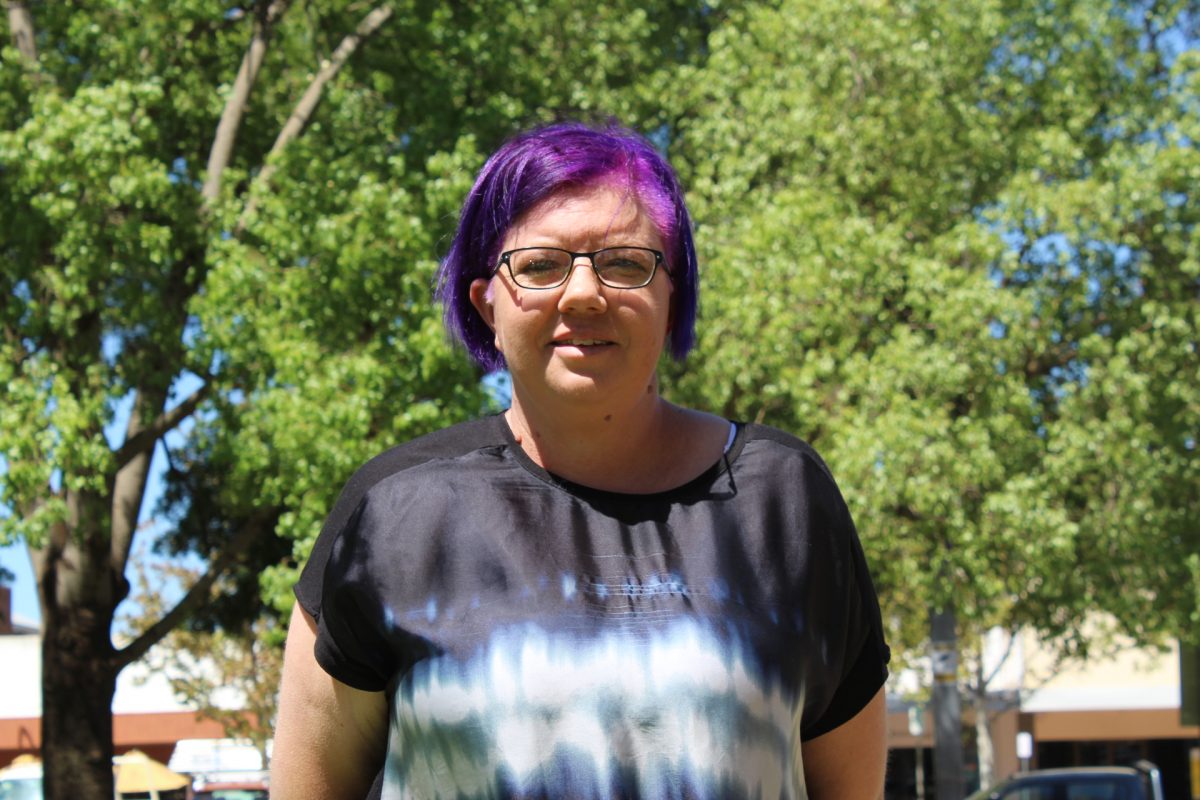
Griffith-based MND sufferer Tania Magoci has also campaigned for proper funding into the causes of the illness. Photo: Oliver Jacques.
Ms Dalton said the new framework would allow NSW to move beyond simply counting deaths and begin building a clearer picture of the disease.
“This is about giving researchers the tools they need to ask better questions and hopefully find better answers,” Ms Dalton said.
“We have mortality data. We have isolated research studies. What we have never had is a mechanism that allows us to consistently identify cases, track disease incidence and build a comprehensive picture across an entire population.
“This framework creates the foundation that has been missing.”
Professor Rowe also paid tribute to patients, carers, advocates and clinicians who had driven the campaign.
“This has never been about politics,” Professor Rowe said.
“It has been about giving families hope that we can better understand this disease and one day prevent others from suffering the same heartbreak.
“NSW now has the opportunity to lead the world in the way MND is monitored, researched and understood.
“Today is a major step forward in the global fight against MND.”