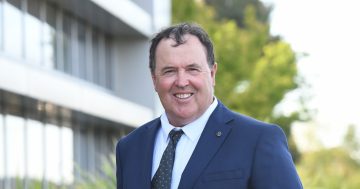
Brian and Riley Irvin have urged Griffith Council to reconsider their decision, for the sake of their family business which has run for 22 years. Photo: Oliver Jacques.
Griffith residents have long been accustomed to the fact that dropping off a load at our tip can rival the cost of going out to dinner at Il Corso.
So the council’s decision to hike waste disposal rates by 32 per cent in one hit is staggering.
I believe this move will backfire spectacularly.
Not only will it cripple local family businesses and potentially lead to more illegal dumping, but it could also result in the council collecting less revenue than it does now.
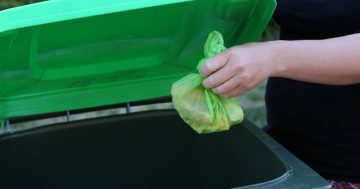
Mixed waste now costs $276 a tonne to dispose of at Tharbogang Tip, up from $209 last financial year.
In Leeton, the rate is just $156. In Wagga, it is $190. Even Canberra, Australia’s wealthiest city, is cheaper at $211.
So why does Griffith need to charge so much more than everywhere else?
The council says it needs the money – about $15 million to construct new landfill space at Tharbogang and rehabilitate existing space.
Fair enough.
But putting up fees so dramatically in one hit means businesses will inevitably look for alternatives.
A waste operator servicing several towns has a very simple choice: why pay $276 a tonne in Griffith when the same rubbish can be taken to Leeton for considerably less?
And private residents facing a cost-of-living squeeze may think twice before paying hundreds of dollars to dispose of old furniture, building waste and other junk.
Some will simply look for somewhere else to dump it.
Just look at Scenic Hill, where Griffith waste operators have already spent their own money cleaning up rubbish.

Brian Irvin said high prices could lead to more illegal dumping in Griffith. Photo: Supplied.
There is an economic concept called the Laffer Curve – the idea that governments can reach a point where increasing a tax or charge actually reduces the revenue they collect because people change their behaviour.
We are seeing this argument play out with tobacco.
Dr Arthur Laffer, the economist behind the curve, recently told an inquiry that Australia had pushed tobacco taxes beyond the point where they maximise revenue.
Legal cigarette prices have soared, while cheap illegal tobacco has helped create an enormous black market. Tobacco excise and customs revenue peaked at $16.3 billion in 2020 before falling to $9.7 billion in 2024, according to figures cited by Laffer.
The tobacco debate is complicated, but the basic lesson is obvious: people respond to prices.
Brian Irvin, whose longstanding business MIA Quikskips has been hit hard by the tip fee hike decision, summed it up best.
“Make it too expensive to do the right thing and some people will do the wrong thing,” he said.
Moreover, to raise a local family business’s major cost by 32 per cent overnight is both immoral and counterproductive.
The council is effectively opening the door for large, out-of-town operators to take their business elsewhere.
And who ultimately pays?
You, me and every other ratepayer.
As councillor Mark Dal Bon pointed out, businesses will simply pass the increased cost on to their customers.
This is particularly hard to swallow after Griffith residents have already been hit with substantial council rate increases – with a special rate variation allowing Griffith Council to increase rates by about 22 per cent over two years.
If the council wants to reduce costs, perhaps it should look closer at one major and growing expense – court battles.
Griffith Council seems keener to take things to court than Donald Trump.
The Serafin Machinery dispute is a perfect example.
A six-year battle over driveways eventually ended in a conciliation conference, where the council agreed to an amended development application allowing the business to proceed.
The cost to ratepayers was about $250,000.
The council was also involved in separate Land and Environment Court matters involving the Irvins, estimated at around $50,000, and Polygon Wood Holdings, estimated at up to $100,000.
More recently, it’s been involved in a court battle over a housing development near Collier & Miller, where its failure to properly check the soil to ensure the land was safe for residential use resulted in legal action.
This all adds up to hundreds of thousands of ratepayer dollars that could have been spent elsewhere.
There is nothing wrong with the council defending a decision when it needs to.
But surely there has to be a better way – like sitting down with a business, taking a flexible approach and negotiating an outcome.
Everyone loses when you go to court – except the lawyers, who make a fortune.
So I would urge Griffith Council to reconsider the 32 per cent tip fee increase.
It needs to fund the new landfill. Of course it does.
But it also needs to think about what happens if it makes Griffith the most expensive place in the region to throw something away.
Businesses will leave.
Costs will be passed on.
Illegal dumping could increase.
And the council may discover that its big fee increase actually brings in less money than expected.
Everyone loses – the businesses, the ratepayers and ultimately Griffith Council itself.