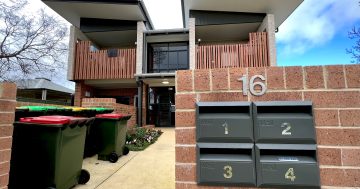
House price falls have been portrayed as a crisis by those who said the same about price rises. Photo: Michelle Kroll.
Property values are falling in almost every suburb in Australia, creating an economic problem and a “political issue” for the Albanese Government, so says The Sydney Morning Herald.
This is the same paper that previously complained that “cashed-up investors are pushing aside first-home buyers as property prices continue to rise”.
Rather than celebrating the fact that houses are becoming more affordable, it seems everything has to be a crisis.
That’s the great Australian housing contradiction: we desperately want houses to be cheaper, right up until the moment they actually become cheaper.
For years, we have been told that soaring property prices are locking young Australians out of home ownership. Housing affordability has been described as a crisis, a catastrophe and an intergenerational injustice. We have hassled politicians to make housing more affordable.
But when prices actually start going backwards, the language changes.
Suddenly we have a “downturn”. Prices are “spiralling”. There are warnings of a “crash”. Household wealth is being “wiped out”. The economy is apparently at risk.
Even our national broadcaster peddles the hypocrisy.
In an article dotted with negative adjectives, ABC business correspondent David Taylor recently reported that the property downturn had spread to 93 per cent of capital-city suburbs, with prices expected to keep falling.
He had previously described the fact that so many Australians couldn’t afford a house as a “complete and utter disgrace”.
It’s true that falling property prices can hurt recent buyers with large mortgages, reduce household wealth and, in a serious enough downturn, weaken spending and construction.
But somewhere along the way, we have forgotten that falling prices are actually the only way to make housing more affordable.
And this particular fall hasn’t come entirely out of nowhere.
The Albanese Government has changed the tax settings that helped make property such an attractive investment, including restricting negative gearing on existing properties and changing the capital gains tax discount. Those changes were explicitly intended to improve housing affordability, even if the government is afraid to brag about its success.
That’s because the idea of ever-rising property prices is ingrained in Australian politics.
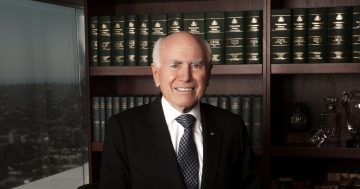
John Howard once famously said he had never met a homeowner who complained about their house value going up.
But that’s an old-fashioned attitude from a man who lived with his mother until he was 31, saved up and was able to buy a harbourside home for $54,000.
In an era when many first homes cost seven figures, Howard’s adage is no longer true. A recent Resolve poll found 61 per cent of Australians supported the objective of bringing house prices down. That included most homeowners.
I’m one of them. I bought my house in 2017. It has more than doubled in value since then.
In the past few months, it has probably lost around 5 per cent of that value.
I think I’ll probably survive.
In fact, I’m quite happy if that small fall makes it a little easier for someone else to get into the market.
The extra value of my home gained over the last decade doesn’t put money in my bank account. I still need somewhere to live. If I sell, I have to buy another house in the same inflated market. Unless I decide to move overseas, the paper gain is largely meaningless.
I’ve previously written about Singapore’s unusual attitude towards housing – seeing it as a form of shelter rather than a money-making vehicle for wealthy investors. Its philosophy has seen it create an enormous public housing system, with around 90 per cent of citizens owning their own home and homelessness virtually non-existent.
Australia has moved in the opposite direction. We have turned the house into a retirement plan, an investment vehicle and a tax strategy, and then wondered why making housing affordable has become so politically difficult.
We also wonder why we now have tent camps of homeless people in many of our towns and cities.
As economist Saul Eslake recently said, if the price of food, petrol, childcare or any number of other things fell, we would welcome it. Yet when the biggest component of household expenditure falls, somehow the sky is falling in.
We have spent years demanding that governments make housing more affordable.
Now, when one of those governments actually changes the rules and prices start to come down, we are told to panic.
Is it any surprise that it’s so hard for policymakers to implement much-needed economic reforms in Australia?
Perhaps we should stop making everything a crisis.
Perhaps, just occasionally, we should recognise a rare thing in Australian housing policy: a government doing something that might actually make houses cheaper.
And maybe we should celebrate it.
Original Article published by Oliver Jacques on Region Canberra.