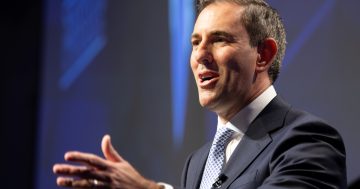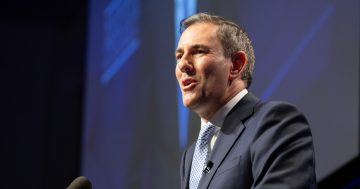


Jim Chalmers says the war in Iran has been devastating for the Australian economy. Photo: Jim Chalmers.
The official interest rate is at its highest in 18 years, after the Reserve Bank raised the cash rate target by 25 basis points to 4.85 per cent.
Six board members voted to increase the rate, while three voted to leave it unchanged at 4.6 per cent.
The central bank’s cash rate has now reached its highest level since 2008.
“Inflation remains elevated and recent data indicate that it is broadly based. The inflation outlook has also been revised materially higher in the updated staff forecasts,” the RBA said in a statement released an hour before the Melbourne Cup began.
“This partly reflects higher fuel and other commodity prices affected by the conflict in the Middle East. But domestic capacity pressures are also judged to have been a little tighter than earlier thought.
“AI-related investment is driving rapid growth in prices for technology-related goods, and inflation in many goods and services remains high.”
It will be a hard blow to mortgage holders, small businesses and all Australians struggling with cost-of-living pressures.
Inflation rose to 4.3 per cent in the year to September.
Some banks have already announced they are passing the interest rate rise on to customers.
The RBA board said it was aware that inflation has been too high for too long.
“Given the revised inflation outlook and the continuing upside risks, the board judged that a further tightening in financial conditions is warranted to support the return of inflation to target,” it said.
“The board will continue to do what it considers necessary to bring inflation sustainably back to target.”
Treasurer Jim Chalmers acknowledged that the RBA’s decision will be a tough pill for many Australians to swallow.
He noted that “people are under substantial pressure already” and increased borrowing costs will make it even harder for many.
The Treasurer again pointed to the Middle East conflict as having a major impact on the Australian economy, but denied the Federal Budget was a major contributing factor.
“Today’s decision was widely expected, but that doesn’t make it any easier for Australian families and businesses to absorb,” he said.
“It will be difficult news for many Australians who are already paying a hefty price for circumstances outside of their control … The war’s in its ninth month and its re-escalation is putting sustained upward pressure on inflation.
“It’s weighing on growth, and its end can’t come soon enough for the global economy or for Australians facing cost of living pressures.
“Our budgets are not what’s putting upward pressure on inflation. But we can play a helpful role, and that’s what we intend to do.”
When asked during a media conference following the RBA’s announcement whether he would consider stepping aside as Treasurer, he simply replied, “No”.
RBA Governor Michele Bullock also addressed the media, in a separate appearance, and acknowledged that the news was not what many Australians wanted to hear.
“But it is what’s needed to get inflation down … some pain now will prevent even worse pain down the track,” she said.
“I understand that today’s decision is going to be difficult for Australians with mortgages, many of whom are already managing large repayments.
“But households with mortgages are not the only Australians doing it tough.
“Every household is dealing with higher prices for groceries, electricity, insurance and other essentials.
“High inflation is particularly painful for Australians on lower incomes, including people who rent and have little or no savings to fall back on.”
Shadow treasurer Tim Wilson laid the blame for rising interest rates squarely at the feet of Labor and the Federal Government’s use of taxpayers’ money.
“The Reserve Bank has been forced to raise interest rates on Australian families and small businesses for the 17th time under the Albanese Labor government because the taxaholic Treasurer still can’t kick his spending addiction,” he said.
“The only sure bet on Melbourne Cup Day was that Australian families would be forced to make tough choices because the Treasurer won’t kick his spending addiction.
“The RBA has now warned that because of the Treasurer’s spending addiction, rates are going to be high and stay there.
“Today’s rise adds around $150 a month to the average new mortgage. That family is now paying about $32,000 a year more in interest than when Labor was elected.
“That’s $2,700 a month ripped out of the family budget.”
Original Article published by Chris Johnson on Region Canberra.