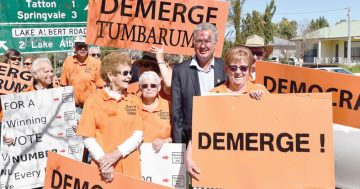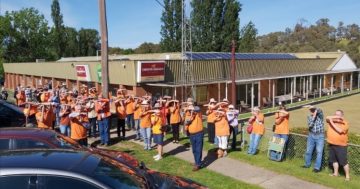


Snowy Valleys Council is seeking community feedback on rates, spending and services for the two proposed councils. Photo: Snowy Valleys Council.
Less than a year after voting to demerge Snowy Valleys Council (SVC), residents are now being asked to help decide the financial future of the two new individual councils to take its place.
Council says the split back into two councils, covering the former Tumut and Tumbarumba shire areas, is well on track for 1 July 2028, subject to the minister’s approval.
For the split to be approved, council must demonstrate that each can be financially sustainable over 10 years, achieving a balanced budget or a small operating surplus.
To that end, SVC has now placed a revised financial plan on public exhibition, which updates the financial modelling that supported council’s earlier demerger proposal, and includes initial long-term modelling for the two proposed councils.
In releasing the plan, council warned that both proposed councils would face ongoing operating deficits if current financial levels continued, requiring changes to revenue or spending to maintain services and community assets.
The modelling tested four scenarios for each council from 2028/29, ranging from no change to a combination of rate rises, reduced spending on materials and services, and changes to fees and charges.
Council says only the fourth scenario, combining rate rises, lower spending and changes to fees and charges, puts both proposed councils on a path to financial sustainability.
In the north, covering the former Tumut area, that means a special rate variation of 4.3 per cent a year on top of the ordinary rate peg, while in the south, covering the former Tumbarumba area, it is 9.5 per cent a year.
An SVC FAQ says the south’s increase is higher because it has a significantly smaller rate base than the north, meaning each ratepayer carries more of the cost of services, based on current services and service levels.
According to the council, water and wastewater funds are being modelled separately and are not included in these figures.
The council says the figures are the first step in a longer process and are meant to prompt community feedback.
“The plan does not make a final decision about rates, services or spending,” SVC’s chief transition officer Nicole Jenkins said.
She said the figures were based on what council currently provided and spent, and that the two new communities were likely to expect different services and have different capacity to pay.
Ms Jenkins also cautioned that long-term plans were only a guide, because forecasts became less certain the further ahead they looked.
For example, she said, the award wage increase for the next two years was known to be four per cent, but after that council had had to make assumptions based on past trends and benchmarking.
During the exhibition period, residents can review the four scenarios and have their say through a community survey, which closes at 11:59 pm on Sunday 1 November.
Ms Jenkins said the survey was about hearing directly from locals to understand what mattered most to the north and south communities.
She framed the choice as whether people preferred lower rates with reduced or delayed services and infrastructure, or would support higher rates to protect services and strengthen their new council’s long-term finances.
It also asks whether rate rises should be phased in gradually over eight years or introduced more quickly over four.
She said community feedback would help refine the scenarios and guide more detailed budget planning.
All submissions received during the exhibition period will be considered and reported to a future council meeting.
The revised options will return to the community for further feedback before council considers them for approval, with final decisions on rates, fees and spending expected later in 2027.
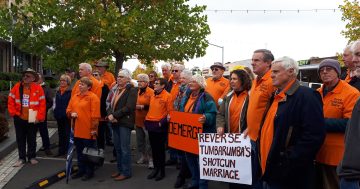
Tumbarumba residents had campaigned for a demerger since before the NSW Government merged Tumbarumba and Tumut shire councils on 12 May 2016.
After then-NSW Local Government Minister Shelley Hancock rejected a proposal to demerge in 2021, state laws passed in 2024 provided a new pathway, including a referendum.
At the 29 November 2025 referendum, about 87 per cent of formal votes backed the split with most ballots counted.
SVC estimates the transition will cost about $4.99 million, including a 20 per cent contingency.
Its funding strategy includes seeking a $2.89 million state grant, applying for approval to borrow $500,000 from its sewerage reserve and redirecting $500,000 from the 2026/27 budget.
Council says it will fund more than 40 per cent of direct project costs, including staffing, referendum and election expenses.
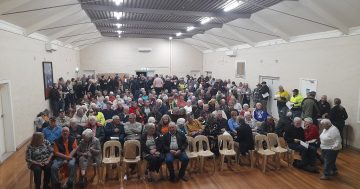
A steering committee comprising councillors and six community representatives, three from each area, oversees the work and a separate community panel held its first workshop in Batlow in September.
Residents can read the plan and take the survey here.
Original Article published by Edwina Mason on About Regional.