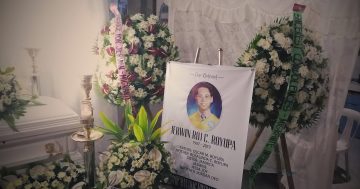
Jessa Joy Royupa has fought for reform since her brother Jerwin died after being exploited in the Riverina. Photo: Supplied.
The sister of a Filipino worker who died at a Riverina winery placement has joined calls for greater support for victims of forced labour, after new research revealed only one per cent of modern slavery reports to police result in convictions.
Jerwin Royupa exited a work vehicle being driven by his boss and died in March 2019. A coronial inquest found he was fearful of his employer, who exploited him while he was in Australia. The winery cannot be named for legal reasons.
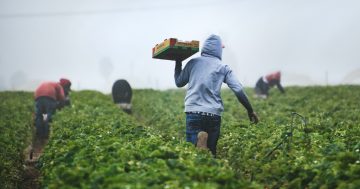
Jerwin came to Australia as a 21-year-old hoping to support his family and gain experience in agriculture through a 407 training visa. But the inquest found he was forced to perform unpaid manual labour for 10 hours a day, six days a week with no training or education whatsoever.
His sister Jessa told Region the Federal Government’s training visa regime operated like a “visa for slaves” that created the perfect conditions for exploitation. She said the federal Department of Home Affairs did not not properly vet his employer nor visit the site of the training placement while Jerwin was in Australia.
The Filipino lawyer has joined former forced labour victim Moe Turaga and support group Domus 8.7 co-founder Alison Rahill in calling for practical assistance for workers at risk of extreme labour exploitation.
Their appeal follows new research produced for the Office of the Australian Anti-Slavery Commissioner, which found there were only 41 convictions for modern slavery and human trafficking between 2004 and 2025 despite more than 3000 reports being made to the Australian Federal Police.
Ms Royupa said with no support, her brother had nowhere to turn for help.
“Jerwin was definitely intimidated by his employer, who got angry when Jerwin asked for his allowance,” she said.
“He (Jerwin) was dependent on his employer for work, for transport, for accommodation, but he also had a fear of the authorities, and when he was being told and abused verbally that he was going to get taken, he was going to be deported, he was going to be taken to the police.
“He would have found that very terrifying, because he had no money. He had no access to his passport. He didn’t have an Australian bank account.”

Jessa still dreams about her brother. Photo: Supplied.
Recommendations from the NSW Coroner’s inquest into Jerwin’s death have prompted the Department of Home Affairs to review its training visa program. The coroner also referred the inquest and findings to the Australian Federal Police for consideration of further investigation.
Mr Turaga, who experienced forced labour himself after being deceptively recruited from Fiji to work in Australian horticulture, said many exploited workers were too afraid to seek help and often fell through the cracks of the justice system.
“This research confirms what people working on the ground in forced labour have known for years – that vulnerable workers in Australia are stuck in a law enforcement limbo,” Mr Turaga said.
“Police can only run prosecutions with willing witnesses. Even then, these cases take years to get to court. In the meanwhile, workers are crying out for help to transition from exploitation to fair work. They just aren’t getting the support they need.
“Migrant workers are the most at risk of forced labour in Australia, but it is almost impossible for them to stand up for their rights. For a migrant worker, the most likely result of calling police, is that they will be sent home or deported – broke, broken, or worse.”
Ms Rahill said the low conviction rate highlighted the need to focus on helping workers recover from exploitation, rather than relying solely on criminal prosecutions.
“People leaving forced labour need safety, accommodation, access to health care, migration advice, and a safe job that pays fairly,” Ms Rahill said.
“These are supports that mainstream community and social services are in a much better position to provide than police.
“Prosecutions are too hard, as the research suggests, so we need to focus more resources on prevention and remediation.
“At Domus 8.7, we are all about building the guardrail against forced labour at the top of the cliff, not just parking a ‘remedy ambulance’ at the bottom.”