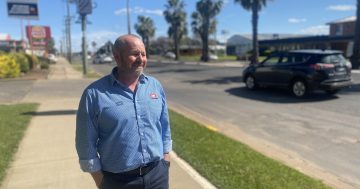
Jo Hersley, MP for Katherine in the NT, shows her support for the 130 km/hr trial speed limit at Emerald Springs. Photo: Facebook Jo Hersley.
The Northern Territory is putting higher highway speed limits back on the table, reviving the question of whether sparsely populated parts of NSW – including in the Riverina – could safely do the same.
The NT Government is conducting a six-month trial of 130 km/h on sections of the Stuart Highway at Hayes Creek and Wycliffe Well, where the limit had previously been 100 km/h.
Former Griffith Council transport guru Simon Croce believes certain stretches of highway in the Riverina could follow its lead, but concedes such a change would be politically difficult to implement.
“It’s not the speed that usually results in deaths on country roads. It is inattention, boredom, drivers driving below the speed limit causing frustration, people falling asleep and the list goes on,” he said.
“They have the ads of the guy doing 3 km per hour over the limit and he ruins everyone’s life. Does anyone believe this rubbish?”
The NT had 130 km/h limits on parts of its highways before 2013, when limits around several roadhouses were reduced because of concerns about vehicles entering and leaving the businesses and pedestrians crossing the highway.
Now it is testing whether 130 km/h can return where roadhouses have closed and other circumstances have changed.
Could NSW do something similar?
It has already been considered.
A NSW parliamentary inquiry into speed limits and road safety in regional NSW looked specifically at the possibility of going above the state’s 110 km/h maximum.
NSW motorist Gemma Thomas wrote in a submission in favour of increasing limits.
“Having travelled in the NT when open limits and 130 speed limits were in place, I feel the majority of drivers still drove to road conditions and weren’t reckless with their driving behaviours,” she said.
“Even if a trial run is offered on the roads in the western, open plains, I believe the benefits would outweigh the potential negatives.
“The only downside I can think of is the government would luck out on their revenue raising speed cameras that catch people doing less than 10 km/hr over the speed limit.”
Similarly, the National Motorists Association Australia advocates higher speed limits, arguing that “driving slowly is not necessarily driving safely”. It highlighted the Sturt Highway between Narrandera and Hay as a stretch of road capable of sustaining a 130 km/h speed limit.

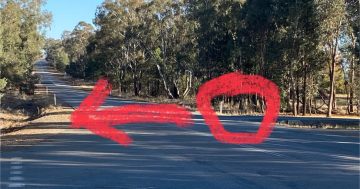
While parts of the Sturt Highway run through sparsely populated areas, the number of fatalities on the road has caused concern. Photo: Narrandera Shire Council.
However, the NSW Police Association opposed the push to increase limits.
“It is well known that increased speed is a significant cause of road accidents and increases the severity of accidents. Higher speed adversely affects the time available to react, stopping distances, and the impact of a crash,” its submission stated.
The association also noted that many regional roads were in poor condition, increasing risks if limits were increased.
The parliamentary inquiry recommended that Transport for NSW investigate the potential for higher speed limits on suitable regional roads.
Region asked Transport for NSW whether it had carried out that work, what it found and, if it did not proceed, why not.
The department did not answer these questions, but indicated that it did not intend to introduce 120 km/h or 130 km/h speed limits on roads in regional NSW, saying higher speeds increased stopping distances and the severity of crashes.
In 2015, then NSW Liberal MLC Trevor Khan called for the state’s road safety authorities to consider increasing the maximum speed limit on suitable roads from 110 km/h to 120 km/h.
His parliamentary motion specifically nominated the Newell and Pacific highways, arguing improved road standards meant some roads could accommodate higher speeds. The motion also pointed to the Northern Territory’s trial of open speed limits.
The motion passed though it was opposed by The Greens, who argued the evidence did not support increasing speed limits and that safety should take priority over speed.
The parliamentary inquiry and Khan’s 2015 motion both put higher speed limits on the political agenda, but neither required the government to act.
There was also a recent push in the opposite direction. The Federal Government last year proposed reducing the default speed limit on unsigned rural, regional and remote roads from 100 km/h to as low as 70 km/h, with an 80 km/h limit among the options considered. But the proposal was abandoned in November after state and territory transport ministers raised concerns about a blanket approach. NSW had opposed the options and said it had no plans to change its open-road default speed limit. The federal proposal will therefore not proceed or be implemented in NSW.