More than 100 people crammed into the Presbyterian Church for the forum. Photo: Oliver Jacques.
The Roxy Theatre has been branded the iceberg that will sink Leeton’s Titanic, with angry residents blaming the costly redevelopment for a proposed rate hike of up to 54 per cent – a claim strongly refuted by the council.
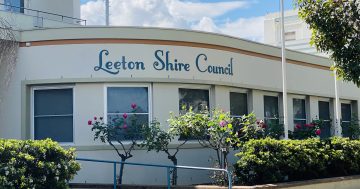
More than 100 people packed into the Presbyterian Church on Monday (19 October), to grill Mayor George Weston and general manager Jackie Kruger over the proposed special rate increase, which the council says is needed to shore up its finances.
The Roxy was a flashpoint, with residents questioning how a redevelopment of the 1930s art deco landmark had ballooned in cost and why ratepayers should continue to fund its operation.
Restaurateur Vanessa Pages likened the Roxy expenses to the iceberg that sunk the Titanic.
“The Titanic has already hit the iceberg and the council wants the ratepayers to give them money to pay for the band and bar,” she said.
The redevelopment’s cost was put at $15 million at the meeting, more than three times the original $4.45 million estimate when the project was conceived in 2018.
The theatre’s ongoing operating costs were also questioned, with the annual bill put at about $1.2 million, including staffing, utilities, maintenance, depreciation and debt repayments.
“That’s a lot for something that doesn’t do much,” one attendee said.

Teah Marshall said the council should consider outsourcing the Roxy.
But Mayor Weston and Ms Kruger rejected the suggestion the Roxy was responsible for the proposed rate rise.
“It’s a very minor proportion of the rate hike; it would be less than a single-digit impact,” Ms Kruger said.
“If we never did the Roxy, we would still be having the same discussion about the special rate variation and it would be around the same figures we are discussing now.”
Ms Kruger said government grants had paid for most of the redevelopment, and that the council’s contribution mostly came from a loan of $4.2 million which is to be paid off over 20 years.
“The cost of running the Roxy is no worse than anywhere else that runs theatres,” she said.
She also noted the theatre earned $200,000 a year in ticket sales.
Mayor Weston said the council was in a difficult position in 2018.
“The Roxy was getting old and wasn’t compliant. We had three choices – knock it over, sell it to someone or try and make it viable. I think everyone in the hall wanted to keep the Roxy,” Cr Weston said.
Gym manager and mother Teah Marshall suggested the council consider outsourcing the theatre’s management to a private company with experience in events and live shows.
“We need to come up with a way to make our assets more profitable,” she said.
Ms Kruger said the council had previously considered outsourcing, but there was an “outcry” from the community against it. She said it was something that the council would revisit, based on residents’ feedback, as well as looking at outsourcing other services.
Mayor Weston noted that changes to the library’s opening hours – such as closing it two days a week – was off the table, though.
Ms Marshall said she had initially opposed the rate rise but had gained a better understanding of the council’s position after hearing its explanation.
“I didn’t support it when I first came in, but the way they’ve explained it, I understand it more,” she said.
“The rate rise applies to only a proportion of our total rates, not everything. That probably needs to be explained better.”

Mayor George Weston answers questions.
The proposed special rate variation would increase the council’s total general rates revenue by between 44.2 per cent and 53.8 per cent over two years, on top of standard annual rate increases.
The council says an independent financial review found its general fund was not financially sustainable over the long term, with projected deficits over the coming decade. The proposed increase is intended to help fund existing services and infrastructure, with the higher options also allowing for additional community projects.
The meeting, convened by Leeton Ratepayers Association president Marina Cook, was cordial but at times threatened to boil over. Questions had been submitted in advance and were read out to the mayor and general manager. Some people walked out before the Q&A concluded.
In a statement, the association said residents felt they were being ignored and feared the council would push ahead with the rate rise regardless of community opposition.
Ms Kruger rejected this suggestion.
“No decision has been made on a rate rise. It’s true that council has a legal obligation to run its general fund in a financially viable way. That’s why we are consulting the community on how to do this.”
The consultation closes on 27 October, with councillors expected to decide in December whether to pursue a formal application to substantially increase rates with the regulator – the Independent Pricing and Regulatory Tribunal.