A Cobb and Co coach and horses in Warburton, Victoria: State Library Victoria.
There are few more famous names in Australian history than Cobb and Co. The signature red coaches and powerful horse teams played a pivotal role in connecting regional centres such as Gundagai and Wagga Wagga to the cities and forged a vital link to outposts all across the Riverina.
The men and beasts that steered the iconic American-style stagecoaches loaded with mail, gold, and travellers across rough colonial roads became legends in their own right.
When former Wagga stage coach driver Harry Watson passed away in 1930, the Riverine Herald remembered him as one of the last from a time “when it required men of strong will and stronger physique to win out against the hardships that coach drivers had to face”.
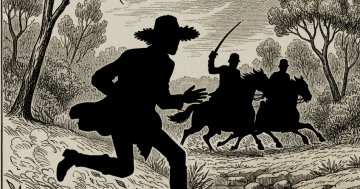
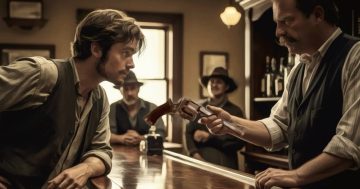
Described as a “first-class whip”, Watson had been on the wrong end of bushranger Dan Morgan’s pistol and claimed to have met a young Ned Kelly at a dance when he was carrying the Beechworth mail.
Armed robbers, wild weather, floods, fires and broken wheels were all in a day’s work for a Cobb and Co driver!
Australia’s most famous transport company was founded during the Victorian gold rush in 1853 by a group of four American entrepreneurs who had learned their trade from stagecoach giants Wells Fargo and Adams & Co.
Freeman Cobb and his partners recognised the need for fast, reliable transport between Melbourne and the goldfields and they imported state-of-the-art American coaches such as the Concord that could handle rough Australian terrain at a brisk pace.
They quickly expanded to meet the growing demand and their coaches covered up to 80 kilometres a day with horses changed regularly at staging posts along the route.
In March of 1942, The Daily Advertiser covered a sermon from Narranderra priest JP Hartigan who paid tribute to the coaches that carried the clergy and their flocks across the parish in the days before cars and trains.
“‘If I were not preaching a sermon, I would dilate upon the fascinating story that is woven around the magic name of Cobb and Co,” he said.
“It was the only link between the world and the vast outback; the only thread that connected the wanderer’s life with all he had left behind.
“It carried the priest on his sacred errand, bearing to his breast pocket the Eternal Remedy both of body and soul!” he declared before concluding with a line from Henry Lawson’s poem “The Lights of Cobb and Co”.
“The roaring camps of Gulgong, and many a ‘Digger’s Rest’;
The diggers on the Lachlan; the huts of Farthest West;
Some 20,000 exiles who sailed for weal or woe;
The bravest hearts of 20 lands will wait for Cobb and Co.”
Handling large teams of powerful horses required skill, strength and endurance and in the years after the company closed in 1924, Melbourne’s Motor Show committee hosted annual dinners to pay tribute to the veteran drivers who had pioneered regional transport.
A reporter from the Herald joined the “white-headed old gentlemen” at an exhibition in May, 1928 as they relived their glory days and scoffed at the younger generation.
“There were no metalled roads in our day,” one old driver told him.
“We had to drive, all day and all night, moon or no moon, over rough bullock tracks, carrying passengers and Her Majesty’s mails , and we were always on time.”
Another fondly remembered the valuable animals that hauled the coaches, noting that “a good coach-horse cost anything from £21 to £67 in those days.”
Inevitably, the conversation shifted to the “knights of the road” and boasts of bravery in the face of the bushrangers.
Harry Watson was there and recalled being “stuck up” by Jack (aka Dan) Morgan while driving the mail from Albury and fellow Wagga coachman Bob Grover told of his meetings with Ned Kelly more than a decade later.
“In the Kelly days passengers and drivers alike were all keyed up and expecting the worst,” he said.
“But I was never stuck up, because I always carried a bottle of brandy in the boot. More than once or twice I’ve swung round a bend to see Ned Kelly himself with his hand up to stop me. All he wanted was a stiff nip, and he always got it from me, and we’d swap a word or two.”
At its peak in the late 19th Century Cobb and Co coaches harnessed 6000 of its 30,000 horses every day and covered almost 45,000 kilometres a week on some of the roughest roads in the world.