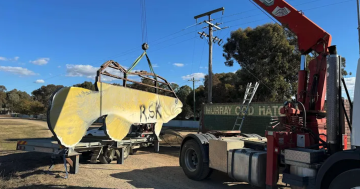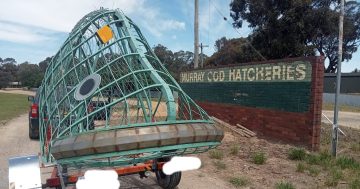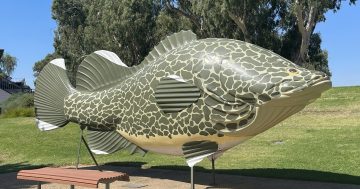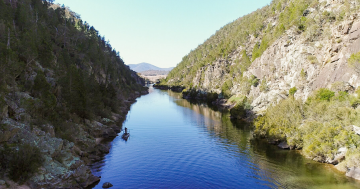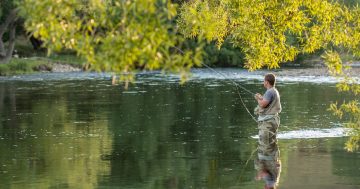

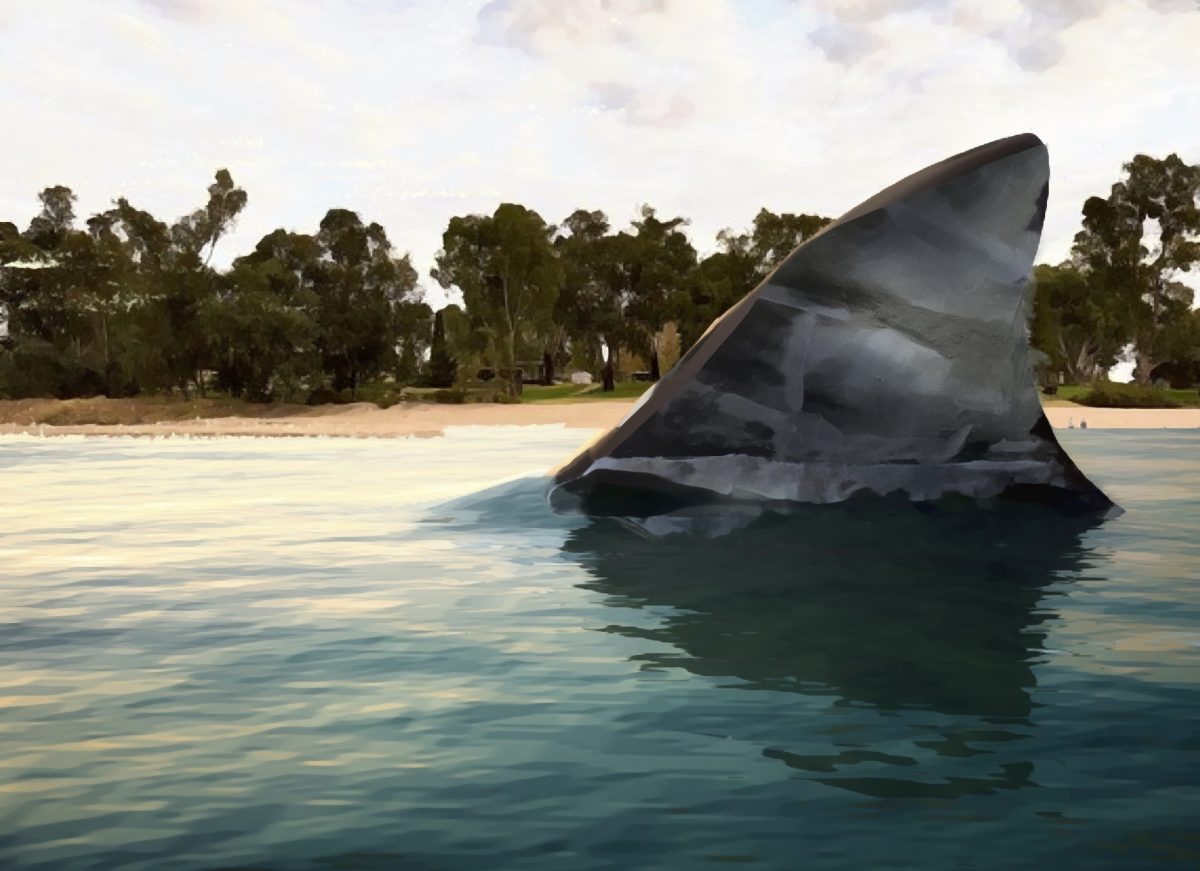
What are the odds of encountering a Murrumbidgee Mud Shark this summer? Photo: Chris Roe.
Stories of giant predatory fish in the Murrumbidgee have circulated in the Riverina for almost 150 years.
To this very day anglers will caution the uninitiated with tales of the powerful ‘Murrumbidgee Mud Sharks’ that have been known to snap their lines, break their rods and carry off their dogs.
Visiting fishermen are likely to laugh off the legend, but a dig into the archives suggests that there may be some historical evidence that could wipe the uneasy smile off their faces!
In May of 1851 the Sydney Morning Herald published a report from a correspondent in the Lower Murrumbidgee that detailed a startling encounter at Nicki Nicki station.
According to the reporter, the station’s inhabitants witnessed an extraordinarily large fish making its way up the river.
“A large dorsal fin stood prominently up out of the water, and the fish, which was supposed to have been about six feet long, appeared to be of a dirty pale yellow colour,” they said.
“The water being deep in that locality, the fish passed close to the shore, but the blacks were so frightened at the apparition, that they had not sufficient courage to spear the intruder, although they might very easily have done so.
“Neither the extremities of the fish were seen, but it was noticed that in passing over a partially sunken tree, its weight caused the branches to sink much deeper, from which circumstance it is reasonable to suppose that it was a heavy fish.”
Two of the witnesses had spent time on Victoria’s Glenelg River and the pair swiftly declared it to be a bull shark like the ones commonly seen near the coastal entrance. But the correspondent was skeptical.
“I am not aware if there are instances on record of sharks living in fresh water, or of their being found so far away from saltwater,” they mused.
“The spot where this one was seen must at the very least be some 1300 miles inland by the course of the Murray and the Murrumbidgee. It is possible that the steamboats may drive sharks up the Murray, but the individual in question must have been very fond of travelling to come so long a distance into the interior of the colony.”
The most obvious solution to this 1857 mystery is that the station’s inhabitants were treated to a rare sighting of an enormous, ancient Murray Cod.
While these apex predators of the inland waterways do not often cruise along the surface with their spiny dorsal fin in view, the correspondent notes that it swam near the shallow shore, which may have left the leviathan with little choice.
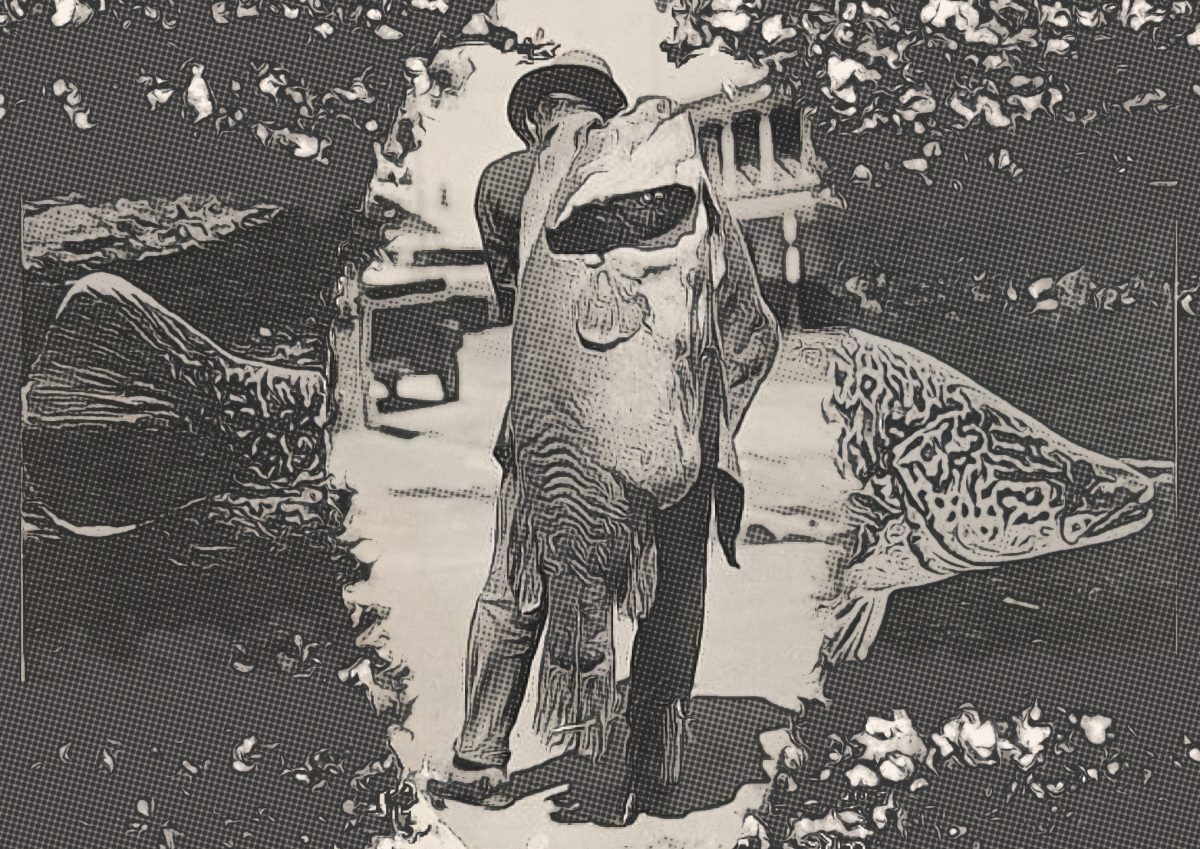
This iconic postcard from 1924 shows the 44 kg cod caught near Corowa. Original Photo: National Library of Australia.
The average adult fish is usually around 40 to 50 cm and weighs 2 to 4 kg, however, a number of shark-sized cod have been caught over the years.
The largest Murray Cod ever recorded was on the Barwon River in 1902 and reportedly measured 1.8 metres (5.9 ft) and weighed more than 113 kg (249 lb). It’s estimated this fish was between 75 and 114 years old.
A similar giant was reeled in on the Darling River near Menindee in 1896. According to the Inquirer and Commercial News it weighed 81 kg (181 lb) and “two men pulled it out with fencing wire, and dragged it into a billabong”.
A 44 kg (97 lb) cod was caught at Collendina Station near Corowa in 1924. A postcard shows the professional fisherman carrying the fish on his back where it stretches from his shoulder to his heels.
A quick look online will reveal similar sized fish caught on occasion in recent years across the Murray-Darling river system.
So there you have it. While you are unlikely to suffer a bite from a Murrumbidgee Mud Shark, there are undoubtedly still a number of ancient river monsters lurking in the depths.
If you are lucky enough to catch one, remember to treat it gently and to let it go after you get your selfie!