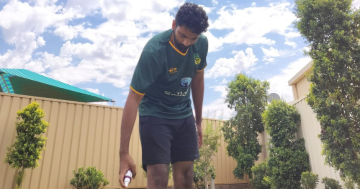
Griffith mum Amanda Elvy protects herself from mosquitos with a spray. Photo: Oliver Jacques.
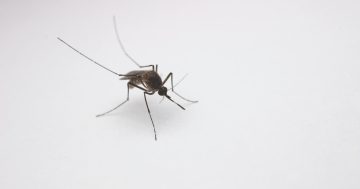
Riverina residents are being urged to protect themselves against mosquitoes – and particularly Japanese encephalitis (JE) – during the Easter period and school holidays.
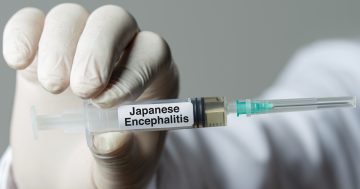
Dr Anton Forsyth, a public health physician with the Murrumbidgee Local Health District (MLHD), said people living, working, or visiting high-risk areas could get vaccinated against JE.
“People living or working in areas at high-risk for JE can access a free vaccine to protect against JE virus,” he said.
“Until 1 June 2026 the vaccine is also free for people travelling to high-risk LGAs for outdoor recreation (such as camping, caravanning, boating, hunting and fishing etc). The JE vaccine is available through general practitioners, Aboriginal Medical Services and pharmacists,” Dr Forsyth said.
Once fully vaccinated, it can take between two and four weeks for your body to develop a protective immune response to the disease, so if you’re eligible, the MLHD advises you should get vaccinated as soon as possible.
The warning comes as residents and visitors are expected to spend more time outdoors over the Easter break, increasing the risk of mosquito exposure.
Mosquitoes in NSW can carry several viruses, each with different impacts on human health.
Japanese encephalitis is a rare but serious virus that can cause inflammation of the brain. Symptoms include fever, headache, nausea, confusion, seizures, and in severe cases, long-term neurological damage or death.
There are also a number of other mosquito-borne viruses.
Murray Valley encephalitis virus can also affect the brain, with fever, headache, vomiting, and neurological complications in severe cases.
Ross River virus, common in rural and regional areas, leads to joint pain, fatigue, fever, and rash, with symptoms that can last weeks or months.
Barmah Forest virus causes similar effects, including joint and muscle pain, fatigue, and sometimes swelling, though it is rarely life-threatening.
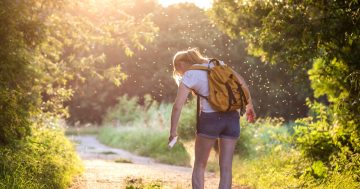
Dr Forsyth said residents and visitors could reduce the risk of mosquito bites by applying repellent containing DEET, picaridin, or oil of lemon eucalyptus, wearing light, loose-fitting long-sleeve shirts and long pants, and covering their feet. He also recommends avoiding outdoor activity during peak mosquito hours, particularly at dawn and dusk, and using insecticide sprays, vapour-dispensing units, or mosquito coils outdoors in well-ventilated areas.
By combining vaccination with protective measures, Dr Forsyth stressed that the Murrumbidgee community could enjoy the Easter holidays safely, while reducing the risk of mosquito-borne diseases.
Information on eligibility for a free JE vaccine is available on Japanese encephalitis vaccination.
For further information on avoiding mosquito bites visit Mosquito-borne disease.