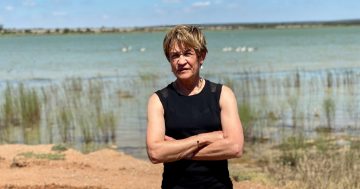
Deniliquin farmer Louise Burge has joined One Nation MP David Farley in opposing water buybacks. Photo: David Farley MP Facebook.
Farming and Riverina leaders have warned Australians could end up paying more for food during a cost of living crisis after the Federal Government spent hundreds of millions of dollars buying water out of the Murray-Darling Basin from just one corporate entity.
According to Commonwealth AusTender records, the government recently purchased almost 86 gigalitres of water entitlements for environmental use at a cost of more than $430 million from Sydney-based financial firm State Street Australia Ltd, which held the water entitlements on behalf of investors, including superannuation funds.
A water buyback occurs when the government purchases water rights from irrigators or corporations and transfers that water away from agricultural production and allows it to flow down the river, with the aim of improving river and wetland health under the Murray-Darling Basin Plan.
One Nation Member for Farrer David Farley said the most recent buyback would hurt people in the cities as well as farmers.
“Labor is adding another $400 million in debt to remove productive water from food production, and Australian families will ultimately pay the price through both their taxes and their grocery bills,” Mr Farley said.
“This is debt-funded deindustrialisation. Water that should be growing food, supporting regional jobs and keeping grocery prices affordable is being taken out of food production.
“Less productive water means less food, less processing, fewer regional jobs and higher prices at the checkout.”
Mr Farley said the southern Murray-Darling Basin produced about 40 per cent of Australia’s food and warned the country was reducing its ability to feed itself during drought.
Riverina and Murray Joint Organisation (RAMJO), a body that represents Riverina councils, said the latest purchase showed the Commonwealth was still pursuing water recovery targets without properly considering the impact on regional communities.
“Every gigalitre removed from productive use has consequences,” RAMJO chair Ruth McRae said.
“It affects what farmers can plant, what processors can source, what transport operators can move, and whether small towns can retain jobs, services, schools, sporting clubs and young families.”

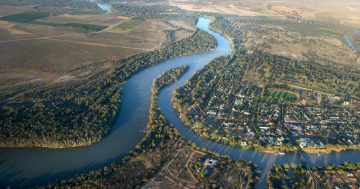
The Federal Government believes buybacks are crucial to restore river health. Photo: Supplied.
Cr McRae said Basin communities supported healthy rivers but opposed what she described as “blunt buybacks” that damaged local economies.
“The Basin Plan has been done to our communities, not with our communities,” she said.
“This latest buyback confirms that the Federal Government is still chasing numbers instead of delivering practical, place-based environmental outcomes.”
The Federal Government has been buying back water from agricultural entities for decades – because it believes excessive irrigation has depleted our rivers and is degrading the environment.
Minister for the Environment and Water Murray Watt says this needs to continue.
“We remain on track to reach 400 GL by December, and it’s good to see this process nearing the finish line, delivering a healthier Basin for the future,” he said.
“You simply can’t have sustainable communities if you don’t have a sustainable environment, and last year’s Basin Plan evaluation showed that our rivers and wetlands are now better off thanks to the plan – while at the same time our agricultural production has continued to set new records.
“We flagged intentions back in 2024 so that people had time to think through potential impacts and make decisions.
“The government is taking a balanced approach to water recovery that incorporates infrastructure investment, voluntary water purchases and community adjustment assistance.”
The latest purchase is one of the largest water buybacks completed since the Commonwealth resumed large-scale water recovery efforts aimed at delivering an additional 450 gigalitres of environmental water across the Basin.