


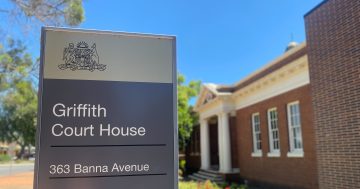
The Riverina man appealed a conviction handed down in Wagga Wagga Court in late 2024. Photo: Michelle Kroll.
A Riverina man convicted of sexually touching a child has failed in his bid to overturn the verdict, with the NSW Court of Criminal Appeal ruling a jury was entitled to accept the complainant’s evidence despite inconsistencies and a mixed verdict.
According to the published judgement, Harley Thomas Sherry was convicted by a majority jury verdict in Wagga Wagga in late 2024 of one count of sexually touching a child aged between 10 and 16. The offending involved Sherry tracing his hand up the child’s thigh and touching him sexually under his clothing while they were in a car in Junee.
When the allegations first emerged, the complainant, known as “AZ,” identified as female, but by the time of the trial, he identified as male.
Justice Peter Hamill noted it was “unfortunate” that AZ’s preferred pronouns were not respected at trial. The judgment noted that defence counsel referred to the witness as a “young lady” during cross-examination, even though AZ’s pronouns were “he/him/his”.
The trial was described by the appeal court as “emotionally charged,” highlighted by an incident where AZ called the defence counsel a “f****** c***” during cross-examination. While the defence argued this outburst went to the complainant’s credibility, Judge Hamill disagreed.
“On my reading of the transcript, the least that can be said is that AZ’s response to counsel, as crude as it may have been, was understandable,” Judge Hamill said.
The trial also heard allegations from AZ’s sister, referred to as IZ. However, the jury acquitted Sherry of two counts relating to IZ’s allegations, delivering what is known as a mixed verdict.
Following his conviction, Sherry was sentenced to two years and three months’ imprisonment, with a non-parole period of 18 months. He was later granted bail in May 2025 pending the outcome of this appeal.
He appealed the conviction on the basis that the guilty verdict was unreasonable and could not be supported by the evidence. His legal team argued the case contained “inconsistencies, discrepancies and inadequacies”. Specifically, they pointed to a conflict regarding the timing of the incident, arguing the details provided by AZ were factually impossible.
Sherry’s lawyer also pointed to the fact his client had been found not guilty of very similar allegations made by AZ’s sister, arguing the claims were closely alike and raising the possibility the evidence had been fabricated or the result of collusion. He also pointed to aspects of the complainant’s behaviour – including maintaining some level of contact with Sherry after the alleged incident- as being difficult to reconcile with the allegation.
The Court of Criminal Appeal rejected those arguments. The judges said inconsistencies in a witness’ evidence do not necessarily mean their account is unreliable, particularly where the core allegation remains consistent.
The court also dismissed the suggestion that the mixed verdict undermined the conviction, noting that a failure to reach the criminal standard of proof in relation to one complainant does not prevent the acceptance of another’s evidence.
In dealing with the argument about the complainant’s post-incident behaviour, the court cautioned against relying on assumptions about how victims of abuse were expected to act.
“Reliance on preconceived ideas of how people behave, or how they are expected to behave, after incidents of sexual touching and inappropriate or abusive relationships are not in line with the current understanding of the diverse ways in which people react and conduct themselves in the aftermath of such trauma,” Judge Hamill said.
Ultimately, the appeal court found no miscarriage of justice had been established. While there were some inconsistencies and areas of uncertainty in the evidence, these did not preclude a finding of guilt when the evidence was considered as a whole.
“After considering the whole of the evidence very closely, taking into account the way the case was conducted at trial and the submissions made on the appeal, I am not persuaded that the verdict is unreasonable or unable to be supported having regard to the evidence,” the court ruled.
The appeal was dismissed and the conviction stands. The identities of the complainants cannot be published for legal reasons.







Gary Delpiano exactly! I’m happy to pay for my meal and drinks, but I have no desire to pay for… View