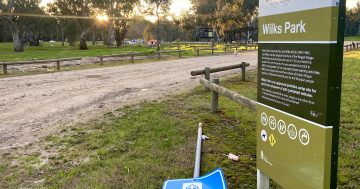
Councillor Richard Foley spoke to people living at Wilks Park to find out more about the issue. Photo: Richard Foley Facebook.
The NSW Government says it is looking for more stable housing options for people sleeping rough at Wilks Park and along the Murrumbidgee riverbank, but advocates fear vulnerable people could be left stranded away from essential services.
Wagga’s homelessness crisis has been thrust into the spotlight in recent weeks after a homeless duo were drenched by sprinklers at Victory Memorial Gardens on a cold Friday morning and following the death of a newborn baby in a tent near Wagga Beach.
Region understands there is pressure to relocate homeless people away from central locations, with some camps reportedly viewed as an eyesore ahead of upcoming winter events and festivals.
If that happens, housing advocate Leigh Swansborough wants governments to commit to a clear plan that provides people with safe, warm shelter and access to support.
“I have a real concern, because where are people supposed to go?” she said.
“At present, they are at least close to services.”

Leigh Swansborough and Tim Verhoef assisted a pair drenched by sprinklers last week. Photo: Supplied.
Tolland and Wiradjuri Reserve suggested as alternatives
The issue of rough sleeping in Wagga is not new. Wilks Park has long housed a community of people living in tents and caravans, with flooding, safety concerns and a shortage of affordable housing repeatedly complicating efforts to move people on.
Councillor Richard Foley, who has advocated for homeless residents for years, said some people preferred living in tents by the river but acknowledged the location was not sustainable.
“They can’t stay there forever; if the river rises they’ll have to move,” he said.
“They need to go somewhere safe, secure and close. I believe people could be moved to the sport ground on the Wiradjuri Reserve. You could put toilets and showers and some barbeques there, and have a rubbish collection.”
Wagga Ratepayers Association president Chris Roche suggested vacant land at Tolland – where homes have been demolished ahead of redevelopment – could provide part of the solution.
“Why not put container houses on these blocks of land, so people can get out of their tents, move there, lock up their goods and feel safe,” he said.
“If you have communities set up at Tolland, you can get the services out to them to help connect with Centrelink and provide medical support if needed.”
Homes NSW denies timeframe to relocate homeless
Cr Foley, Mr Roche and Ms Swansborough all say they are willing to work with NSW Housing Minister Rose Jackson on solutions, but were disappointed she did not meet with local housing advocates during her recent visit to Wagga.
Last month, Ms Jackson visited the city to announce 12 factory-built social homes in Ashmont and met with local officials, following renewed scrutiny of homelessness after the Wagga Beach tragedy.
Her department, Homes NSW, denies there is any timeframe or pressure to rapidly move homeless people out of central areas.
“Homes NSW is committed to supporting people experiencing homelessness in Wagga Wagga to access safe and stable housing,” a spokesperson said.
“There is no one-size-fits-all solution to homelessness and housing outcomes depend on an individual’s circumstances, support needs and the accommodation options available at the time.
“Homes NSW works closely with local specialist homelessness services, councils and partner agencies to connect people sleeping rough with housing assistance, accommodation pathways and the support services they need.”
Claims homeless blacklisted from housing support
Advocates also told Region some homeless people believed they were unable to access housing assistance because of previous tenancy debts, including unpaid rent or property damage.
Homes NSW rejected claims people were blacklisted.
“Former tenancy debts do not prevent people from seeking housing assistance,” a spokesperson said.
“Homes NSW works with clients to establish affordable repayment arrangements that take into account their individual circumstances and capacity to pay.”
It is understood former tenancy debts, including rent arrears and property damage charges, are generally managed through negotiated repayment plans rather than lump-sum repayments.
While advocates differ on where they think homeless people should be housed, they agree on one point – moving people on without providing realistic alternatives risks shifting the problem rather than solving it.