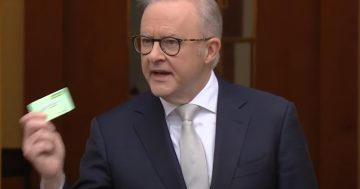
Winning candidates in Australia more accurately reflect the entire spectrum of voter preferences. Photo: Michelle Kroll.
It’s 10 years since the United Kingdom voted for Brexit, surely one of the silliest decisions of the post-war era.
Pushed by the hard right, Tory Prime Minister David Cameron announced a referendum on leaving the European Union, clearly not thinking for a moment it would succeed.
A barnstorming populist campaign by future PM Boris Johnson and Nigel Farage (now much richer than he used to be, thanks to multi-million-pound “gifts” from an expatriate crypto-billionaire) led to a slender majority vote for the Leave campaign, based on slogans about “taking back our country”.
A decade later, Brexit has made the UK economy smaller, with added trade regulations rather than the much-ballyhooed freedom from red tape.
The UK’s GDP is likely between 6 and 8 per cent lower than it would have been; business investment has declined by between 12 and 18 per cent compared with peer economies; and both employment and labour productivity have declined by around 4 per cent.
And that’s before we consider the social impact as the Far Right rises. It’s a heavy price to pay for a vote predicated on sentiment.
In Australia, the populism debate is in full swing on the back of the Liberal Party’s implosion. A tide is rolling, we’re told, and there will be consequences if we ignore it. The people are rising.
But the critical difference in Australia by comparison with many other Western democracies is one of the jewels in our electoral crown – proportional representation, achieved through preferential voting.
Unlike the UK (and many other countries), our winning candidates more accurately reflect the entire spectrum of voter preferences.
If 10 candidates stand, the one who receives 15 per cent of the vote is not necessarily elected. Votes filtered by preference produce the outcome best suited to most people rather than a simple plurality.
Voters exercise their first preference, then make other choices, most of which will have some value somewhere along the line. That’s how David Pocock defeated Zed Seselja for the Senate: more Canberrans gave him their preferences, even if their first vote went elsewhere.
So if Pauline Hanson really is the Prime Minister most of us want, for example, we’ll find that out soon enough at the ballot box through the preference flows.
If Anthony Albanese’s time is over, we’ll see the same evidence. If the Liberals are done for, the clearest sign is not just a primary vote slump, but also the second-, third-, and fourth-choice votes ordinary people make in the voting booth.
Understanding the intricacies of preference flows was the basis of Antony Green’s whole career, but Australian election results have always tended towards the middle because that’s where most people feel OK, if not absolutely satisfied.
When combined with compulsory voter registration, proportional representation via preferential voting provides robust protection against extremism at either end of the spectrum. An independent Electoral Commission is the final foundation of a democratic system regularly rated as among the world’s best.
But let me throw in one other, possibly fanciful, observation about populism and its perils.
Recently, I was honoured to be at Government House for a charity function, where you can see both the room and the actual letter with which Sir John Kerr sacked Gough Whitlam.
It’s a reminder that despite the Dismissal’s seismic impact on the nation, the Governor-General of Australia retains the power to give Royal Assent to bills passed by both Houses as the representative of the King, in whom our constitution vests final executive power.
The Governor‑General also issues writs for Federal elections, sets times for Parliament to meet, and can call a joint sitting of Parliament in specified circumstances. And of course, the Governor‑General both appoints and can dismiss ministers, including the Prime Minister.
Imagine a scenario in which the country is hurtling towards destruction and the Governor-General slams on the brakes, carpets the PM and refuses assent to bills that, say, ban immigration on racial grounds.
Is that scenario a justification for Sir John Kerr’s choices back in 1975, or a call to action for the incumbent at Yarralumla? You decide, as we all hope it doesn’t come to that again.
Genevieve Jacobs is the CEO of Hands Across Canberra, the ACT’s community foundation.
Original Article published by Genevieve Jacobs on Region Canberra.