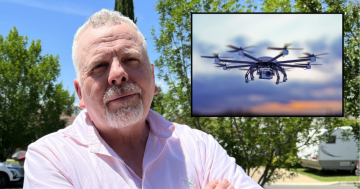
POLAIR Remote drones have been trialled in Moree. Photo: NSW Police.
Wagga’s long-running illegal motorbike problem could soon be tackled from the sky, with independent MP Joe McGirr pushing for the city to become the next NSW trial site for police drones.
Dr McGirr has formally written to Police Minister Yasmin Catley asking the NSW Government to prioritise Wagga for the roll-out of police drone technology, with illegal trail bike riders one of his key concerns.
The push comes after repeated complaints about riders tearing through roads, parks and pedestrian areas, with police facing a major problem when it comes to pursuing them.
Dr McGirr said police were limited in their ability to chase riders because of the danger of high-speed pursuits.
“Police are limited in their ability to catch these riders because of the dangers presented by pursuits – a fact known by the riders who feel confident in defying the law because they believe they won’t be caught,” he said.
He said drones could give police a safer way to track riders until officers could apprehend them.
“Drone surveillance would help police to safely track riders so they can be safely apprehended, and the appropriate steps taken to remove them from the roads,” Dr McGirr said.
The proposal builds on an idea previously pushed by Wagga councillor Richard Foley, who last year called for Wagga to become a regional pilot site for police drones.
Cr Foley said the problem was particularly difficult because riders could disappear before police arrived.
“Currently, when bikes get reported to police, by the time they leave the station, [perpetrators have] already left the area,” he said.
Cr Foley said the technology already existed and could provide police with an “eye in the sky” without putting officers into dangerous pursuits.
He also pointed to a serious incident in Jubilee Park, where a young girl was injured after being struck from behind by a motorbike.
The proposed system would see drones activated in response to incidents, rather than simply flying around Wagga conducting general surveillance.
Cr Foley previously said he was not a “Big Brother-type person” and did not want drones hovering over people’s homes.
He said the drones would be specifically used for pursuits, with police unable to use them to watch people’s backyards without the appropriate legal authority.
The proposal has nevertheless raised civil liberties concerns.

Wagga MP Joe McGirr is pushing for the use of drones to tackle crime. Photo: Parliament of NSW/Facebook.
NSW Council of Civil Liberties president Timothy Roberts previously questioned what would happen when police drones captured innocent people while following a suspect through a residential area.
He warned that even a system designed for pursuits could result in police collecting footage of people who had nothing to do with an offence.
“What if, as is common with these motorbikes, they travel down a busy street and the drone flies over someone putting out their clothes on the line in their underwear while in their own backyards?” he said.
The debate comes as the NSW Government expands its use of the technology following an Australian-first trial in Moree.
Two remotely operated police drones have been operating in Moree since early 2026, with the government announcing last month that the trial would continue for another two years while it considers rolling the technology out to other regional areas.
The POLAIR Remote drones are housed at Moree Police Station but flown remotely by NSW Police Aviation Command from Bankstown Airport.
Police say the drones can reach anywhere in Moree within minutes, providing officers on the ground with live information while reducing the need to put officers at risk.
Dr McGirr said Wagga should be considered as the technology expands.
“While Wagga has a lower crime rate than some other regional communities, the fact remains that efforts to stop illegal motorcyclists have been unsuccessful, meaning that the risk of serious crashes remains high,” he said.
“I’m confident that drone operations would help to deter and apprehend illegal riders.”
The proposal would still face regulatory and operational hurdles, including rules governing the use of remotely piloted aircraft and privacy safeguards.