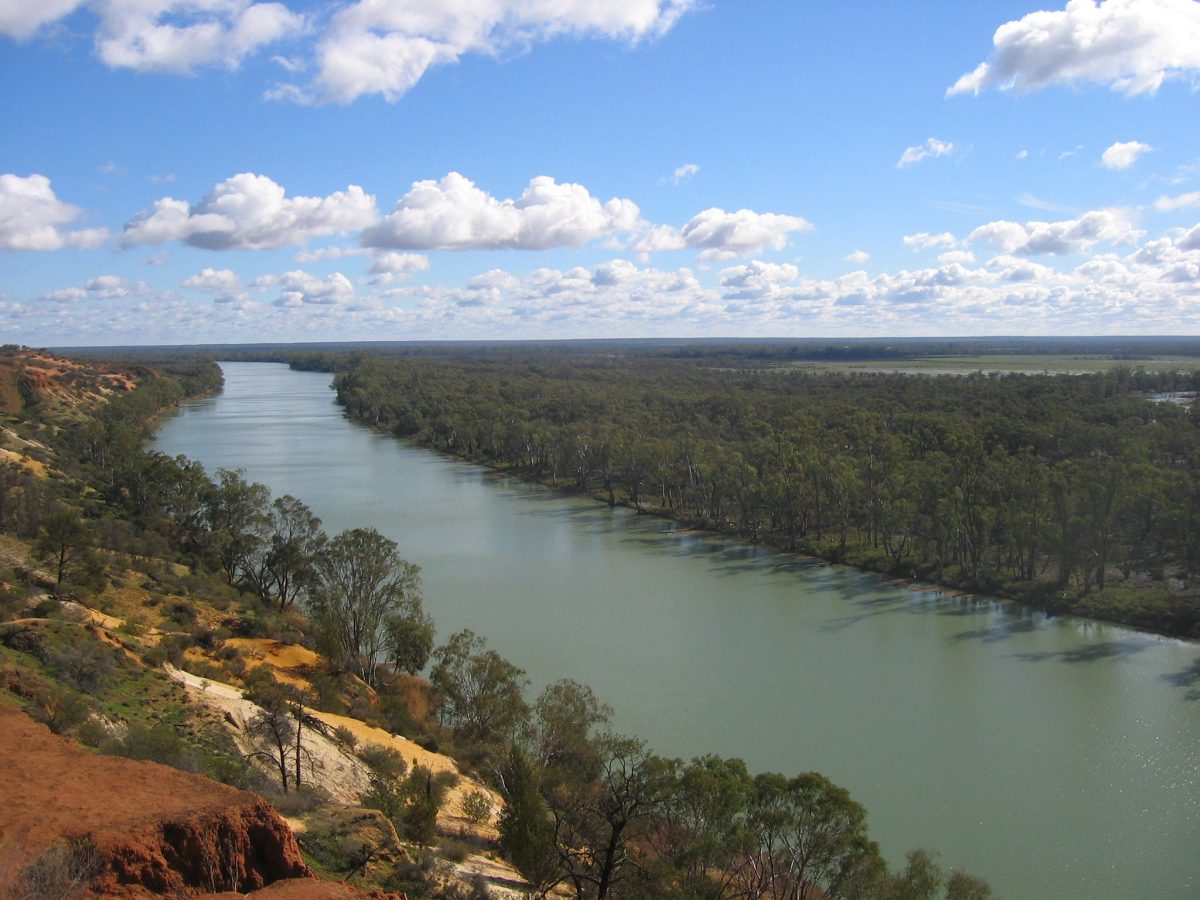
The detection of forever chemicals in the Murray River has raised the concerns of a prominent environmental group. Photo: Andrew Evans/Flickr.
Fears are growing over the safety of drinking water in southern Riverina communities after repeated detections of potentially harmful “forever chemicals” in the Murray River were uncovered through Freedom of Information requests, with NSW authorities unable to say whether contamination detected upstream is reaching local tap water supplies.
Friends of the Earth Australia obtained the information through FOI requests to Victorian authorities, revealing repeated PFAS detections in the Murray River and prompting concerns about what could be happening downstream in NSW.
PFAS – short for per- and polyfluoroalkyl substances – is a large group of manufactured chemicals previously used for decades in products including non-stick cookware, food packaging, cosmetics, waterproof clothing and firefighting foams. They are known as “forever chemicals” because many PFAS break down extremely slowly and can persist in water, soil and living organisms. Some PFAS can build up in the body and have been associated with health effects including impacts on the immune system, liver and cholesterol levels.
More than 250 km of the Murray River between Koondrook and Mildura could be affected by PFOS (perfluorooctane sulfonic acid, a type of PFAS) at levels above ecological guideline thresholds, according to Friends of the Earth.
The group has also pointed to PFAS detections recorded during the 2024 NSW Health PFAS Screening Program involving councils responsible for drinking water along the Murray, including Balranald Shire Council.
Region asked WaterNSW – the government authority responsible for capturing, storing, and delivering the state’s bulk water supply – whether it monitors PFAS in Murray River water used for drinking supplies, whether it had detected PFAS downstream of Lake Mulwala and whether contamination could travel downstream.
A spokesperson said this was not a matter for WaterNSW and suggested we direct our enquiries to the NSW Environment Protection Authority (EPA).
The EPA said it had not specifically tested the Murray River at Lake Mulwala and had not seen or analysed the results obtained by Friends of the Earth, which meant it was unable to comment further.
Region also contacted NSW Health, which oversees drinking water safety in NSW and works with local water utilities to ensure supplies comply with the Australian Drinking Water Guidelines.
We asked this department whether raw Murray River water was being tested for PFAS, what the test results showed and whether PFAS contamination could travel downstream into NSW drinking water supplies, and if it could rule out any risk to those supplies.
It did not answer our questions but provided the following comment.
“Local water utilities are responsible for assessing and managing risks to drinking water quality, undertaking tests of their drinking water supplies and reporting on the results,” a spokesperson said.
“NSW Health offered funding to all local water utilities for PFAS sampling of treated water supplies in 2024, and for sampling of their treated water supplies and raw water sources in 2025.
“Balranald Shire Council and Federation Council accepted the offer of treated water sampling in both 2024 and 2025. Federation Council also accepted the offer of sampling raw water sources in 2025.”
The Victorian information obtained through FOI includes a significant PFOS detection at Lake Mulwala, which borders NSW, on 13 July, 2023.
Nine PFAS chemicals were detected on that occasion, with PFOS recorded at 0.29 micrograms per litre – 36 times the current PFOS drinking water guideline, according to Friends of the Earth.
The group says the cause of the contamination was never investigated.
North East Water detected PFAS in the Murray River 19 times between August 2017 and November 2024, including nine detections at Lake Mulwala on 13 July, 2023.
Lower Murray Water detected PFAS 26 times at eight locations between December 2024 and February 2026.
Friends of the Earth says 60 per cent of those detections exceeded the ANZECC PFOS Biota Screening Threshold, raising concerns about potential impacts on aquatic wildlife and the possibility of contamination extending downstream.
The ecological threshold is different from the health guideline for treated drinking water, meaning the detections do not necessarily establish that Riverina tap water is unsafe.
The NSW EPA stressed that PFAS was widespread and that its presence did not necessarily mean there was a risk to human health.
“PFAS is ubiquitous in our environment as a result of its historical use. The presence of PFAS does not necessarily mean that there is a potential risk to human health; many people are exposed to small amounts of PFAS in everyday life through its use in products like non-stick cookware, clothing, fast food packaging, make-up and personal care products,” a spokesperson said.
The Riverina has already seen the devastating consequences PFAS contamination can have, with Wagga aquaculture operator Greg Semple claiming contamination linked to RAAF Base Wagga destroyed his fish-breeding business. Mr Semple is pursuing compensation from the Commonwealth, accusing the government of denying responsibility for the losses he says PFAS contamination caused.