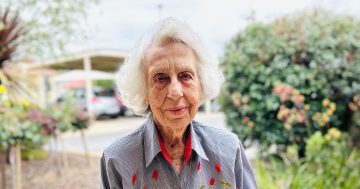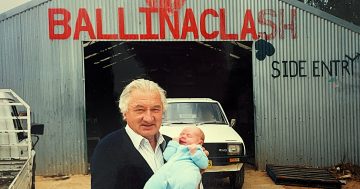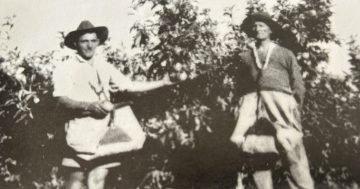

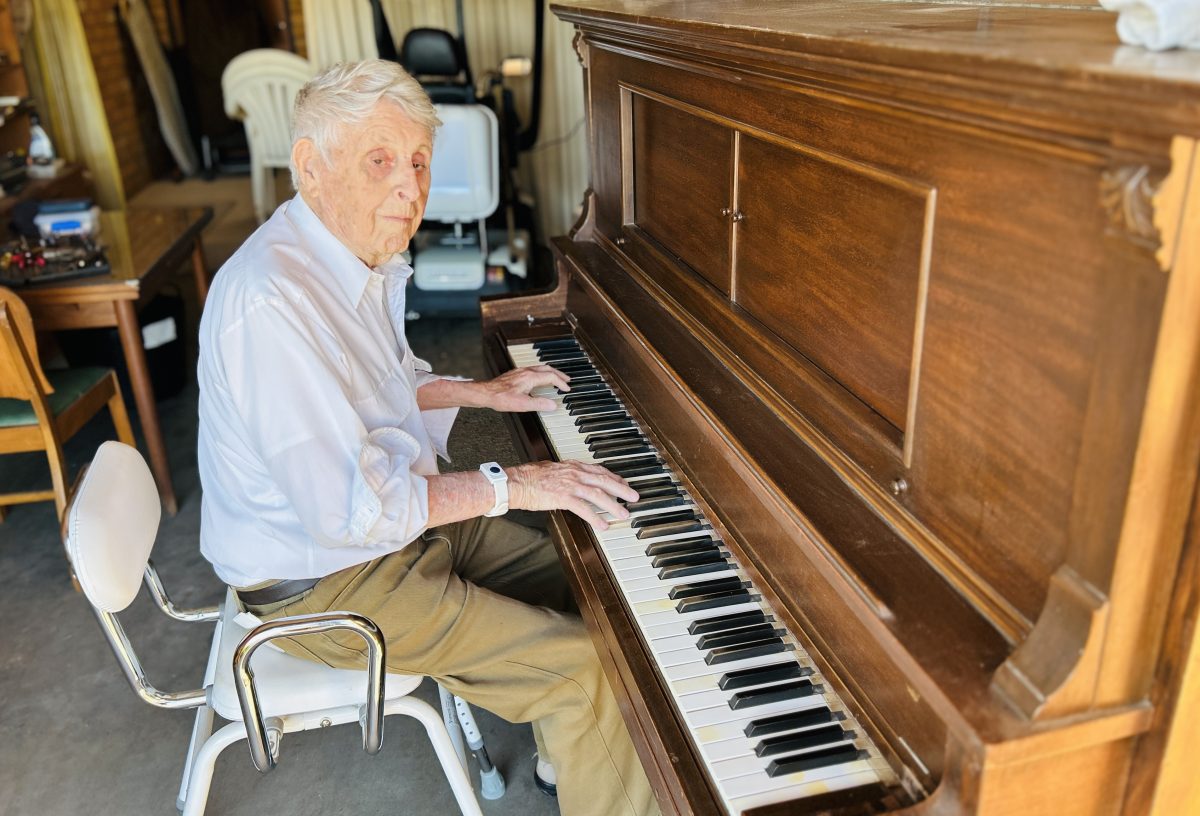
Peter Marcus taught himself to play piano and livens up his street. Photo: Oliver Jacques.
At 93, Peter Marcus remains one of Griffith’s most recognisable characters — often spotted hooning around town on his mobility scooter or filling his quiet street with the sound of beautiful, self-taught piano music.
Born in 1932 at Woodlands Private Hospital on Binya Street, Peter is the son of war veteran Samuel Thomas Archie, who died of pneumonia when Peter was a child.
A lifelong bachelor, Peter grew up with six siblings on a farm at Myall Park before moving to Griffith, where he later forged a successful career in agricultural machinery sales.
Over a beer, I asked Mr Marcus to reflect on his life — and what people today might learn from it — as part of our Life Lessons series.
What’s the secret to living a long life?
Drinking lots of plonk.
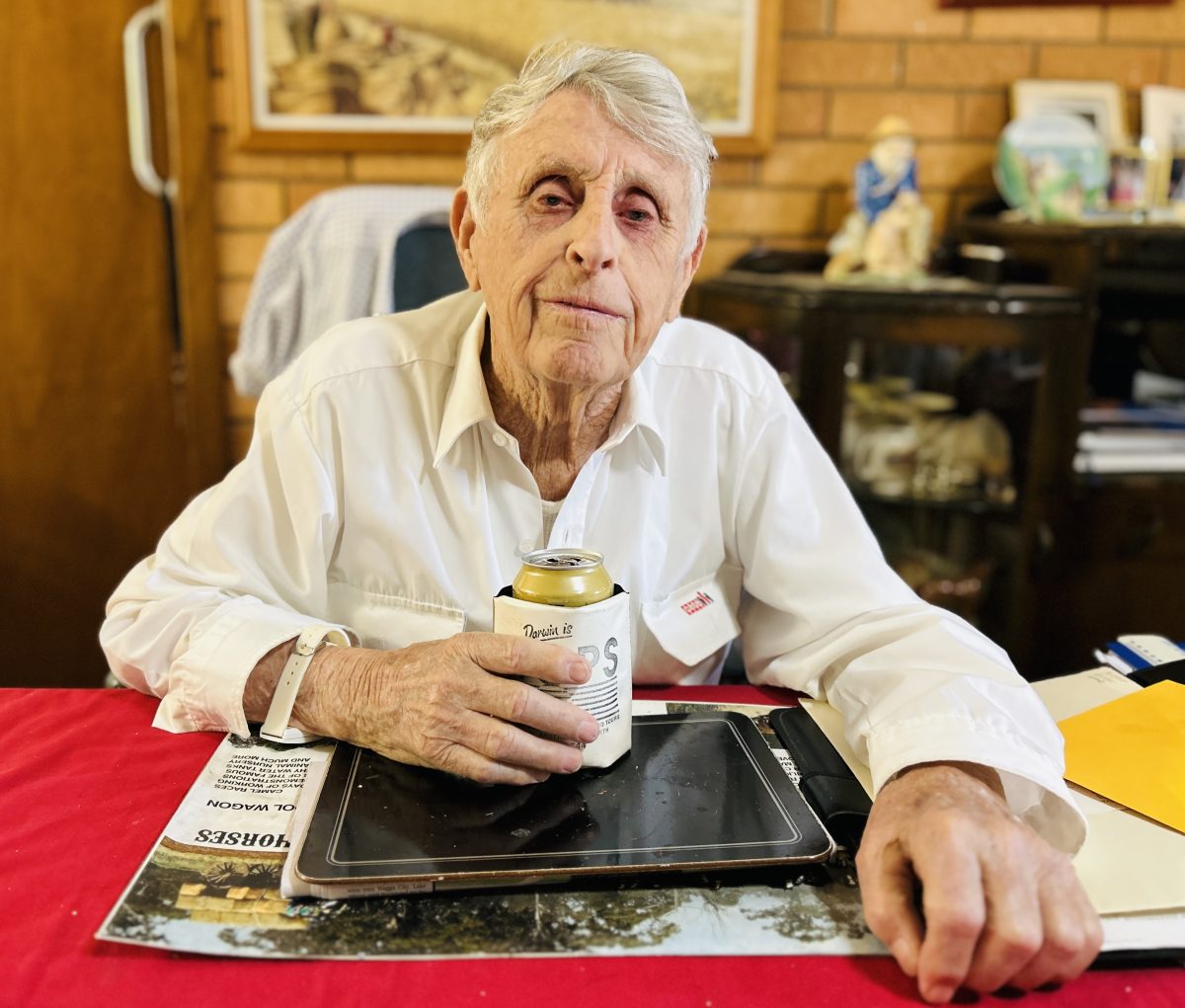
Peter still enjoys a beer. Photo: Oliver Jacques.
What’s different about life today?
People don’t dance anymore and I don’t know why. They’re really missing out.
We had dances and balls all the time, every Friday night, in places like Rankins Springs, Goolgowi and Hanwood.
Why did you never get married?
I had two or three girlfriends, but I had to look after my mum. I didn’t make much money in farming until I was 40, and by then it was too late to have kids.
What do you think about marrying later in life?
People are getting married late these days and I think it’s a miserable failure.
How did you learn to play the piano?
I taught myself. It’s all by ear. I’ve never had a lesson in my life.
What’s your view of the Albanese Government?
I don’t think they’re very smart. They’re going to have a royal commission — what for? It’s not going to change anything. They’ll just be paying barristers $10,000 a day.
Where was your favourite place to eat in Griffith?
The Mona Cafe.
But we didn’t go out much. We had sausages and gravy at home.
I think we should get rid of all the crap people are eating and go back to straight, simple meals.
What was your early life like?
My family had farms at Myall Park where we grew wheat, rice, sheep and cattle. We had no water on the farm. We had to take the horse down to the channel, fill up, and cart it back.
We later moved into Griffith and bought a house on Bringagee Street for $700. We started farming on Gribble Road. We share-farmed together with my siblings and their families, and we all got on famously.
Where did you go to school?
I went to Climsland Public School at Myall Park, which doesn’t exist anymore. It was named after a British family because they couldn’t call it Myall Park — that name was already taken.
I wasn’t very good at school. I preferred being outside.
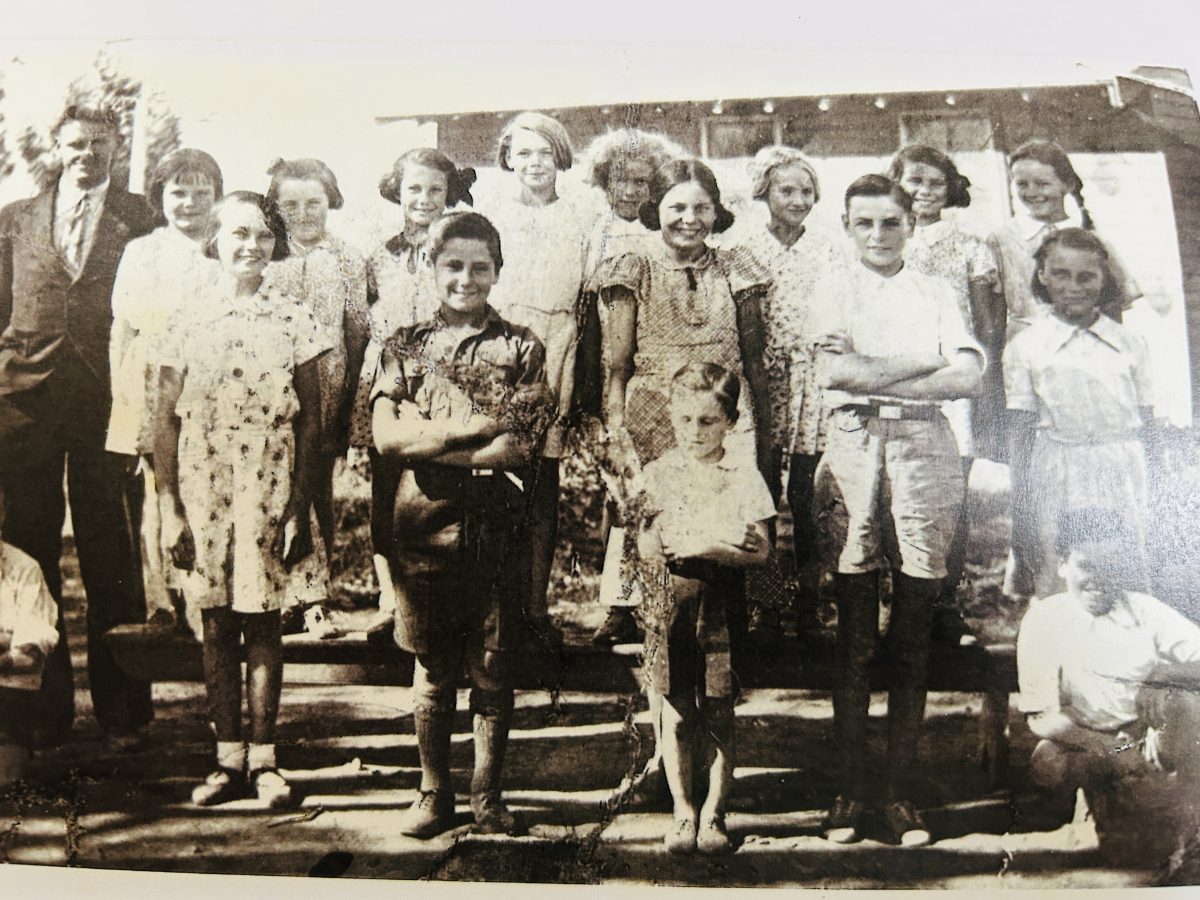
Climsland School in 1938, with Peter (white shirt) in the front row. Photo: Supplied.
Why did you leave farming?
In the late 1960s we had a terrible mouse plague. There were millions of them and they ate 200 tonnes of rice. That was the last straw for me. I was getting towards 40 and not making money.
In 1972 I took a job with Murdoch & Gaffey, selling agricultural machinery and spare parts. At one stage I had the best sales in Australia.
How did you feel about appearing in the famous book The Griffith Wars?
I didn’t like it. What they wrote about me wasn’t true.
How do you reflect on your life?
I’ve had some fun times, and that continues.
If you know an elderly Riverina resident whose wisdom could teach us a thing or two, call Oliver on 0498 843 181 or email: [email protected].