UC vice-chancellor Bill Shorten delivering the 2026 Aitken Lecture. Photo: Davey Barber Five Foot Photography.
University of Canberra vice-chancellor Bill Shorten has proposed a new education levy on business in a reformed funding model for Australia’s higher education sector.
In the 2026 UC Aitkin Lecture at the National Press Club, Mr Shorten said proceeds from the one per cent levy on profits would go towards a Sovereign Wealth Education Fund.
Mr Shorten said this could raise $5.2 billion a year and should be administered jointly by government, industry and universities for agreed national priorities in a non-partisan way.
“The money would come from those who benefit most from a highly skilled, well-educated population – businesses and corporations,” he said.
Mr Shorten said the current funding model was obsolete and government contributions had been scaled back over the last four decades, forcing universities to increasingly rely on international student fees and behave like private businesses.
“Incentives for universities to act as individual profit-making businesses should be discouraged so they stop competing as if they are multinationals,” he said.
“The incentive is to deliver low-cost, high-profit, high-volume courses, regardless of national priorities, regardless of what an institution’s local region needs.”
The cost of university education had been individualised to students who were increasingly burdened by HECS debt, compounded by cost-of-living pressures and distortions in the housing and tax system that had created intergenerational inequity.
“Why do we presume that the only Australians who benefit from the education system are those who progress through it?” Mr Shorten said.
He said Australia needed to take the long-term, 20 to 30-year view, like Norway did in establishing its Sovereign Wealth Fund.
In return, the higher education sector needed to accept reforms to how it operated, including becoming more efficient and flexible.
Mr Shorten said universities needed to recognise prior learning and experience and teach the gaps.
“One of the biggest inefficiencies in education is the assumption that the student knows nothing when they start a uni degree,” he said.
“We often educate people in skills they already possess … expending unnecessary time and resources on students as if they are a blank page.”
Mr Shorten said universities should move to a hub and spoke model, in which universities aren’t expected to provide every course but where students can draw on other campuses to build a degree without having to move.
“If you live in Rockhampton, for example, you should be able to take Italian semiotics from another university for your Rockhampton degree and have it funded strategically and sustainably,” he said.
Mr Shorten urged more specialisation with the support of the Sovereign Wealth Education Fund and the goal of delivering a better student experience and to stop treating education as a commodity.
He said there should be more focus on quality teaching and rigour, especially in the context of AI and a switch to “authentic” assessment – “real-world tasks with the emphasis moving from knowledge recall to better judgement synthesis, and ethical reasoning”.
Without change, Mr Shorten warned, Australia put at risk its national sovereignty.
“I don’t just mean as it relates to national security and defence, but the social and economic well-being of Australia,” he said.
“Education is a pillar of national sovereignty as important as defence.
“Our national sovereignty depends upon economic resilience, the complexity of our economy, productivity, the drivers of which are a higher education system that offers high-quality, up-to-date, industry-relevant education.”
Mr Shorten said a Sovereign Wealth Education Fund was about a country investing in some of its citizens so that all of its citizens benefited from their skills and knowledge in a febrile, unpredictable world.
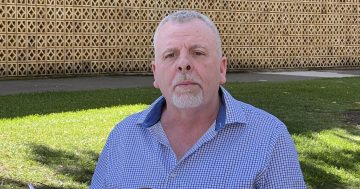
National Tertiary Education Union ACT Division Secretary Dr Lachlan Clohesy welcomed Mr Shorten’s proposal, saying corporate Australia was the beneficiary, so it was fair that it contributed.
“This is a policy for parents,” he said. “Even those that have not been to university themselves often want their kids to have that opportunity one day.
“For that, we need universities that can support students, without parents worrying that their kids will rack up a lifetime of debt.”
Original Article published by Ian Bushnell on Region Canberra.