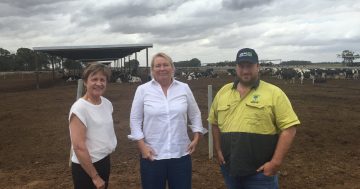
Southern Riverina Irrigators CEO Sophie Baldwin was supported by Helen Dalton MP and farmers during the class action. Photo: Helen Dalton MP.
Southern Riverina farmers have lost a $1.5 billion legal battle against the Murray-Darling Basin Authority (MDBA) over decisions to send water overbank into the Barmah-Millewa Forest, with irrigator leader Sophie Baldwin describing the judgment as “yet another kick in the guts” for farmers.
“But if we don’t keep fighting, nothing will change,” she said.
Ms Baldwin, CEO of Southern Riverina Irrigators, represented the interests of farmers from the region who were among about 28,000 irrigators involved in the class action against the MDBA, the government authority responsible for managing the Murray River system.
It centred on MDBA decisions to send large volumes of water overbank into the Barmah-Millewa Forest during the 2017-18 and 2018-19 water years.
Farmers argued the water sent overbank that flooded the forest was effectively lost to downstream irrigators and could instead have been used to supply farmers below the Barmah Choke, some of whom were left with no water allocation and unable to grow their crops.
The claim initially sought $750 million in compensation and was later described as being worth up to $1.5 billion, including damages, costs and interest.
But NSW Supreme Court Justice Tim Faulkner dismissed the case in a judgment handed down this week, finding the MDBA did not owe individual water entitlement holders a duty of care in relation to economic loss. He found the MDBA’s role was to manage the wider Murray-Darling system and balance competing interests, rather than owe a legal duty to protect individual irrigators from financial loss.
Ms Baldwin said the case had nevertheless exposed serious problems with the way the authority managed the river.
“It’s a really sad reflection of where our country is going when you can’t be held accountable for a mistake that had severe impacts on farming communities – a decision that left irrigators with zero allocation,” she said.
She said the case showed the MDBA did not follow its own best-practice procedures when making decisions to send water overbank.
“One of the most critical things to come out of the class action was the admission by the MDBA that when they go overbank they waste between 36-41 per cent of the water volume,” she said.
Ms Baldwin said the admission was particularly concerning given continued proposals to relax river constraints and allow more water to be sent across private and public land.
“While this determination is extremely disappointing, the class action has not been a loss,” Ms Baldwin said.
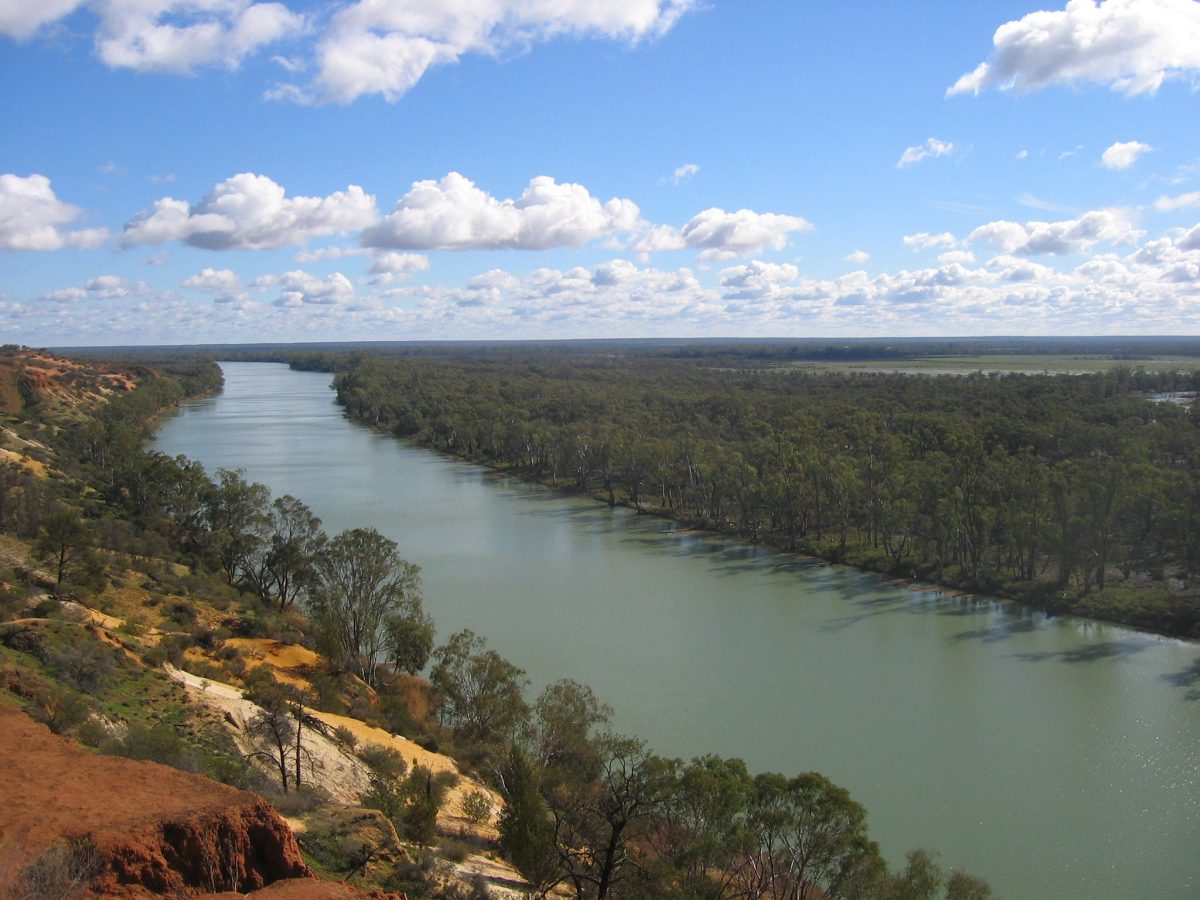
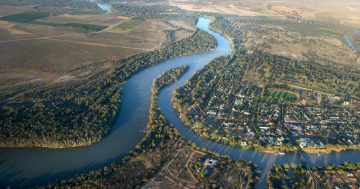
Ms Baldwin said the judgement was critical of how the Murray River was managed. Photo: Andrew Evans/Flickr.
She said the number of farmers who joined the action showed the strength of feeling across the irrigation industry.
Ms Baldwin warned the consequences of reduced agricultural production would eventually be felt by the wider community.
“We need the community to get behind us. They’re going to feel it in the supermarkets with higher prices,” she said.
“Farmers in the Southern Basin are responsible for staple food production; that’s being wiped out.”
“It’s not just about water – it creates immense stress in rural communities, leading to small towns losing population,” she said.
It is not yet clear whether the plaintiffs will appeal the decision.
The MDBA has declined to comment further while the matter remains subject to appeal rights, saying it needs time to consider the judgment.
Ms Baldwin said the case came at a critical time, with reviews of the Basin Plan and Water Act underway and NSW and Victorian elections approaching.
She called on political leaders to say whether they would hold the MDBA to account.
“We would like to hear from our state leaders about whether or not they are going to accept primary producers being sold down the river and if they intend to hold the MDBA to account,” she said.