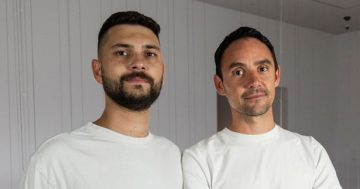

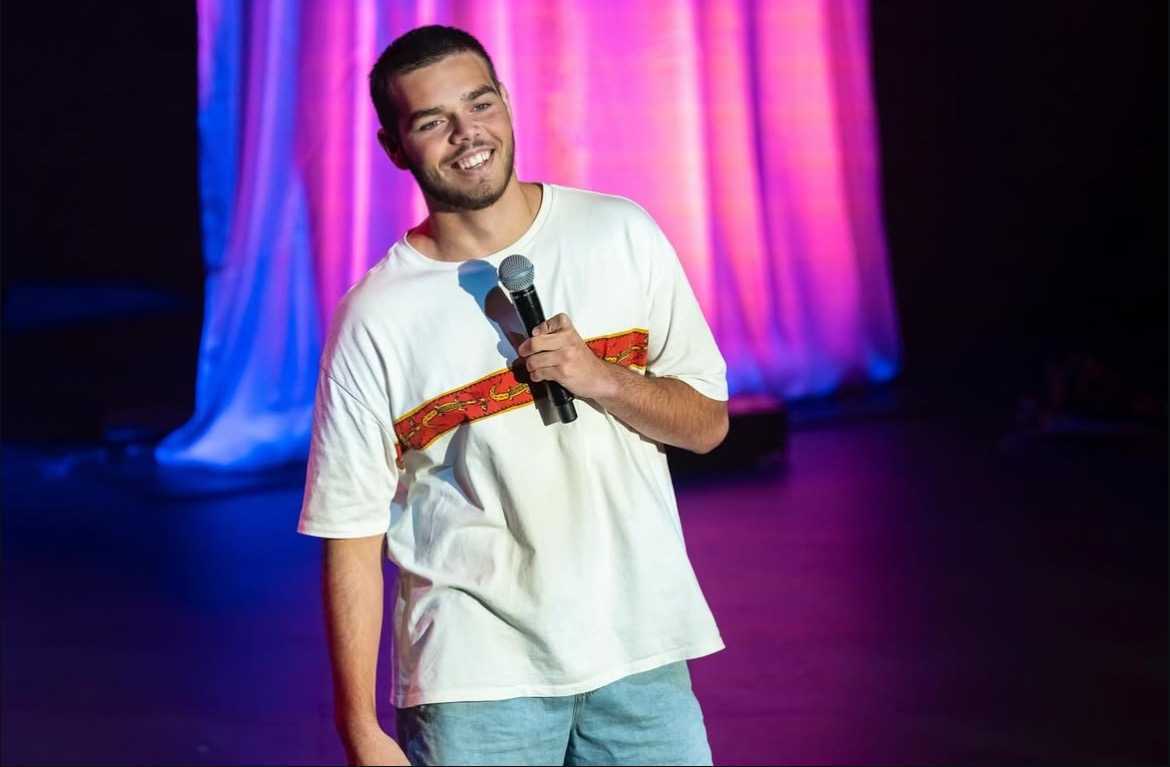
Yindyamarra Johnson has received a rare honour after being accepted into the National Institute of Dramatic Arts straight out of high school. Photo: Supplied.
The National Institute of Dramatic Arts (NIDA) is one of the most difficult institutions in the country to get into.
It is even more difficult coming straight out of high school. Despite the challenge, young First Nations student Yindyamarra ‘Yindy’ Johnson took the punt and is one step closer to accomplishing his dreams of becoming a professional actor.
He was told not to get his hopes up and that a prestigious institution such as NIDA rarely let students as young as him in. Clearly, Yindy had little to worry about as the acting prodigy defied the odds and booked his spot in the best dramatic arts school in the country.
“I was told I got in just a couple of weeks ago. The entire time I was applying, people were saying don’t be heartbroken when I don’t make it in because they don’t accept people straight out of high school, and I should set my expectations quite low,” he said.
“I got the phone call saying I was in, and I literally was speechless for the next three hours, and I was just running around my house in excitement.
“I’ll move to Sydney in a couple of weeks and start shortly after. I do like Sydney, and I will miss Wagga, but I’m so excited to take this opportunity.”
Yindy wasn’t always an actor; in fact prior to his first ever role in a play that his mother and uncle wrote and directed, he was actually quite embarrassed.
“My mum wrote a play with my uncle Dom, like years ago, I would have been maybe 14, and I didn’t really want to be in it,” he said.
“Mum took ages convincing me to do it. I remember eventually getting up to do it, and I instantly fell in love with acting and performing.
“I’ve always been a character and tried to be silly or make people laugh, and then doing this, doing that on stage, just made all of that come together.
“It’s strange because I’m just acting and being a different person, but I’m also being myself.
“I had that realisation of, oh my gosh, I already do this on the day-to-day. I’d love to do this for the rest of my life.”
Yindy soon enrolled in drama classes at Wagga Wagga High School, where his teacher, Melissa Brown, encouraged him to audition for a local production of Priscilla, Queen of the Desert.
“Priscilla was great because I was only 17, and there were a lot of older people to help me that have been doing it nearly their whole lives.
“They helped me get through the nerves, and they gave me tips to memorise lines and really like push into the character I’m portraying.
“My teacher, Melissa Brown, helped me find my confidence in acting and dance.
“Besides my mum and a lot of my family, mainly my mum, but yeah, Melissa Brown was one of the only people outside of my family that was like, pushed me to the limit, and did a lot of things for me, and I’ve got her to thank for me being here.”
Following Priscilla, Yindy joined a handful of other classmates in completing drama as one of his HSC subjects.
For his final marks, he was required to perform an individual monologue as well as a group performance with his classmates.
“The monologue was something that I wrote completely by myself, and added some movement in there, because I do love dancing. Clearly, the judges loved it too,” he said, laughing.
“For our group performance, we wrote a comedy bit as a group. We had a lot of fun writing and performing that.”
On top of his HSC, Yindy was also named a finalist in the Melbourne Comedy Festival’s Deadly Funny competition.
“That was such a fun experience,” he said.
“Getting to travel to Melbourne and learn from so many other comedians, it really made me feel like I was making the right decision to pursue performing.”
As a young First Nations man, Yindy said performance and acting were key ways of sharing stories about his culture and something he was excited to explore at NIDA.
“Performing is everything in my culture,” he said.
“You see all the Aboriginal dance and song that are performed all over Australia, and you see that they’re all just ways to tell stories from the past, ancient stories and even stories from today.
“Aboriginal people are still adapting their dances and songs into modern stories, and it’s just been part of Aboriginal culture forever, and it’s because it’s the way to tell someone a story to make them feel something.”
Yindy will begin his classes at NIDA on 2 February.