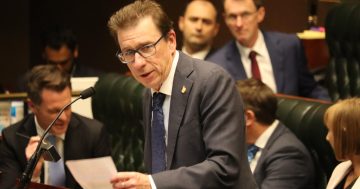
Dr Amanda Cohn was joined by Wagga volunteers and Greens supporters at Wagga Beach to test the sand last weekend. Photos: Dr Amanda Cohn.
Tiny pieces of plastic found at Wagga Beach have sparked calls for action, with Albury-based Greens MP Dr Amanda Cohn warning the particles could be getting into people’s bodies and harming their health.
Dr Cohn joined local volunteers at Wagga Beach last weekend to collect samples for testing, with the group finding hard plastic fragments, polystyrene foam and synthetic fibres.
The same citizen-science exercise was carried out at Albury, with samples from Wagga and other sites to be sent away for verification.
“The samples we collected will be sent to the Australian Microplastics Assessment Project for verification and collation with the results of similar events around the country,” Dr Cohn said.
“Microplastics are being found in waterways across NSW. A report by the EPA this year detected microplastics in all 120 of the coastal waterways that it tested.
“This is concerning because there is more and more evidence that these tiny plastic particles are accumulating in our bodies and harming our health. Plastic has been found in human blood, placenta and foetuses and even in sperm, and this has been linked to a range of health problems including hormonal disruption, reproductive impacts, and dementia.”
The Wagga science exercise has not established that people using the Murrumbidgee River are being harmed by microplastics. But Dr Cohn said the potential for harm was present.
“Plastic never breaks down fully. Once it’s in the environment it just breaks down into smaller and smaller pieces that animals and humans can ingest or inhale,” Dr Cohn said.

Dr Cohn (in white) with volunteers collecting samples.
She wants to see policy change to reduce the amount of new plastic being produced.
“The best solution is government intervention to reduce the production of new plastic, for example restricting the use of plastic packaging, or requiring new plastic products have a minimum recycled plastic content. The companies that profit from plastic production should bear the cost of cleaning up this mess. The work shouldn’t be up to individuals or local councils,” she said.
Wagga-based Greens volunteer Sam Ryot took part in the exercise.
“It was an interesting process to analyse the sand on the beach and to learn how the microplastic testing is done,” he said.
“It’s disturbing to see how much plastic is in the waterways and we don’t yet know what sort of health problems this could cause.”
Mr Ryot said making plastic less attractive economically could be part of the answer.
“The biggest thing we need to do is to address the fact that plastic packaging is so cheap – other packaging solutions are not going to be viable while this is the case. So taxes or levies could be considered on production of virgin plastics, or we could have subsidies for companies who produce non-plastic packaging. This will help reduce the amount of plastic in our ecosystem,” he said.
“This all has to be done by government but it’s not going to happen unless the people demand it.”