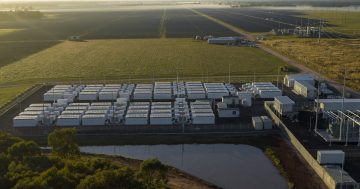
A consultant attached a photo of a similar sized project in Echuca in a report to show it wouldn’t have a major physical footprint. Photo: Chris Smith and Associates.
A proposed battery storage facility near Hanwood has sparked concerns about water contamination, fire hazards and electrical safety, with a nearby farmer warning the project could put his crops, livestock and land at risk.
Griffith Council will vote on whether to approve the facility at its meeting on Tuesday (28 July).
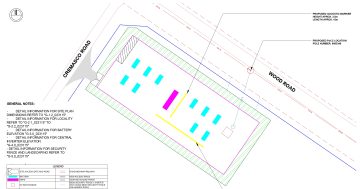
Renewable energy company Servo Energy Pty Ltd has proposed building a fenced battery facility containing four large battery containers on a vineyard property at 37 Hanwood Avenue, about 4 km south-east of the village centre.
The 5 MW battery system would connect to the existing electricity network, charging when electricity is available and supplying power back into the grid when needed.
The battery compound would occupy about 0.39 hectares of the 30-hectare property, with the four battery containers each measuring about 6.1 m long, 2.5 m wide and 2.9 m high.
The proposal comes amid growing concern across the Riverina about renewable energy developments and the level of consultation with nearby landowners.
Solar and battery projects have recently been approved by the State Government in south Griffith and Bilbul, despite opposition from residents.
Hanwood farmer Frank Calabria has formally objected to the battery project, raising concerns about the potential impact on water flowing through his property.
“The water drainage system from 37 Hanwood Avenue runs directly through our property,” he wrote.
“I am deeply concerned that runoff or contamination from the proposed battery storage system could introduce harmful toxins into the water supply. Any contamination would have serious impact on my crops, land, livestock and the surrounding environment.”

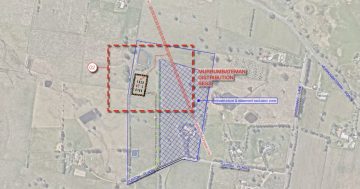
A map showing the proposed location. Photo: Griffith City Council.
A consultant acting for Servo Energy rejected the suggestion that the facility would routinely discharge harmful substances.
“As all coolants are internally contained and recirculated, we submit that the system does not generate any regular discharges/transfers containing ‘harmful toxins’ or pose significant risk to surface water, groundwater, or the surrounding environment,” the response stated.
The developer said the batteries used a closed-loop cooling system, meaning coolant was circulated internally rather than routinely discharged.
Mr Calabria also raised concerns about potential fire hazards, electrical shock and noise from the facility.
The developer’s response and council’s assessment addressed those concerns, with the planning report noting the proposed batteries use lithium iron phosphate (LFP) technology, which it describes as “one of the safest battery chemistries in the industry”.
The facility would also have battery monitoring and fire alarm systems, while council’s recommended conditions include measures to manage potential leaks, spills and emergencies.
The proposal has drawn comparisons with other renewable energy developments in the region, including the controversial solar project opposed by Griffith citrus farmer Frank Battistel.
Mr Calabria said he was concerned residents did not have enough information about what was being proposed.
“We just don’t know much about this project – we need someone to explain exactly what they are doing and what the long-term impacts may be,” he told Region.
“We originally thought it was solar panels and then I found out it was a battery.”
Council planning staff have recommended the application be approved, finding the proposal permissible under NSW planning rules and that the developer has adequately addressed the issues raised in the objection.
The facility would be located in a rural area surrounded by farms and vineyards, with council noting there are no neighbouring dwellings within 1 km of the site.
Councillors will decide whether to approve the application on Tuesday.