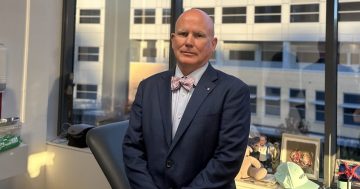
Professor Dominic Rowe, Helen Dalton MP and Health Minister Ryan Park celebrated the new MND register launch earlier this year. Photo: Supplied.
Forty cases of motor neurone disease have been reported across NSW since the deadly condition became notifiable, but the State Government will not say how many have been recorded in the Riverina, where rates have been estimated at seven times the national average.
The first figures, released this week, show 40 notifications had been received by NSW Health as of 27 October, including four historical cases.
But despite the Riverina being the focus of years of concern and calls for research, NSW Health has refused Region‘s request for a regional breakdown of the cases.
The new reporting system, which came into effect on 1 September, requires doctors to notify the state of MND diagnoses, giving researchers a clearer picture of where the disease is occurring and who is affected.
The register was established following a seven-year campaign by Griffith-based independent MP Helen Dalton, leading MND specialist Professor Dominic Rowe and local advocates including MND sufferer Tania Magoci.
A 2015 Macquarie University study indicated Wagga Wagga, Griffith and Leeton had MND rates around seven times higher than those in cities, but the reasons remain unknown.
What could be causing the high rates?
MND is a progressive neurological disease that damages the nerve cells controlling muscles, gradually robbing people of their ability to walk, talk, swallow and breathe. There is no cure.
About eight in every 100,000 Australians have the disease, with roughly 90 per cent of cases occurring without an apparent cause or family link.
In the Riverina, one theory researchers are investigating is whether prolonged exposure to blue-green algae in waterways could be a contributing factor.
Frequent algal blooms in Lake Wyangan near Griffith and Lake Albert in Wagga have prompted questions about whether exposure to toxins produced by cyanobacteria could play a role in the region’s unusually high rates.
Overseas research has explored possible links between blue-green algae and MND, but no causal link has been established.
Professor Rowe has also identified agricultural chemicals as a potential environmental factor worth investigating. One possibility is that agricultural runoff, including nitrogen, could contribute to algal blooms in waterways, although that does not establish a link between the chemicals, the algae and MND.
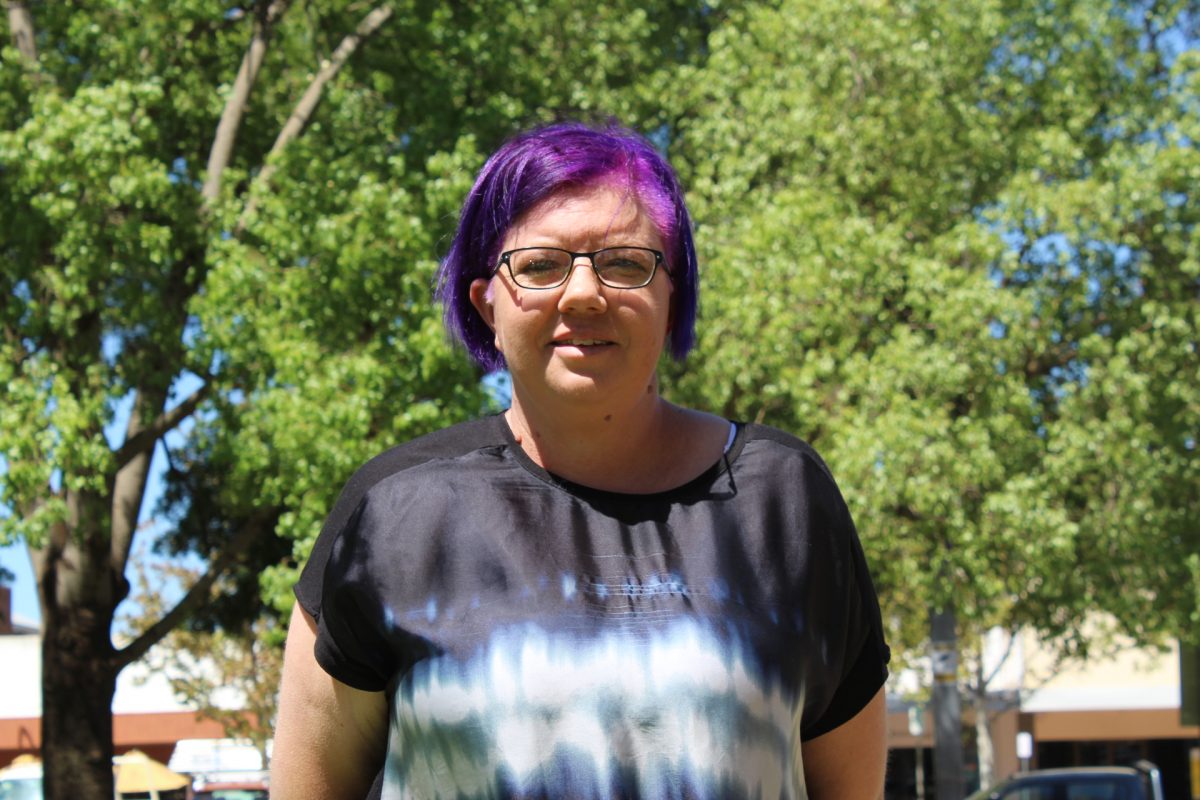
Tania Magoci has spent years lobbying for MND funding. Photo: Oliver Jacques.
Researchers have stressed the need for systematic data and further investigation before drawing conclusions about what is causing the apparent cluster.
The research effort has already suffered setbacks. A team led by French neuroscientist Professor Gilles Guillemin was investigating possible causes in the Riverina, including environmental exposures, but the project collapsed after funding dried up.
The NSW Government later committed $2 million to MND research, with grants supporting work to improve health outcomes and diagnostic tools. Those projects are funded until late 2027.
What happens next?
The new statewide register is intended to fill a crucial gap by consistently recording diagnoses and information such as patients’ age, address, occupation and the date their symptoms began. Researchers could then look for patterns involving particular locations or potential exposures, helping them investigate possible causes and inform the development of better treatments and, ultimately, a cure.
The register also allows doctors to notify historical cases, although this is voluntary. Patients and families whose loved ones were diagnosed before September can ask their treating clinician to submit a notification, with no restriction on how far back the diagnosis occurred.
NSW Health will collect information including a patient’s full name, address, date of birth, age, gender, Aboriginality, language spoken at home, country of birth, occupation, date of symptom onset and, where applicable, date of death. Details about the referring doctor will also be recorded, with the department saying the information will be kept confidential.
Health Minister Ryan Park said the figures represented people and families whose lives had been upended by the disease.
“Behind each one of these 40 cases is a person who has had their lives turned upside down by this beast of a disease. We owe it to them and their families to do what we can to help,” he said.
“When it comes to motor neurone disease, there is so much we don’t know. We hope that by collecting more data, we can begin to understand it better.”