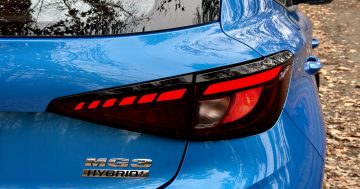
EV drivers will continue to receive a 25 per cent discount on FBT from April 2029. Photo: James Coleman.
A key tax break helping Australians buy electric vehicles will be wound back from next year as the Federal Government moves to claw back $1.7 billion over five years.
The upcoming budget will scale back the fringe benefits tax (FBT) exemption – known as the Electric Car Discount – for EVs under novated leases, starting in April 2027.
Under the changes, EVs priced above $75,000 will lose access to the exemption from that date. Cheaper models will also see support gradually reduced, before the scheme shifts to a flat 25 per cent FBT discount by April 2029 for vehicles below the luxury car tax threshold.
Treasurer Jim Chalmers and Energy Minister Chris Bowen said the changes reflected a maturing EV market.
“The current New Vehicle Efficiency Standards has seen a dramatic increase in the availability of affordable EV models, and now is the right time to focus the FBT exemption on these cars,” they said in a joint statement.
The transition will happen in three phases. The current full exemption remains until March 2027. From April 2027 to April 2029, only EVs priced at $75,000 or less will qualify for the full benefit. After that, a reduced 25 per cent discount will apply to eligible vehicles.
Existing leases will not be affected, and EVs will remain exempt from import tariffs.
The government says the scheme has successfully boosted uptake, cut emissions and helped shield drivers from global fuel price shocks – but argues it now needs to be better targeted.
“This is all part of our government’s plan to address the immediate pressures our country is facing at the same time as we deliver support for Australian families and address our intergenerational responsibilities,” the ministers said in a joint statement.
When Anthony Albanese took office in 2022, only two EVs were available under $40,000. Today, there are about 10, including one priced below $30,000.
EVs now account for 16.4 per cent of new car sales – roughly one in six vehicles sold.

BYD was the second-best-selling car brand in Australia in April after Toyota. Photo: James Coleman.
Industry groups have cautiously welcomed the changes. The Australian Automotive Dealer Association said the reforms were “pragmatic”, as long as incentives remain accessible.
CEO James Voortman said the government must now focus on the broader impacts of the transition, including charging infrastructure and support for small businesses.
“This includes greater investment in the electricity grid for installation of charging infrastructure, legislating franchising protections and protecting small businesses who need light commercial vehicles,” he said.
He also warned dealers could face pressure as emissions standards tighten under the New Vehicle Efficiency Standard.
“Electric vehicles have not been, and are not, the top-selling vehicles. When the NVES policy settings are tightened, Australian new car dealers will need to be shielded to protect the more than 64,000 Australians they employ,” Mr Voortman said.
EV momentum does continue to build. Data from the Federal Chamber of Automotive Industries shows April 2026 was a record month for sales, with 92,591 vehicles sold overall – up 2.2 per cent year-on-year.
FCAI chief executive Tony Weber said the continuation of incentives, even in reduced form, would support further growth.
“There are around 110 EV models available to Australians, and the supply of EVs continues to increase,” he said.
But he also warned that infrastructure must keep up with demand.
“Stronger EV uptake is driving increased demand for public charging, and that demand must be matched by a step change in both public and private investment.”
Full details of the changes will be confirmed when the federal budget is handed down on 12 May.
Original Article published by James Coleman on Region Canberra.