

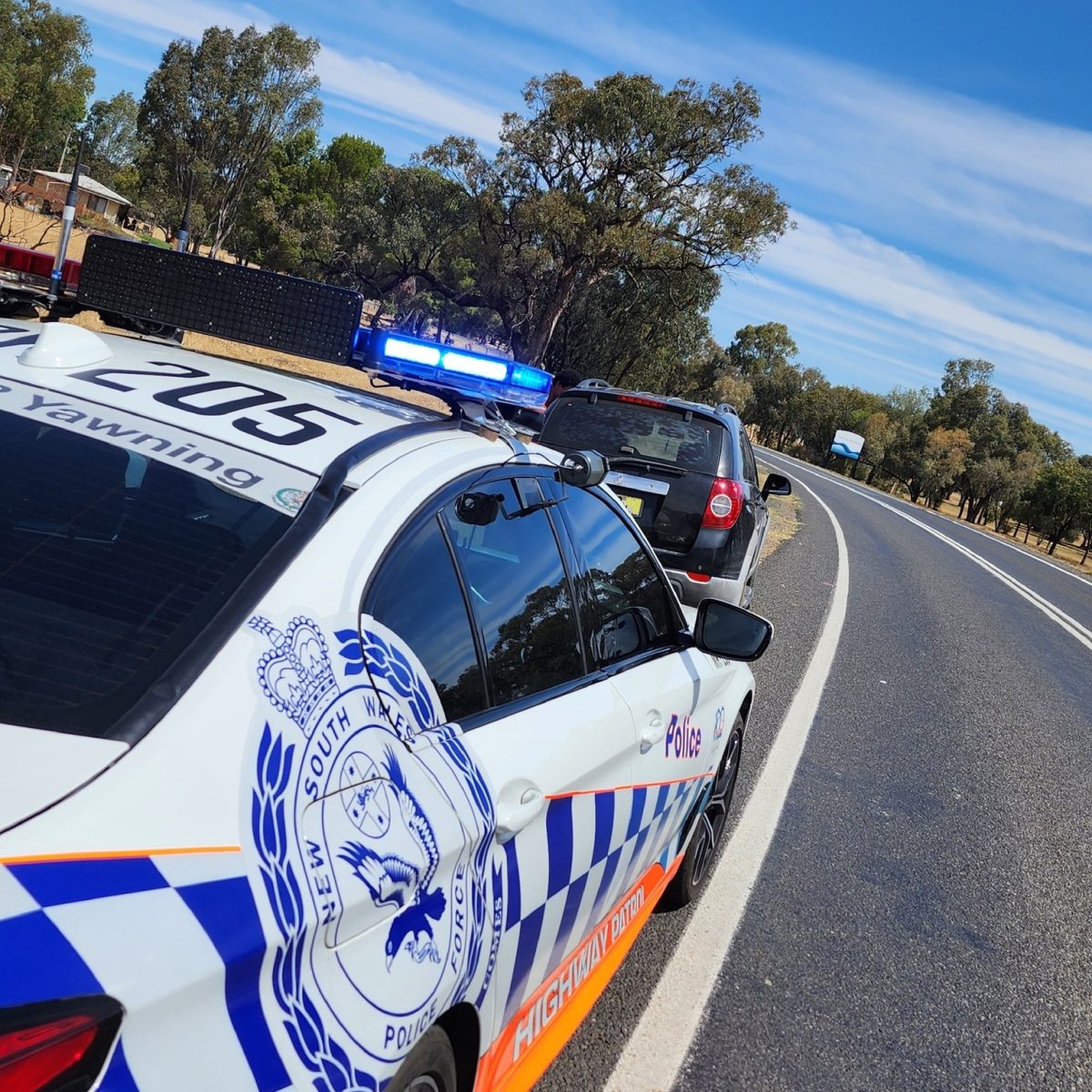
Peter Davis has called for stronger sentencing for adults repeatedly flouting the law. Photo: NSW Police.
For Riverina motorists, dangerous driving is more than a road safety issue. It is a question of whether the law can protect ordinary people from drivers who repeatedly put lives at risk – and whether those who deliberately flout the rules face consequences that mean something.
As a former police officer, I believe the Minns Labor Government’s proposed changes to dangerous driving laws must deliver more than headlines. Repeat offenders who ignore licence disqualifications or drive impaired by drugs deserve particular scrutiny. The real test of these reforms is whether they prevent crashes, strengthen enforcement and hold dangerous drivers accountable.
Driving is a privilege, not a right. Obtaining a licence means accepting the responsibility to operate a vehicle safely and lawfully. When someone repeatedly disregards that responsibility, the system must respond in a way that discourages further offending and protects the public.
The Minns Government announced proposed reforms earlier this month targeting dangerous driving causing actual bodily harm, failing to stop and assist after a crash causing actual bodily harm, and the unauthorised recording and sharing of images of seriously injured or deceased crash victims. Unlawful street racing would also become an aggravating factor in dangerous driving offences.
These proposals recognise an important principle. The law must distinguish between an ordinary driving mistake and conduct that demonstrates a serious disregard for human life. Deliberate dangerous driving deserves a response that reflects the risk and harm involved.
The statistics are confronting. In 2025, 355 people died on NSW roads, including 241 on rural and regional roads. More than two-thirds of the state’s road deaths occurred outside metropolitan areas. Behind every statistic is a person, a family and a community left to deal with the consequences.
Across the Riverina, we depend on roads such as the Sturt Highway and Olympic Highway to get to work, attend medical appointments and maintain connections between our towns. We cannot eliminate every risk associated with driving, but we should never accept reckless behaviour as an inevitable part of regional life.
I believe there needs to be a stronger sentencing response for adults who deliberately drive while disqualified, and for those who drive while impaired by prohibited drugs. These behaviours can place innocent motorists, passengers, pedestrians and police officers at serious risk.
Police officers routinely put themselves in harm’s way responding to crashes and intercepting dangerous drivers. When someone knowingly ignores a driving prohibition or gets behind the wheel impaired by drugs, they are not just breaking a rule. They are making a decision that can endanger other people’s lives.
A licence suspension or disqualification must mean something. If a person continues to drive despite being legally prohibited from doing so, the system must respond in a way that discourages further offending. Repeat offenders who demonstrate a persistent disregard for road safety should face consequences that reflect their pattern of behaviour, not just their latest incident. Penalties must remain proportionate and account for the circumstances, but deliberate and repeated offending cannot be treated as a trivial matter.
The government’s proposed reforms are a step towards stronger accountability, but legislation alone will not make our roads safer. Police need practical laws, sufficient resources and the ability to gather evidence. Prosecutors must be able to prove offences in court, and sentencing must reflect the seriousness of proven offending.
Maximum penalties are not automatic sentences. We must look beyond the announcement and examine what happens when these laws are applied. Strong legislation is only effective when it can be enforced fairly and consistently.
Prevention must also be central to the response. Targeted enforcement, responsible driving campaigns, education, safer road infrastructure and action against speeding, fatigue and drug impairment all have a role to play. Regional police operate across enormous distances, making effective resource allocation and intelligence-led enforcement particularly important. We should also examine whether repeat offenders are being identified early enough to prevent them from putting the public at risk again.
We must remember the victims. A serious crash can leave a Riverina family facing hospital stays, rehabilitation, lost income and lengthy travel for specialist treatment. The consequences often continue long after the road has reopened.
The government should publish clear data on prosecutions, sentencing outcomes, repeat offending and serious road trauma so the community can assess whether these reforms are working. If gaps emerge, they must be addressed. Road safety policy should be judged by its results, not the strength of its slogans.
As someone who has served in policing and now lives in regional NSW, I want to see laws that protect our communities rather than simply sound tough. We need to hold dangerous drivers accountable, prevent avoidable harm and reinforce the responsibilities that come with using our roads.
For the Riverina, the measure of success is not how tough a law sounds when it is announced. It is whether fewer people are killed or seriously injured, whether police can enforce the law effectively, and whether families can travel our roads with greater confidence that they will arrive home safely.