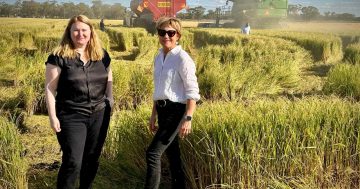
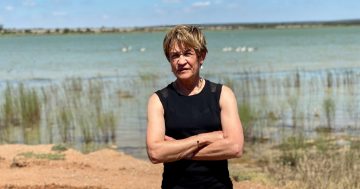
The 14,900-hectare Gundaline Station was sold to Chinese interests in 2023. Photo: LAWD.
Independent Murray MP Helen Dalton has called on the NSW Government to take back a $10 million taxpayer-funded grant awarded to a Riverina farming enterprise owned by a Chinese textile giant.
The funding has been allocated to a project at Gundaline Station, a 14,900-hectare property between Darlington Point and Carrathool, to establish what is being described as Australia’s first large-scale hemp-processing facility capable of producing linen-quality fibre.
The $10 million grant comes through the Sustainable Communities Program, a Commonwealth-funded initiative administered by the NSW Government. The program was established to compensate communities for the negative impacts of water recovery and buybacks in the Murray-Darling Basin.
In 2023, Gundaline Station was purchased by Ausuntech Pty Ltd, a subsidiary of Chinese textile manufacturer Zhejiang Sunrise Garment Group, for a reported $121 million.
Mrs Dalton said money intended to support communities affected by water buybacks should not be going to a foreign-owned corporation.
“This program was set up to soften the blow to Murray-Darling Basin communities which has been caused by the Federal Government’s disastrous water buybacks,” she said.
“This money was never meant to become corporate welfare for foreign-owned businesses.”
She called on NSW Agriculture Minister Tara Moriarty to reverse the decision immediately, and to “redirect that money to the locals who desperately need it”.
Gundaline Station is a major cotton producer and is regarded as one of the premier irrigation properties in the Murray-Darling Basin due to its extensive water holdings and infrastructure.
Mrs Dalton has also renewed concerns she previously raised about its management.
In 2024, The Riverina Grazier published a video in which she spoke to former workers who made allegations about practices at the property, including claims of biosecurity breaches.
The company denied the allegations at the time and no court has found Gundaline or its owners guilty of any biosecurity offences.
Region asked NSW Agriculture Minister Tara Moriarty’s office and the Department of Primary Industries and Regional Development why a foreign multi-national received a community grant, how they responded to Mrs Dalton’s allegations against the company and whether they would consider taking back the $10 million.
Neither the Minister nor the department responded.
“Surely NSW Agriculture Minister Tara Moriarty is aware of the whistleblowers who provided me evidence previously about illegal biosecurity breaches at Gundaline,” Mrs Dalton said.
“How on earth could the Minister be giving this business $10 million that should have gone to the rural towns that have lost their water, jobs and young people because of Federal Government water buybacks?”

MP Helen Dalton has long held concerns about Gundaline Station. Photo: NSW Legislative Assembly.
Mrs Dalton also questioned the proposed hemp-processing venture itself.
“I would encourage Minister Moriarty to ask Gundaline what type of seeds they plan to process at this new facility, and where these seeds will be coming from,” she said.
“I’ve recently been approached by very credible insiders who are raising serious concerns about this issue.”
Mrs Dalton questioned whether the project could create future biosecurity risks for the region.
“Has Minister Moriarty just used $10 million of taxpayers’ money to fund the biggest biosecurity hazard the Riverina has ever seen?”
Gundaline has long been regarded as a prized Riverina agricultural asset.
Twynam Agricultural Group owned it before selling it in 2014 to Southern Agricultural Resources. In 2018, it was acquired by Dutch agricultural investment fund Optifarm before being purchased by Ausuntech Pty Ltd in 2023 for a reported $121 million.
The increase in Gundaline’s value has been driven largely by its irrigation infrastructure and water entitlements. The purchase by a subsidiary of Zhejiang Sunrise Garment Group attracted national attention at the time because it represented one of the largest recent acquisitions of Australian farmland by Chinese interests.