
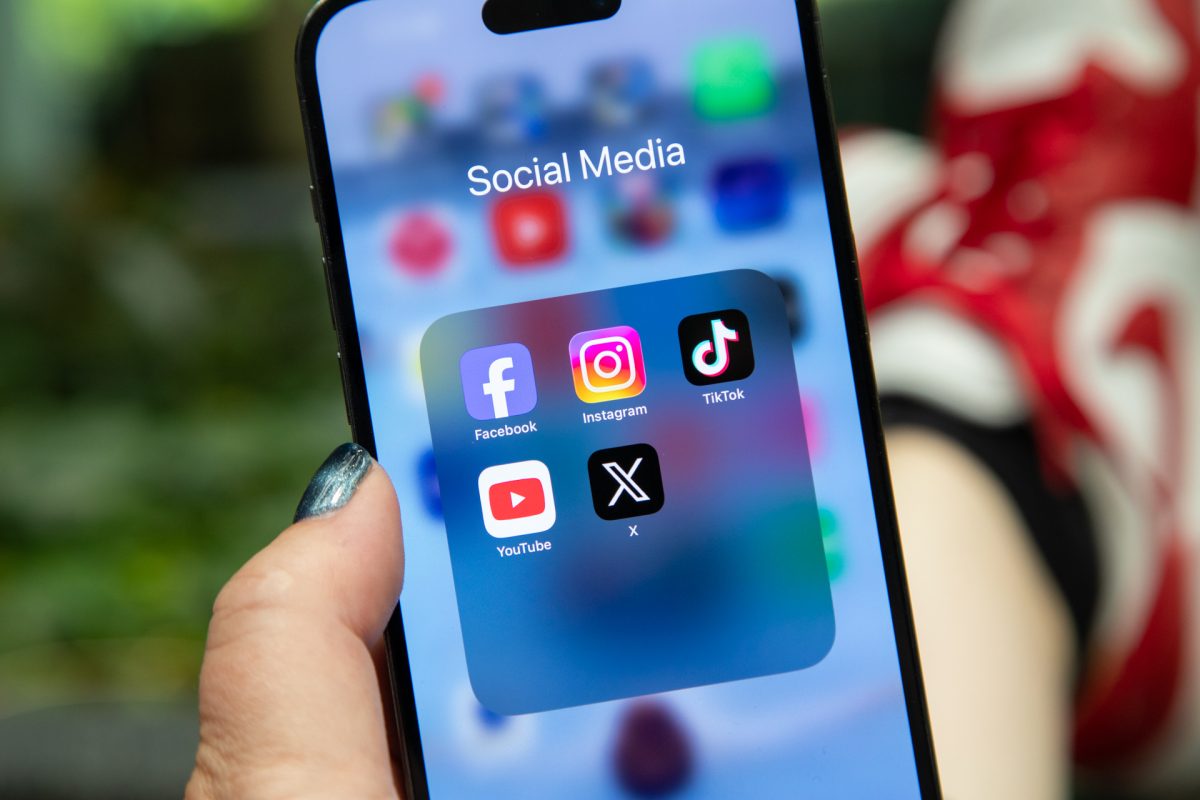
A lecturer from Charles Sturt University has warned teenagers agains using VPNs to access social media apps. Photo: Michelle Kroll.
A Charles Sturt University lecturer has warned teenagers and families looking to bypass social media via VPNs (Virtual Private Networks) to be careful about sharing personal information.
Since the social media ban was implemented on 10 December, many teenagers have looked to VPNs as a means to overcome the Australian laws.
By using a VPN, devices are connected to networks elsewhere in the world, thereby bypassing the Australian lockout.
While most VPN users utilise them as a means to secure data, Charles Sturt School of Computing, Mathematics and Engineering’s Information Technology lecturer Louis Hourany said VPNs were not a feasible solution to overcoming the ban.
“Under 16s, their parents and others might think a VPN can hide where a connection appears to come from, but they don’t understand that it does not make a user anonymous to platforms that analyse device data, behaviour and account history,” he said.
“VPNs are not a guaranteed or long-term solution for bypassing geographic restrictions.
“VPN usage leaves identifiable patterns in metadata, including shared IP space, predictable routing paths and Transport Layer Security signatures, meaning that when many users appear to come from the same type of service or shared location, it becomes a clear indicator that the connection may not reflect the actual country or person behind it.
“While a VPN may initially obscure location, platforms have become far less reliant on IP addresses as the primary indicator of where a user actually is.”
Mr Hourany also warned the ban would lead many young people who were desperate to get back on social media to use products that were unsafe and invasive.
“That is a legitimate technical concern. When mainstream VPN services are blocked or degraded, users often migrate to lesser-known or free providers that may operate outside Australia’s privacy expectations,” he said.
“Many free VPN providers operate by monetising user data, injecting advertising or harvesting telemetry across apps. This may include browsing history, app usage, advertising data or device information.
“Parents often assume VPN equals privacy, but in some cases, the operator of the VPN may see far more than the social media platform ever could.
“There is a cybersecurity and privacy dimension to consider if increased demand pushes young users toward unvetted offshore products.
“Digital literacy and privacy education play a role here, helping young people understand that the tool they use to stay private can sometimes expose even more.”