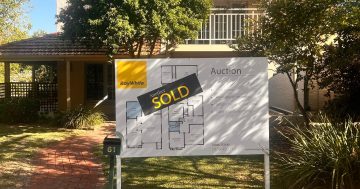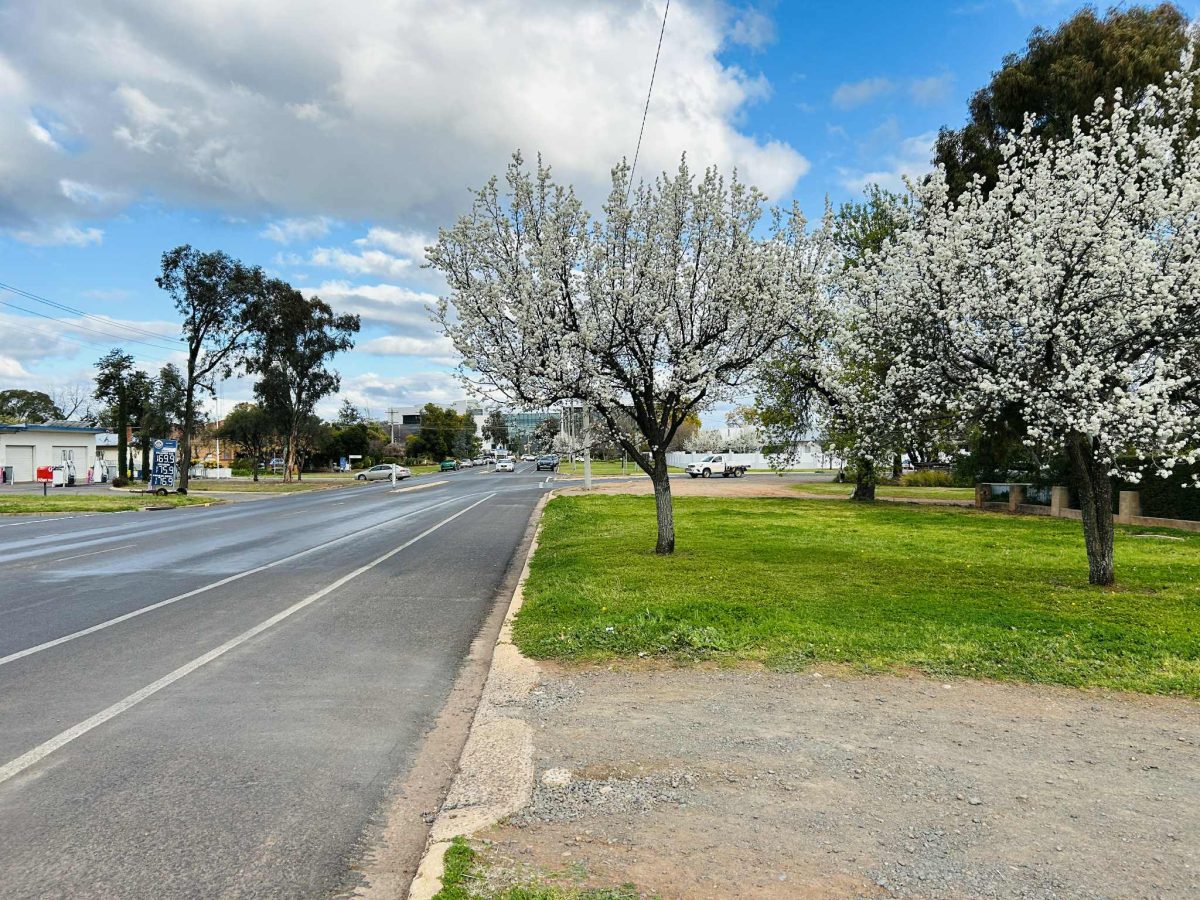
Despite concerns about congestion on the corner of Palla Street and Wyangan Avenue, the housing development near the hospital will go ahead. Photo: Oliver Jacques.
A controversial 18-room apartment complex near Griffith Base Hospital has been approved by the NSW Land and Environment Court, after a year-long battle by the developer to get the project off the ground.
Sydney solicitor Mark Secivanovic originally submitted a development application to build a 21-room dwelling at 6 Wyangan Avenue. This was rejected by Griffith City Council in a 7-1 vote in August 2025, following a backlash from those concerned about the fact that it only provided for nine on-site parking spaces. Nearby residents said this would create traffic and congestion problems near the corner of Wyangan Avenue and Palla Street.
Mr Secivanovic took the matter to court in a bid to overturn the decision, arguing the town desperately needed more housing.
He previously told Region he had heard horror stories of six to seven people having to sleep in the same room due to the town’s rental crisis. He was also told of Griffith residents who had to travel two hours to Wagga for basic medical services due to staff shortages at the local hospital.
Mr Secivanovic said this motivated him to find a solution to both those problems – build a housing complex 200 metres from the hospital, which would help NSW Health attract skilled staff while also easing the rental crisis.
After making his appeal to court, he undertook a conciliation conference with Griffith Council, where the parties reached a compromise agreement. The court formally approved an amended development application that reduced the number of rooms from 21 to 18.
His project will demolish the existing house on the site and build an apartment complex that will accommodate 34 lodgers. This will include 14 double rooms, two single rooms, two accessible rooms, a communal area and a separate double room for an on-site manager. There will be provision for eight parking spaces and one disabled park.
The court found the proposal complied with NSW housing planning rules and was suitable for the residentially zoned land.
Opponents argued the development would worsen congestion around the hospital precinct and create safety risks because there will be more rooms than allocated parking.
“Palla Street and the near surrounding areas within the vicinity of 6 Wyangan Avenue is busy enough at peak times let alone during other hours,” nearby residents Glenys and Gordon Gaffey wrote in a submission when the original proposal was considered.
“To add more traffic and multiple co-living spaces in a family-oriented peaceful living area is ridiculous.”
A petition opposing the development attracted more than 200 signatures.
However, the developer said these concerns were overblown.
“We’ve submitted two independent expert opinions on the traffic impacts, both have said they are negligible and don’t pose a risk,” Mr Secivanovic said.
“There’s plenty of parking in the area … a lot of people are going to be working at the hospital, so they’re not going to be driving. Some of them won’t have cars.”
The case became a broader flashpoint in Griffith’s housing debate, with supporters arguing the town’s chronic rental shortage and health worker accommodation crisis required higher-density developments to be accepted in established suburbs.
Councillor Scott Groat, the only councillor to support the DA when it first came before council, argued at the time that Griffith needed different types of accommodation and residents had to expect denser housing near key services like the hospital.
The court’s decision now overturns council’s original refusal and clears the way for the project to proceed, subject to conditions agreed to by both parties.
Mr Secivanovic was contacted for comment.