Frank Battistel says the development is way too close to nearby homes. Photo: Oliver Jacques.
A controversial solar farm and battery project near Griffith’s dog pound has been approved by the NSW Government, despite Griffith City Council recommending it be refused.
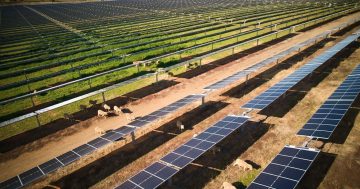
The $6.7 million development at 11 Duchatel Road will include a 7.1 megawatt solar farm and a battery energy storage system (BESS) – a series of shipping container-sized batteries that store electricity generated by the solar farm.
The proposal sparked fierce community opposition when it was first exhibited earlier this year, with nearby residents arguing it was far too close to homes, with the nearest occupied house less than 150 m away.
Griffith City Council agreed with many of those concerns and recommended the application be refused.
However, because the project is worth more than $5 million, it is classed as regional development under NSW planning laws. That means the final decision did not rest with councillors, but with the Western Regional Planning Panel, an independent body appointed by the NSW Government.
The panel unanimously approved the project on 1 July, overturning council’s recommendation. The decision was published on the panel’s website, but not widely publicised.
Frank Battistel, a semi-retired citrus farmer who lives about 250 m from the site, said residents’ concerns had been ignored.
“It’s clearly very close to homes and they didn’t seem to care what we think,” he said.
He said it would be an eyesore on one of the main entries to Griffith and raised concerns about noise from the battery system at night and the risk of fire.
Mr Battisel also said that increased construction traffic, including heavy vehicles, would create safety risks on Duchatel Road, arguing it is not designed to safely handle the additional truck movements without turning lanes.
The development is being undertaken by an entity called Tharbogang Bess Pty Ltd. A Region search of company records shows the company is owned by Sydney-based renewable energy developer G8 Energy.
Council’s main concern was that the proposal failed to comply with its own Solar Energy Farms and Battery Energy Storage System Policy.
The policy says solar farms should avoid prime agricultural land, sites close to residential areas, land fronting major roads and locations where they would have a significant visual impact. Council also raised concerns about the potential impact on animals at the Griffith Pound.
“The construction works particularly will likely result in altered animal behaviour during daytime while heavy machinery and the like is operating within the subject land,” its submission stated.

The site will be next to the Griffith dog pound. Photo: Oliver Jacques.
The planning panel disagreed.
In its decision, the panel said local planning policies cannot override NSW planning laws and were therefore “not valid reasons to refuse the application”.
Instead, the panel found the proposed landscaping would reduce the project’s visual impact, including for motorists travelling along Kidman Way. It also said concerns about noise, battery fire risks and returning the land to farming at the end of the project’s life could all be managed through conditions attached to the approval.
“The panel considers that concerns raised by the community have been adequately addressed,” the panel’s report stated.
Mr Battistel said he totally disagreed.
He has raised his concerns with Murray MP Helen Dalton and said Griffith City Council had written to nearby residents advising they could challenge the decision in the Land and Environment Court, but only at their own expense.
The Griffith project approval follows the NSW Government giving the green light to a 20,000-panel solar farm in near homes in Bilbul, where residents also argued their concerns had been ignored.