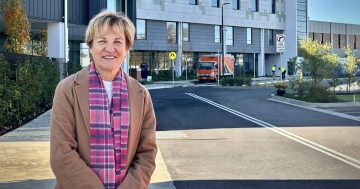
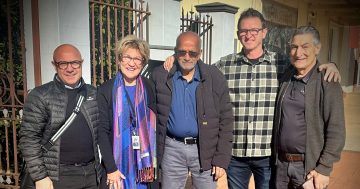
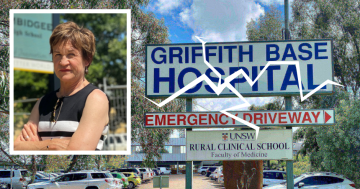
Griffith residents Virginia Tropeano and Yvonne Turnell each made a submission in support of the split. Photo: Oliver Jacques.
A NSW parliamentary inquiry into a proposal to split the Murrumbidgee Local Health District (MLHD) has revealed a clear divide between community sentiment and what officials and agencies think is best for them. Almost all the individual submissions to the inquiry backed the change, while major health bureaucracies either expressed a neutral view or opposed it.
The inquiry is examining a bill by Murray MP Helen Dalton to separate Western Riverina hospitals in towns such as Griffith, Leeton, and Hay from the MLHD, to form their own administrative body. Mrs Dalton has argued that small towns are losing essential services under the current Wagga-based management.
Strong support for the split from doctors and residents
More than 80 per cent of the publicly available submissions expressed support for the split.
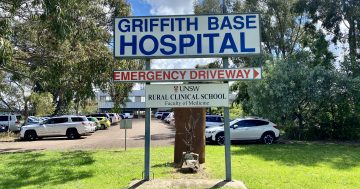
“We need decisions made by clinicians working in this community, not remotely from Wagga Wagga as has been the norm for these last 25 years,” veteran Griffith surgeon Dr Jayachandran Narayanan wrote in his submission.
“It’s been pathetic that an institution as big as Griffith Base Hospital have no say in how health care should be managed. Our local administration are like puppets with no powers.”
Former Griffith-based surgeon Dr Stephen Hayes echoed this sentiment.
“During my time at Griffith Base Hospital, funding was always an issue … with a perception that Wagga Wagga Base Hospital was first in line for consideration. This delay in the equitable sharing of resources obstructed planning strategies to purchase equipment and recruit staff,” he wrote.
“Griffith, being a vibrant community and an important centre of agriculture, deserves autonomy in the funding of its hospital.”

Marlene O’Connell and Diana Brown were part of a protest rally during an inquiry hearing in Griffith. Photo: Oliver Jacques.
Griffith health advocate Virginia Tropeano highlighted the MLHD’s poor track record of staffing hospitals outside Wagga.
“The emergency department on many occasions cannot admit patients as there are ‘no beds’. No beds obviously meaning not enough nurses. These patients then must either be sent home or remain in the ED,” she said.
“Griffith was promised two orthopaedic surgeons back in 2021, but that has not happened and we still have none.
“I am sure people in the major centres have no idea what health care is like in the regional centres.”
Her friend Yvonne Turnell said she’d been flighting for Griffith and surrounding districts’ health care and services for more than 20 years.
“I’m afraid the health services have declined gradually over those years; we have actually lost services and medical equipment and we are at the mercy of MLHD waiting for those services to be restored,” she said.
More than 750 people have responded to a Region survey on the split, with 77 per cent supporting it.
Health bureaucracies warn about possible downsides
Peak body the Australian Medical Association (AMA) NSW opposes the split.
“Healthcare challenges faced in this region are not unique. Splitting the region will not solve issues of funding, staff retention and specialist shortages. AMA (NSW) believes this split will only exacerbate the challenges faced in the community and place further strain on already scarce resources,” its submission stated.
The Health Services Union (HSU) agreed that separating the district was not the answer.
“Funds that would be consumed by administrative restructuring would be far better directed into workforce expansion, infrastructure, and rural service innovation. Establishing a new LHD does not guarantee more responsive management, particularly if it is created without adequate resourcing, increased funding, and clear accountability,” it argued.
The MLHD itself also stated it did not want to be divided.
“Splitting the MLHD would destabilise services without addressing the real issues: workforce shortages, service gaps, and increasing population complexity. The focus should remain on strengthening the existing integrated model and building on the systems, partnerships, and workforce programs already in place,” its submission stated.
Next steps
The parliamentary committee is no longer accepting submissions and has completed its three hearings for this inquiry (two in Griffith on 12 and 13 March and one at NSW Parliament on 30 March). The committee’s next step will be preparing its final report, which will either recommend supporting or opposing the MLHD split. This report is expected to be tabled later this year. Mrs Dalton’s bill will then go before parliament to be voted on.