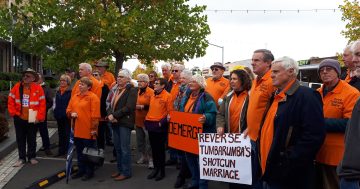
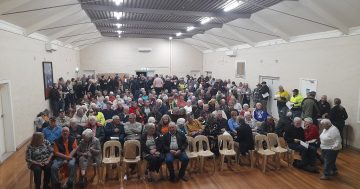
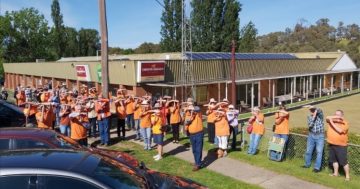
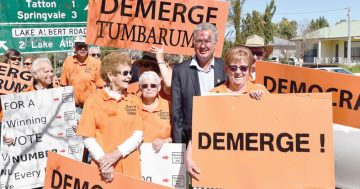
Snowy Valleys Council is progressing its de-amalgamation, with community groups questioning how residents will be represented as the process moves into its next phase. Photo: Snowy Valleys Council.
The campaign to reverse the 2016 amalgamation of Snowy Valleys Council (SVC) may have ended with a successful referendum, but as work begins on creating two new councils, attention is turning to who will control the process.
Community leaders from the former Tumbarumba Shire say the governance arrangements being put in place risk repeating the representation issues that fuelled the push for de-amalgamation, while council says community participation has been built into the process.
The debate comes as SVC last week announced the six community representatives who will join its De-amalgamation Steering Committee.
Following an expression of interest process that attracted nine applications, three representatives were appointed from each side of the local government area.
The northern representatives are Allan Tonkin of Tumut and Barnett “Barney” Hyams and John Connors, both of Batlow. The southern representatives are Jingellic’s Mary Hoodless and Tumbarumba residents Ian Chaffey and Andrew Rae.
Together with council’s nine elected councillors, they will form the voting membership of the steering committee, while executive team members will participate in a non-voting capacity.
Mayor Julia Ham said the successful applicants brought a mix of local knowledge, professional experience and a strong commitment to achieving the best possible outcome for the two future councils.
She said this would help ensure the community remained actively involved throughout the de-amalgamation process.
“The de-amalgamation process belongs to the community, so it’s important that local people have a seat at the table,” Cr Ham said.
Council is also currently recruiting a 20-member De-amalgamation Community Panel to broaden community participation throughout the transition.
However, one of the long-time public voices behind the campaign to reverse the amalgamation, Save Tumbarumba Shire spokesman Dr Neil Hamilton, said the issue was not the appointment of community representatives, but who was controlling the de-amalgamation process.
Dr Hamilton said many residents of the former Tumbarumba Shire wanted the de-amalgamation to be led by an independent community process rather than the existing council.
He said that was consistent with the two consultant reports that informed the de-amalgamation implementation plan, both of which recommended the communities of SVC be central to the process.
However, Dr Hamilton said the current governance arrangements were developed without community consultation, despite repeated assurances from the mayor and other councillors that the de-amalgamation would be community driven.
He said the Tumbarumba community held several public meetings before nominations for the steering committee opened, endorsing three preferred candidates because of their extensive local government experience.
“This list of candidates was put to council, but was ignored,” he said.
Dr Hamilton argued the committee’s composition left effective control of the process in the hands of elected councillors rather than the communities that voted for de-amalgamation.
“It is nothing short of absurd that the steering committee comprises all the councillors and several senior council staff, vastly overwhelming the community representatives,” he said.
“The committee makes recommendations to council, not decisions for council, so there is no justification for any councillor to be on it.”
“The simple reality is that SVC has shown no intention of listening to the communities of the LGA. We have reached out several times, provided clear, expert advice on what the community of the former Tumbarumba Shire could do, and been ignored,” Mr Hamilton said.
He said the only way the community could have confidence in the de-amalgamation process was for the Tumbarumba and Tumut communities to make the key decisions through their own representatives, with council’s role limited to providing accurate and timely information.
Similar concerns have also been raised by the Tumbarumba De-amalgamation Interest Group (TDIG), who have written to NSW Minister for Local Government Ron Hoenig seeking safeguards to ensure the former Tumbarumba Shire has meaningful influence over decisions affecting its future.
In its letter, TDIG said the steering committee was weighted in favour of the former Tumut Shire because it included all nine councillors, seven of whom live in the former Tumut Shire, alongside three community representatives from each former council area.
The group said it had initially sought equal representation from both former shires on the steering committee before proposing a consensus model with unresolved matters referred to an independent arbitrator.
It said both proposals were rejected.
TDIG said the appointments reinforced concerns that the community’s views were not being reflected in the de-amalgamation process, noting that only one of the three candidates endorsed at a public meeting attended by more than 100 people was ultimately appointed.
The group said it feared decisions on governance, organisational arrangements and shared services could again favour the former Tumut Shire and asked the minister to monitor the de-amalgamation process and consider safeguards to ensure both communities had genuine influence over key decisions.
SVC Chief Transition Officer Nicole Jenkins said responsibility for delivering the de-amalgamation rested with the elected council under the direction of the Minister for Local Government.
“Council has consistently viewed this as a community-driven process, which is why community representatives have been included as members of the steering committee from the outset,” Ms Jenkins said.
She said SVC had delegated decision-making authority to the steering committee, allowing it to make many key decisions directly rather than simply referring recommendations back to the full council.
“This ensures community representatives have a meaningful and influential role in guiding the process,” she said.
Ms Jenkins said TDIG had provided written feedback on the proposed governance arrangements, prompting council to amend the committee’s composition by making executive team members non-voting participants.
She also said one of the three southern community representatives appointed to the steering committee was a nominee of TDIG.
While the steering committee would oversee the project, Ms Jenkins said the De-amalgamation Community Panel would sit at the heart of council’s community engagement framework, providing ongoing opportunities for residents to share their views, test ideas and help shape future service priorities and service levels for the two new councils.
“The goal is to have at least 10 representatives from both the northern and southern communities, and council would welcome an even larger panel if there is sufficient interest,” she said.
Ms Jenkins said recent consultation on the future of the SVC brand demonstrated how community feedback would influence decisions throughout the de-amalgamation process.
The survey found strong support for retaining the SVC brand for the future northern council, while consultation on the name of the future southern council will begin once the De-amalgamation Community Panel is established.
“One of the strongest messages council has heard so far is concern that the existing Snowy Valleys Council model, including services, service levels, structure and systems, might simply be replicated,” Ms Jenkins said.
“That will not be the case. The purpose of this process is to establish two councils with operating models that support the delivery of services that reflect the distinct needs, priorities and aspirations of their respective communities.”
Expressions of interest for the De-amalgamation Community Panel close on Sunday, 19 July.
Original Article published by Edwina Mason on About Regional.