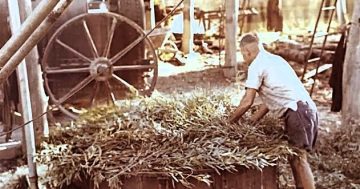
Blue mallee and broombush coppicing has been part of life in the Bland Shire since the 1930s. Photo: GR Davis Pty Ltd.
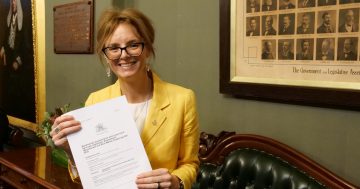
Farmers caught up in western NSW’s long-running “pink mapping” dispute should be compensated for nearly two years of lost income, according to NSW Member for Cootamundra Steph Cooke, who has accused the NSW Government of abandoning affected communities across the Bland Shire.
Ms Cooke has called on NSW Agriculture Minister Tara Moriarty to urgently deliver a compensation package for blue mallee and broombush producers impacted by restrictive native vegetation mapping, saying many families remained locked out of traditional harvesting operations with no clear resolution in sight.
The dispute centres on land classified as Category 2-sensitive regulated vegetation under the NSW Native Vegetation Regulatory Map – commonly referred to by landholders as “pink mapping” because affected areas appear shaded pink on official government vegetation maps.
The designation restricts vegetation clearing and harvesting activity on affected land, leaving many producers unable to continue coppicing blue mallee and broombush stands that have been sustainably managed by local families for generations.
“This is fundamentally an agriculture issue, yet the Agriculture Minister has failed to stand up for the farmers and businesses being crippled by these decisions,” Ms Cooke said.
“If the government is going to prevent farmers from using their land, then it has an obligation to properly compensate them for the losses they are being forced to carry.”
Blue mallee and broombush are native species harvested for eucalyptus oils, fencing and building products, with coppicing operations dating back to the 1930s in parts of western NSW.
Coppicing is a traditional harvesting method where native plants such as blue mallee and broombush are cut back close to ground level, allowing them to naturally regrow from existing root systems or lignotubers.
Landholders have consistently argued coppicing should not be treated as land clearing because the plants regenerate naturally after selective harvesting, often from established root systems.
The issue escalated in 2024 after large areas of farmland across the Bland Shire were placed under draft environmental protections linked to the Mallee and Mallee-Broombush Critically Endangered Ecological Community.
Affected landholders have argued the mapping relied too heavily on satellite imagery and broad modelling rather than detailed on-ground assessments.
They have also pointed to what they describe as major discrepancies in the mapping itself, with Department of Climate Change, Energy, the Environment and Water (DCCEEW) figures reportedly identifying about 11,500 hectares under the critically endangered ecological community, compared with earlier independent estimates of about 2300 hectares.
Some producers also reported receiving warnings or compliance notices relating to harvesting activity on their own properties, creating uncertainty and effectively halting operations.
Last year, farming families travelled to NSW Parliament alongside Ms Cooke to lobby MPs directly about the impact the restrictions were having on businesses and livelihoods, prompting the NSW Government to order reviews into both the vegetation mapping and ecological classification.
However, uncertainty remains high among producers, with some claiming they were warned participation in the review process could potentially result in even more land being classified as sensitive vegetation.
The scientific review into the critically endangered ecological community is continuing and is expected to take up to 12 months to complete.
In response to the ongoing uncertainty, Ms Cooke introduced legislation in 2025 aimed at temporarily allowing traditional coppicing to resume while reviews were carried out transparently and in consultation with landholders.
The bill was defeated after Labor and Greens MPs voted against it.
Ms Cooke said the government had since failed to provide any practical pathway forward for affected farmers.
“Compensation should not replace the need to fix the underlying problem,” she said.
“The government still needs to remove the critically endangered status over their land and deliver certainty for these communities, but while farmers remain locked out of their livelihoods, they deserve proper compensation.”
The compensation push comes amid growing concern over the financial impact of the restrictions on farming businesses and rural communities.
Ms Cooke said annual conservation payments currently being offered through the Biodiversity Conservation Trust’s Northern Riverina Woodlands conservation tender fell far short of what many producers previously earned through sustainable harvesting.
The tender offers between $33 and $52 per hectare annually for permanent conservation agreements, compared with what Ms Cooke said was an estimated $400 to $500 per hectare previously generated through coppicing operations.
She also warned banks had begun factoring pink mapping into property valuations, reducing equity and affecting the ability of farming businesses to borrow, invest and plan for the future.
The broader supply chain has also begun feeling the impact, with fencing suppliers warning restrictions on broombush harvesting were beginning to disrupt supply and increase prices for Australia’s brush fencing industry.
Meanwhile, the NSW biodiversity mapping system was updated again in April this year, including revised mapping relating to mallee and mallee-broombush vegetation communities, highlighting the continuing evolution of the mapping process while many producers remain unable to operate.
The dispute has also raised concerns around land management and fire risk, with some landholders warning restrictions on active vegetation management had contributed to increasing infestations of mallee strangle vine, which can smother vegetation and increase fuel loads.
Regional farming groups including NSW Farmers have previously backed calls for greater clarity around the mapping process and long-term certainty for affected producers.
For many families across the Bland Shire, the issue has become about far more than vegetation regulation alone.
“We cannot allow a precedent in NSW where the government can effectively take away a farmer’s ability to use their land without accountability or fair compensation,” Ms Cooke said.
“The Agriculture Minister needs to stop avoiding this issue, sit down with affected landholders, and fight for a fair compensation package that reflects the real losses these families have suffered.”