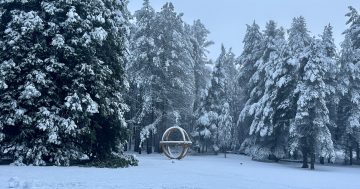
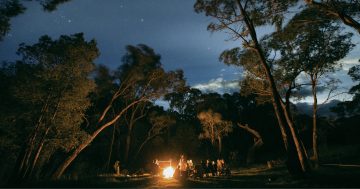
Construction underway on the new Ben Smith campsite in the Snowy Valleys section of the Hume and Hovell Track as recovery work continued following the Black Summer bushfires and subsequent flooding. Photos: Hume+Hovell website.
When Hamilton Hume and William Hovell set out to find an overland route to the southern coast two centuries ago, drought, flood and bushfire dogged them every step of the way.
The track that bears their names has just survived its own version of the same story with a final flourish for modern-day intrepid campers.
The reopening of the popular Ben Smith campsite near Tumut marks the final chapter in the Hume and Hovell Track’s long recovery from the Black Summer bushfires and subsequent flooding.
The $350,000 rebuild completes around six years of painstaking reconstruction work along almost 120 kilometres of the iconic walking trail.
Originally constructed as a Bicentennial project in 1988, the entire 426-kilometre Hume and Hovell Track follows as closely as possible the route taken by the explorers during their 1824 expedition, stretching from Yass to Albury through bushland, farmland, forests and alpine country.
It attracts everyone from casual day walkers to experienced thru-hikers and trail runners, and is increasingly regarded as one of Australia’s underrated long-distance walks.
But the modern walking track, which takes anything from 16-28 days to complete on foot, is a far gentler journey than the one faced by the original expedition party.
When Hume and Hovell left the fringes of the colony in October 1824, they pushed into country no European had mapped, hauling provisions on bullock carts through the impossibly rugged terrain.
Bushfires forced detours, floodwaters swallowed creek crossings, and steep mountain ranges saw carts abandoned and supplies loaded onto bullocks.
While Hume and Hovell became celebrated names in Australian exploration history, the 11-week expedition relied heavily on the men who drove bullocks, handled supplies and helped navigate difficult country through what is now southern NSW and Victoria.
The restored campsite is believed to be named after one of those men — convict assistant Ben Smith.
Historical records compiled by the Albury and District Historical Society identify him as arriving in the colony aboard the convict ship Elizabeth and later being listed in the 1822 muster working with William Hovell at Minto.
It’s one of the track’s several sites that now commemorate these lesser-known figures who physically helped forge the path almost 200 years ago.
Then came the Dunns Road fire.
Ignited by lightning near Adelong on 27 December, 2019, the blaze merged with the Green Valley fire south of Tumbarumba and tore through an estimated 600,000 hectares — roughly 40 per cent of the Snowy Valleys local government area.
Across the region, 186 homes and 27 businesses were destroyed.
Flooding the following year compounded the damage.

Before and after: The Ben Smith campsite following the devastation of the Black Summer bushfires and during reconstruction works as crews restored the final section of the Hume and Hovell Track.
According to the NSW Department of Planning, Housing and Infrastructure, the fires and floods destroyed an estimated $1.3 million worth of infrastructure along the track, including bridges, boardwalks, marker posts and signage, leaving long sections impassable.
Recovery has taken years.
The NSW Government committed more than $1.5 million towards repairs and upgrades, with crews clearing burnt timber and debris, rebuilding bridges and boardwalks, re-establishing the track corridor and installing hundreds of new marker posts and bollards.
The Ben Smith campsite marks the final chapter of that rebuilding effort.
The upgraded site includes a new hikers’ hut with an elevated sleeping platform for up to six people, repaired barbecue and water facilities, expanded camping areas and a new flood-resilient access track between Yellowin Road and the campsite.
A pedestrian bridge overlooking the surrounding landscape has also been constructed.
NSW Minister for Lands and Property Steve Kamper said the Ben Smith campsite reopening had been an important milestone for both visitors and regional communities.
Independent Member for Wagga Wagga Dr Joe McGirr said he’d seen some of the improvements firsthand during this year’s Tumbatrek community walk and was proud to have advocated for the site’s restoration.
“The Ben Smith campsite is a key point on a much-loved walking trail,” Dr McGirr said. “Like many in the community, I was devastated by the damage done to the track by fire and flood.”
He said the track remained one of the region’s great environmental and tourism assets.
“It’s one of the jewels in our environmental and tourism crown and I congratulate the government and all agencies for returning this treasured site to our community,” he said.
For many locals, though, the reopening is about more than a walking trail. It marks something larger than the return of a campsite. It’s a sign that one of regional NSW’s best-known walking trails — and the communities around it — are finally finding their feet again after years of disquiet.
In one of the more remote sections of the Hume and Hovell Track, the Ben Smith campsite lies between the Blowering Reservoir foreshore and the Buddong Falls section of the trail, a part of the route known for its steep forested terrain and views towards Talbingo Mountain.
The campsite is free to use, with no bookings required.
Original Article published by Edwina Mason on About Regional.