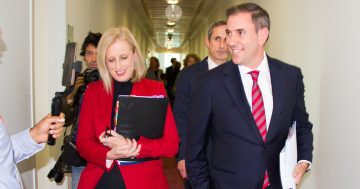
There’s been huge growth in the number of people working in government offices in Australia. But is it sustainable? Photo: Rachel Lovinge.
An executive assistant in the APS can now earn up to $112,000 a year. But you’d do even better as a stakeholder engagement manager for the Queensland Government, where a current ad offers a salary range reaching $156,000. That’s more than the art consultant role at DFAT, which tops out at a paltry $96,000.
The number of public sector jobs in Australia is soaring, and salaries are growing even faster. This expansion has been likened to the mining boom – except instead of generating wealth, it’s just costing taxpayers more and more.
As of June 2025, there were more than 2.5 million jobs across local, state, and federal government – a 36 per cent increase over the past 10 years. Over the same period, the overall wage bill has jumped 77 per cent, while the Australian population grew just 15 per cent. You have to wonder: why are so many of these jobs necessary, and why have they become so expensive?
Sure, it’s great to have more police, nurses, and frontline workers. But the rate of growth has been just as high in the public administration and safety sub-sector, where there are now a staggering 880,000 mostly office-based roles in sprawling bureaucracies.
These figures don’t even capture the full extent of Australia’s dependence on taxpayers. They leave out the explosion of NDIS roles, along with the army of high-paid consultants who feed off APS departments while conveniently being counted as “private sector” workers.
The timing of our government boom is hard to ignore. It coincides with chronic skill shortages in trades and essential services.
Imagine you’re a small business owner trying to recruit a carpenter’s apprentice. How would you convince a young person to do back-breaking work in the hot sun for $60,000 a year when they could be earning a near six-figure salary shuffling paper in air-conditioned comfort – in a job with generous super, flextime, and the right to work from home?
It’s no wonder builds are delayed, households are stuck waiting weeks for a tradie, and businesses across the country are scrambling to fill roles.
No doubt there’ll be bureaucrats who read this article and somehow find time in their busy schedules to jump online and denounce it as public service bashing. They’ll insist that they work hard and perform vital functions.
Some of them probably do. But that’s not really the point.
In recent years, 80 per cent of all new jobs in the Australian economy have been created in the public sector. Eighty per cent. At some stage, even the most committed defender of the bureaucracy has to ask: how is that sustainable?
For every government employee, you need at least three private sector workers paying taxes to fund their salary. Tip that balance the other way, as we have, and the maths stops working.
What will happen when those who monitor, regulate and administrate outnumber those who make, produce and build?
The public service may seem like a safe career for the individual, but for the rest of us, it’s a slow-moving economic trap. As the number of bureaucrats climbs and the number of workers who actually produce and pay taxes falls, Australia is piling debt on the next generation at a time when our ageing population means fewer hands will be left to foot the bill.
This should concern our politicians, yet there’s little sign of any appetite to take on a growing voting bloc. The Labor Government seems fond of a big state, while the Coalition, when not fighting among itself, has taken to courting the public service.
As for Anthony Albanese and Andrew Barr, their most likely response will be to create more government jobs to work out how many more government jobs we can afford. Don’t be surprised to see a vacancy soon for a “public sector sustainability strategist”, offering a salary of $150,000 a year.
Maybe it’s time to polish the CV.
Original Article published by Oliver Jacques on Region Canberra.