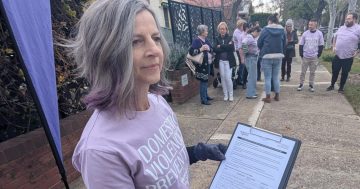
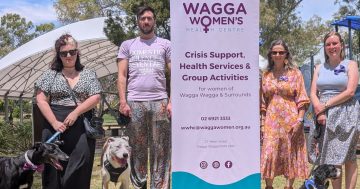
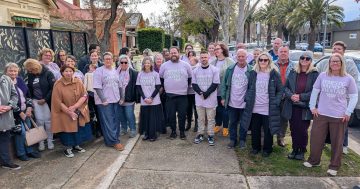
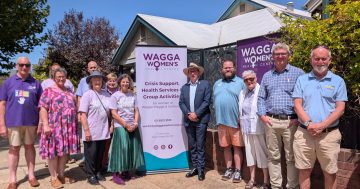
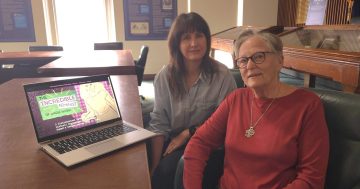
The Wagga Women’s Health Centre is calling for ongoing funding of its transitional housing. Photo: Jarryd Rowley.
The alleged murder of a Wagga woman has prompted a call for urgent investment in housing for women escaping domestic violence, with the Wagga Women’s Health Centre warning there may be nowhere for some women to go when they flee an abusive relationship.
The plea came after three women died in separate suspected domestic and family violence-related incidents across NSW within about 24 hours.
In Wagga, a 23-year-old woman was allegedly fatally stabbed at a home in Ziegler Avenue, Kooringal, on Saturday morning.
A 90-year-old woman was also allegedly fatally stabbed at a home in Bondi Beach, while a 70-year-old woman was found dead at a property near Mole River, west of Tenterfield, after police responded to a reported domestic violence incident.
The Wagga Women’s Health Centre has now called on the NSW Government to immediately fund transitional housing for women escaping domestic violence.
The centre has long argued that Wagga’s chronic housing shortage makes it harder for women experiencing violence to leave abusive relationships.
Its message has been blunt: “It’s not why didn’t she go, but where can she go?”
That question has taken on added significance as Wagga’s homelessness crisis puts pressure on the city’s limited supply of temporary accommodation, with rough sleepers moved into hotels and motels due to the lack of social housing. On a few occasions in the past two months, every single hotel in the town has been booked out.
“If they do keep people in motels long-term, until social housing is built, there’s nowhere for women fleeing domestic violence who need emergency accommodation for a night,” WWHC president Vickie Burkinshaw said.

WWHC says homelessness and lack of affordable housing are directly linked to domestic violence. Photo: supplied.
The WWHC has described the recent spate of domestic violence deaths as a “national emergency” and called for a raft of urgent interventions.
“We need sustained investment in primary prevention, perpetrator accountability, early intervention, specialist domestic and family violence services, and systemic cultural change,” the centre said.
“Women should not have to die before their safety becomes an urgent public policy issue.”
The centre said domestic and family violence did not begin with murder.
“It begins much earlier with control, intimidation, isolation, coercion, threats and violence,” it said.
“By the time a woman is killed, there may have been countless opportunities for intervention.”
The organisation has worked alongside women experiencing violence in the Riverina for almost five decades.
The centre has also been campaigning for the funding it says is needed to prevent domestic violence before it reaches crisis point. After its primary prevention funding was cut, the centre fought for six months and eventually secured $220,000.
But while the money provided a reprieve, it did not restore the funding, leaving the centre facing continued uncertainty over its prevention work.
“We call on [NSW Minister for Women] Jodie Harrison to immediately reinstate our primary prevention funding beyond this year,” the centre said.
The centre has also called on Prime Minister Anthony Albanese and NSW Premier Chris Minns to make statements that women’s safety is a priority.
WWHC will hold a vigil next week to honour women who have died as a result of violence.
“We will not be silent,” it said.
“Stop the killing of women.”