Noel Hicks was the federal Riverina MP in the 1980s. Photo: Richard Paul/Facebook.
A former Riverina MP has labelled the approval of a controversial Griffith solar farm “absolute madness”, accusing the NSW planning system of sidelining local elected representatives and nearby residents.
Former Nationals MP Noel Hicks said the Western Regional Planning Panel should not have overturned Griffith City Council’s recommendation to refuse renewable energy company G8’s proposed $6.7 million development at Duchatel Road.
Concern over approval process
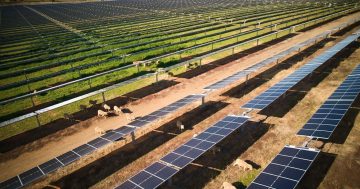
The project, to be built beside the Griffith Pound, includes a 7.1 megawatt solar farm and a battery energy storage system (BESS) – a bank of large, shipping container-sized batteries that store electricity generated by the solar panels. Some homes are less than 150 m from the site.
“It’s objectionable that this is going to be built so close to Griffith,” Mr Hicks told Region.
“That’s why the council opposed it. It’s absolute madness that a panel can come in and override our elected representatives.”
Nearby resident Frank Battistel, who objected to the proposal during public exhibition, said he was disappointed residents never had the opportunity to address the panel in person before it made its decision.
“I was shocked when I found out it had been approved, even though council recommended against it,” he said.

Frank Battistel says the development is way too close to nearby homes. Photo: Oliver Jacques.
Mr Battistel said residents had raised concerns about the proximity of the battery storage facility to homes, potential noise, fire risk and what would happen when the project eventually reached the end of its life.
NSW Government defends decision and lack of consultation
Under NSW planning laws, developments valued at more than $5 million are classified as regional development, meaning the final decision rests with the Western Regional Planning Panel rather than the local council.
According to NSW Government guidelines, the panel is only required to hold public meetings where 10 or more unique objections are received.
Because Griffith City Council received only three written submissions on the development application, there was no requirement for the panel to hold face-to-face consultation before giving the proposal the green light.
“The Western Regional Planning Panel approved the proposal subject to conditions addressing issues which included noise, fire risk and future decommissioning,” a NSW Planning Department spokesperson said.
“The reasons for the panel’s decision are explained in detail in the decision published on the NSW Planning Portal. Panel decisions are made on a merit basis after balanced consideration of all relevant legislative requirements and submissions made during public exhibition.”

Another solar farm, constructed in 2025, is just a few hundred metres away from the newly approved development. Photo: Oliver Jacques.
The decision acknowledges community submissions raised issues including the loss of productive agricultural land, the site’s proximity to homes, potential fire risk, noise, visual impacts and whether the land could be returned to agriculture once the project is decommissioned.
However, rather than addressing each concern individually, the panel concluded they had been “adequately addressed” in the council’s assessment report.
Mr Hicks said he doesn’t have faith in the panel system.
“I went in to give evidence to one of these panels, I put in my objections, but I felt they weren’t really listening and already made their decision it will go ahead,” he said.
Hicks says solar farms changing character of Griffith
The 85-year-old said he did not oppose renewable energy but believed projects should not be built on productive farmland or close to residential areas. He said increased government buybacks of irrigation water were forcing farmers into difficult position.
“As a property owner you might be tempted to have the money – the grape vines on that land are dead, given the way the wine industry is the moment. But it’s not good for the future of our town.
“They’re taking all our water, so we’re seeing a lot more of these solar farms on arable land,” he said.
“They say it creates employment – but for how long? Five minutes.
“You watch what happens. One company installs it, then another company comes in and takes it over and eventually someone else is left responsible for cleaning it all up.”
Mr Hicks said developments such as this threatened the city’s identity.
“We’re trying to attract tourists here. People come to Griffith to see vineyards, citrus orchards and horticulture, not industrial-scale solar farms,” he said.
“Look at the water tower mural. We don’t paint solar farms on it. We paint what Griffith is known for and that’s agriculture.”
The Griffith project approval follows the NSW Government giving the green light to a 20,000-panel solar farm in near homes in Bilbul, where residents also argued their concerns had been ignored.