
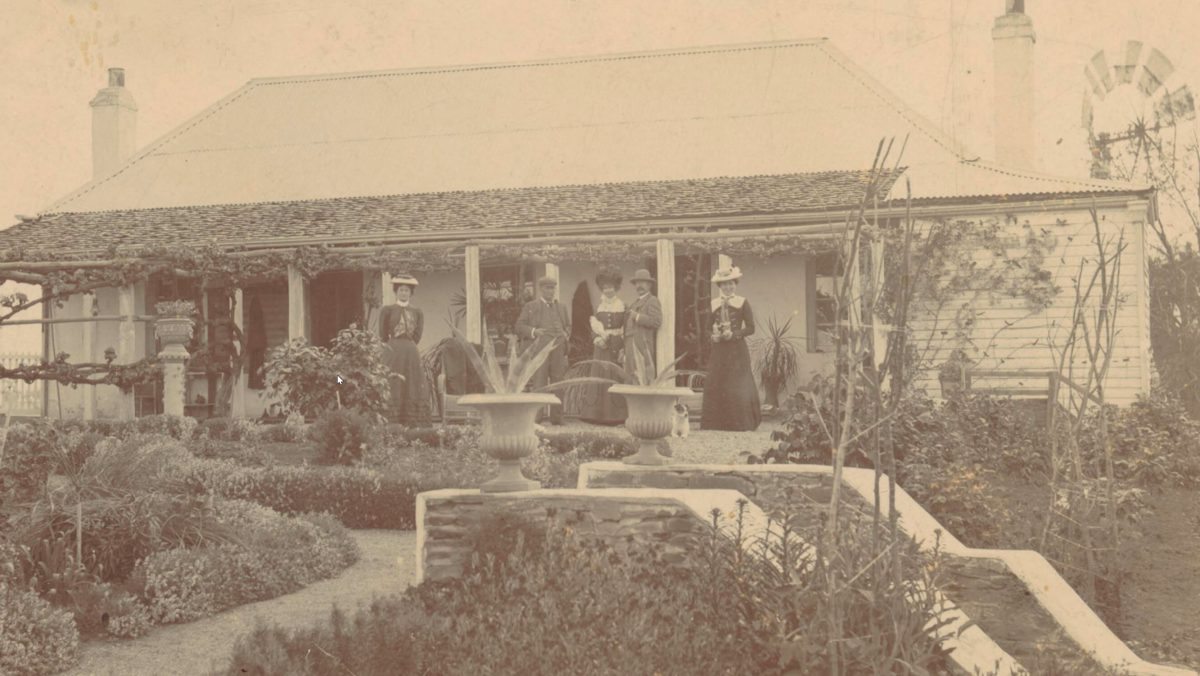
Pulletop Station’s well-heeled owners pose proudly in their landscaped garden between 1886 and 1891. Photo: Charles Bayliss/National Library of Australia.
In the late 19th century, Riverina squatters Edmund and Ashley Westby commissioned well-known landscape photographer Charles Bayliss (no relation to the Wagga Baylis family) to produce a collection of photographs of Pulletop Station.
Taken between 1886 and 1891, the images are carefully staged but provide remarkable insights into the daily chores of station life, featuring mustachioed stockmen on horseback, bearded shearers toiling in the sheds, and enormous bullock drays hauling bales of wool to distant markets.
Other photos feature the Pulletop Station homestead with its genteel owners proudly posing in their Sunday best amid sprawling lawns and manicured gardens fenced off from the surrounding bush like a little slice of England planted within the dry Australian landscape.
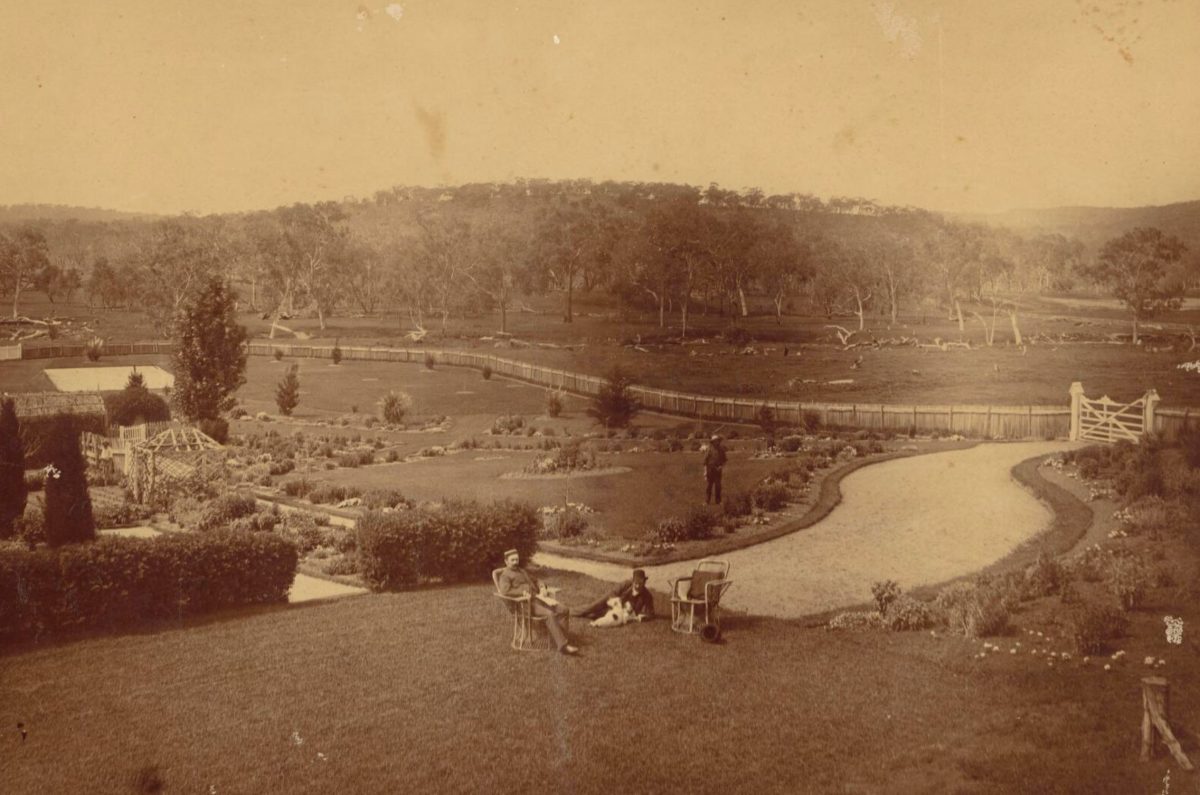
A pair of gentlemen take their leisure in Pulletop Gardens’ well-watered lawns while the gardener watches on. Photo: Charles Bayliss/National Library of Australia.
In June 1890, a correspondent from The Daily Advertiser made the 30-mile trip south from Wagga and was suitably impressed to find such luscious gardens in the bush.
“From an outward aspect, the trim hedge and handsome gates which enclose the flowers are very effective, and the well-kept lawns and borders repay the visitor for a tour round the garden,” they wrote.
“Gravel walks take you in every direction, and entering by a side gate near the house, which you pass on your left, the lower end is approached by a descent of several steps.
“Here are vegetable and fruit gardens on one hand, with greenhouse and fernery on the other. Flowers of every description occupy the intervening space.”
The article provides a detailed description of the watering system, the ornamental pond inhabited by five swans, a thriving plant nursery and stately walkways complete with places to rest and an ornate sun-dial with a Latin inscription.
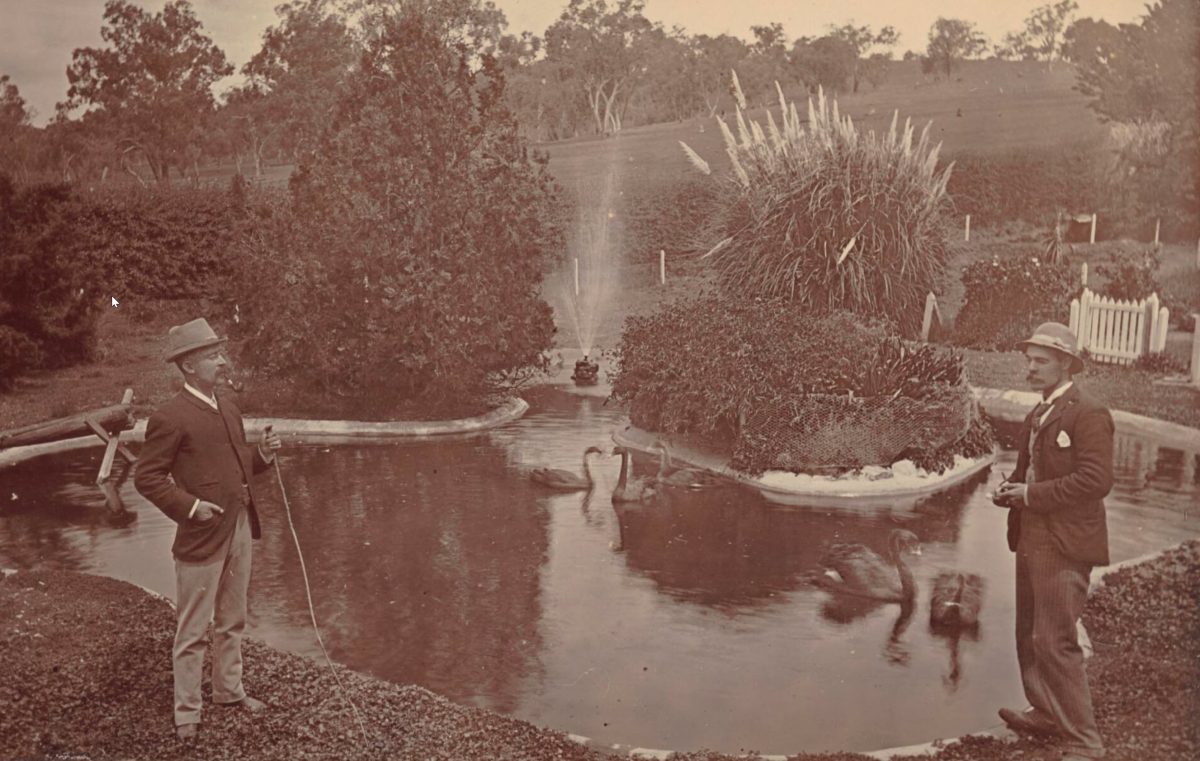
A nearby windmill kept the Westby brother’s ornamental pond full year-round. Photo: Charles Bayliss/National Library of Australia.
The story of Pulletop Station (also called Pullitop or Pollitop) begins with George Macleay who accompanied Charles Sturt on his journey down the Murrumbidgee in 1830 and was subsequently granted vast swaths of land for his trouble.
Macleay accrued enormous wealth through his southern properties that included Toganmain near Carrathool and Pulletop, which was initially a southern outstation of Borambola.
He sold the property in 1852 and a notice in The Sydney Morning Herald on 18 June advertised the upcoming auction of “that fertile and extensive run known as POLLITOP STATION”.
It was located “a very short distance off the Great Southern Road, about 280 miles [450 km] from Melbourne, and 20 miles [32 km] from the township of Wagga Wagga; having an estimated area of about 48,000 acres, and grazing capabilities sufficient to carry in all seasons 20,000 sheep”.
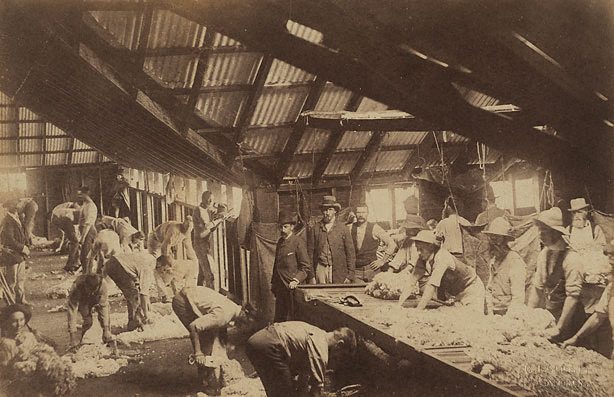
An iconic image of a 19th century wool shed in operation from Charless Bayliss’ Pulletop collection. Photo: Charles Bayliss/Art Gallery NSW.
Pulletop would change hands several times over the next decade before Melbourne sawmill owner Edmund Westby purchased the property and its 13,000 sheep in 1868.
His Eton educated sons Edmund and Alfred took charge and almost immediately commissioned extensive improvements, including the landscaping of the gardens so proudly displayed in Bayliss’ photographs.
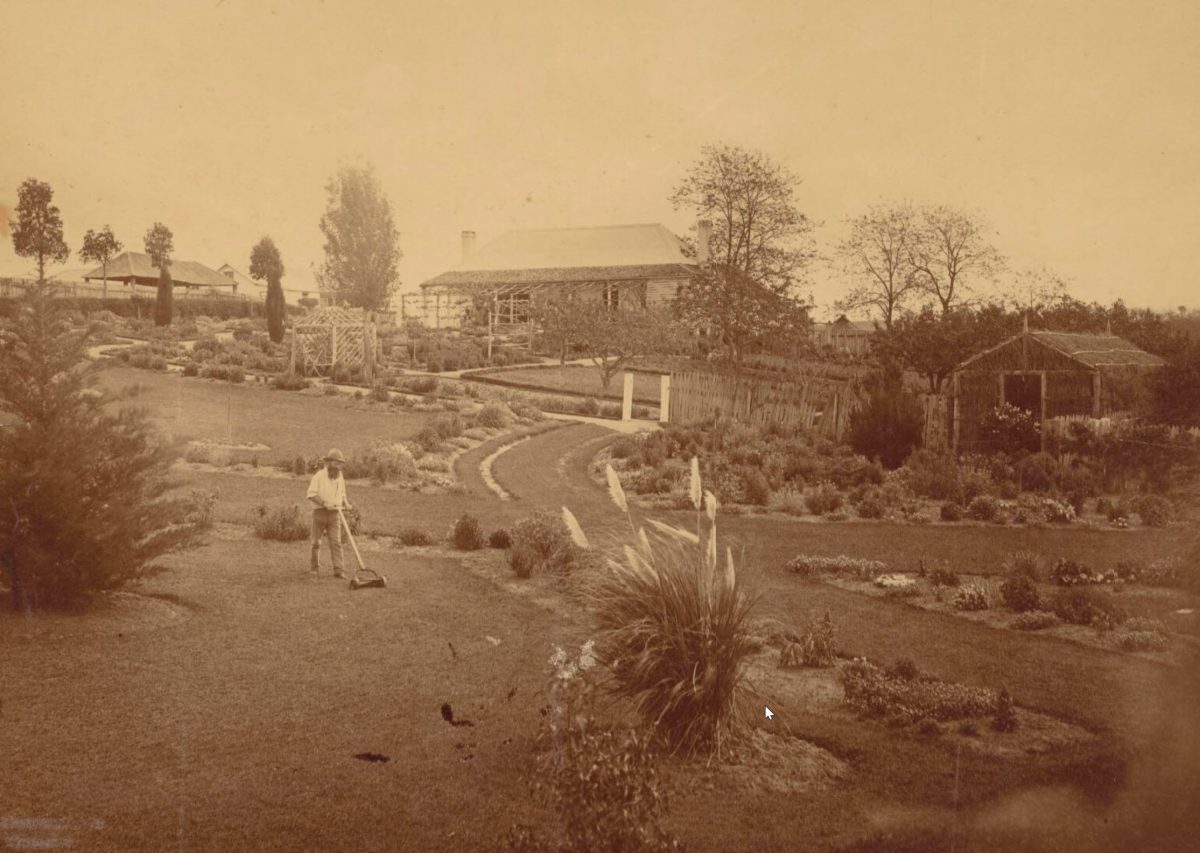
A gardener makes impressive progress on the extensive lawns at Pulletop Station. Photo: Charles Bayliss/National Library of Australia.
In September 1869, the editor of the new Wagga Wagga Advertiser and Riverine Reporter Frank Hutchison shrugged off warnings that he would “get bushed” and set out with a mate to visit the Westby’s property.
After stopping in Mangoplah for beer and biscuits the pair followed the narrow track to the homestead and Hutchinson was thrilled by the “almost park-like beauty” of the surrounding “rich open flats” and “well grassed, undulating country”.
The former barrister Edmund Westby was famously fond of entertaining and treated his guests to a rollicking good time “that made that evening one of the brightest that Pullitop ever saw”.
After partying until the magpies “joined in song” Hutchison toured the newly installed gardens and described “a sloping pleasaunce [pleasure garden] hedged with roses, where with a book or a pretty neighbour a summer’s day might be basked away as pleasantly as in most”.
They capped off the trip with a climb up the nearby Mt Morgan to enjoy the view and examine the remains of the bushranger’s camp that had given the rocky hill it’s name.
While the party was awestruck by the expansive outlook, all that remained of the late Dan Morgan’s hideout was a “wretched gunyah of sticks and stones”.
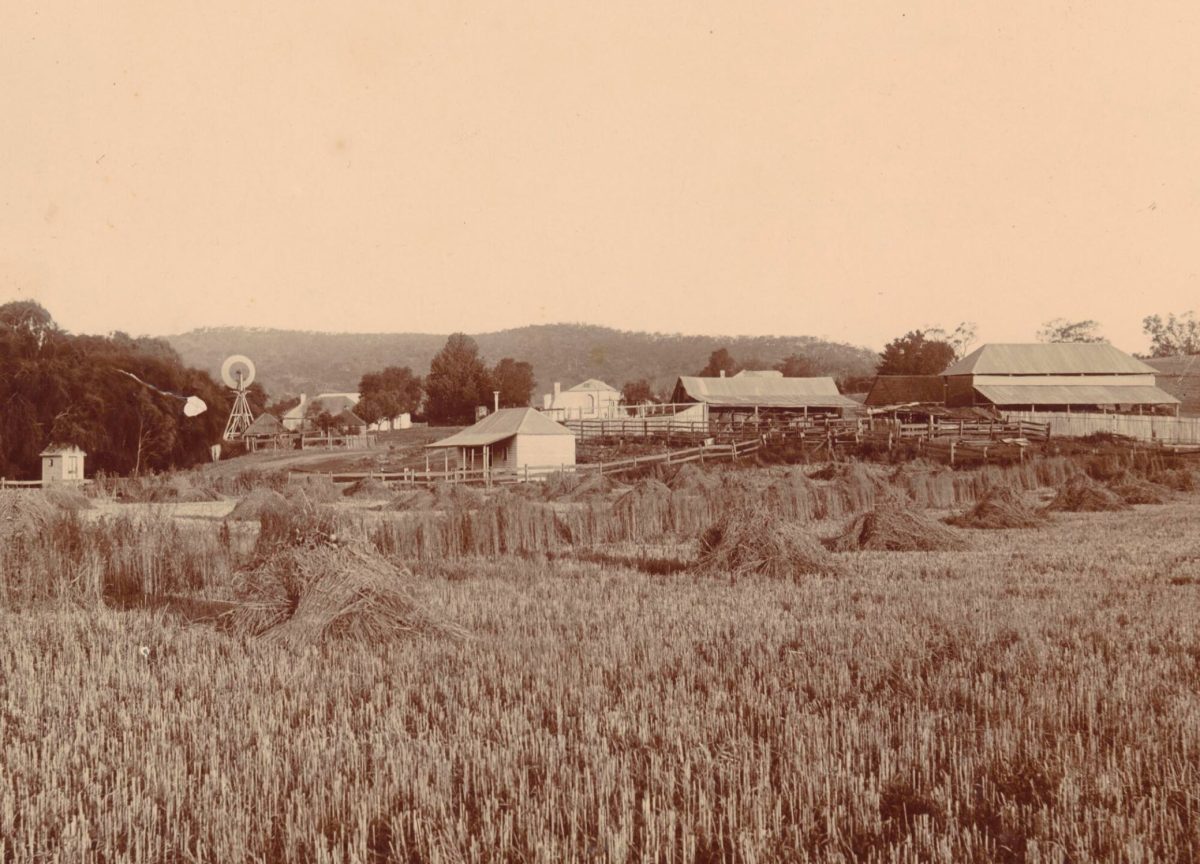
Harvest time at Pulletop Station. Photo: Charles Bayliss/National Library of Australia.
Hutchison left Pulletop thoroughly impressed with the huge investment the Westby brothers had made in the 12 months since taking the station over.
“Miles upon miles of substantial fencing have been completed, paddocks formed, dams planned and partially constructed,” he wrote.
“A capital selection of 320 acres has been taken up on one of the flats for cultivation and the best rams that money can procure have been purchased for the improvement of the Pullitop breed of sheep.”
The younger Westby brother, Alfred, died in 1876 but Edmund retained ownership of Pulletop for another 35 years until his own death in England in 1911.
The photos by Charles Bayliss can be seen in two collections available online through Art Gallery NSW and the National Library of Australia.