
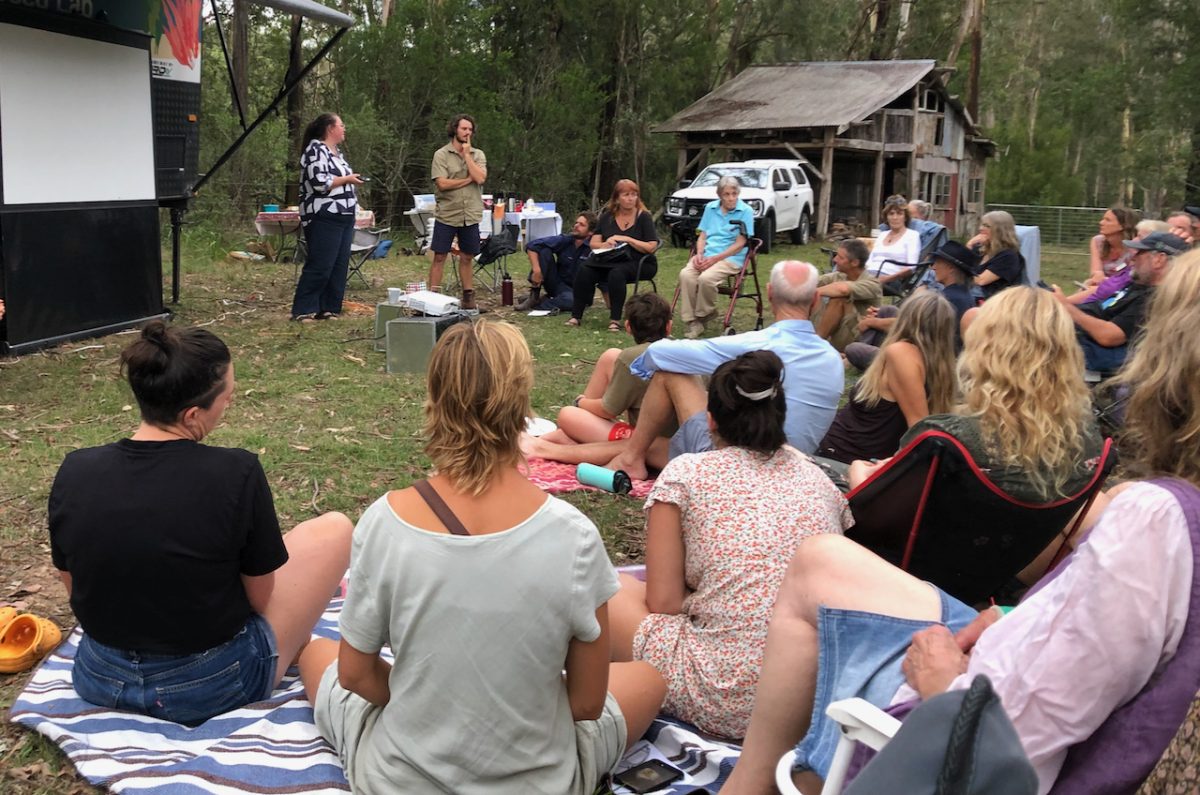
Dr Kylie Cairns speaking to Far South Coast Landcare groups. Photo: Marion Williams.
Cutting-edge genetics has transformed scientists’ understanding of dingoes. Dr Kylie Cairns is researching wildlife genetics and conservation biology at the University of NSW. She is using dingo DNA to help dispel the wild dog myth.
She presented some of her groundbreaking research to Far South Coast Landcare groups at Dignams Creek on Monday (9 February). She has evidence that feral dogs and hybrid dingo-dogs are rare. The vast majority of what are called wild dogs are dingoes.
Dingoes are a primitive type of canine that are related to Asian dogs and wolves. Their closest relative is the New Guinea Highland wild dog. Dingoes have been distinct from modern domestic dogs for around 11,000 years.
Compared with domestic dogs they have longer muzzles, larger teeth and more flexible joints. They are seasonal breeders that breed once a year and have pups in autumn/winter.
Dr Cairns said they have larger brains and are more intelligent than domestic dogs. They can problem-solve, have not been selectively bred and are not reliant on humans.
They can kill and maim livestock, particularly sheep.
“This put them at odds with the settlers when the early economy was built on the sheep’s back,” Dr Cairns said.
But dingoes are generalist predators that eat what is abundant and are opportunistic.
They like macropods mostly, and smaller amounts of small mammals, reptiles and birds.
A study of scat in the Blue Mountains found dingoes were eating wallabies, house mice, common wallaroos, and Eastern grey kangaroos.
“Scats show they are eating fewer prey items than foxes and cats,” Dr Cairns said.
She said dingoes benefitted the ecosystem by controlling large herbivores such as kangaroos, meaning more diverse vegetation, and in environments with minimal dingo populations, higher numbers of foxes, cats, pigs, goats and deer generally occurred.
In NSW ,’wild dogs’ are defined as all wild-living dogs and include dingoes, feral domestic dogs and the hybrid descendants of these.
Dr Cairns said there was no evidence that domestic dogs had established a wild dog population in Australia.
“Domestic dogs don’t have the capacity to survive in the wild,” she said. Street dogs are different as they live on refuse that humans leave around.
There is concern that dingo-dog hybrids are larger, kill and maim more livestock and breed more often.
From a conservation perspective, big populations of dingo-dog hybrids would risk losing the unique identity of dingoes.
However, Dr Cairns said hybrids bred back into dingo populations. That aligns with the finding there is no established wild dog population in Australia.
“Dingoes remain genetically distinct,” she said. “They are not being driven into extinction through interbreeding.”
Another finding is that some dingoes do have a small amount of dog DNA.
“Just like some humans, particularly those from Europe, have one to four per cent of Neanderthal DNA,” Dr Cairns said. “Natural selection keeps the parts of the DNA that are useful.”
Similarly, dingoes have retained some dog DNA over the generations because it is useful. Why those sections are useful is not yet known.
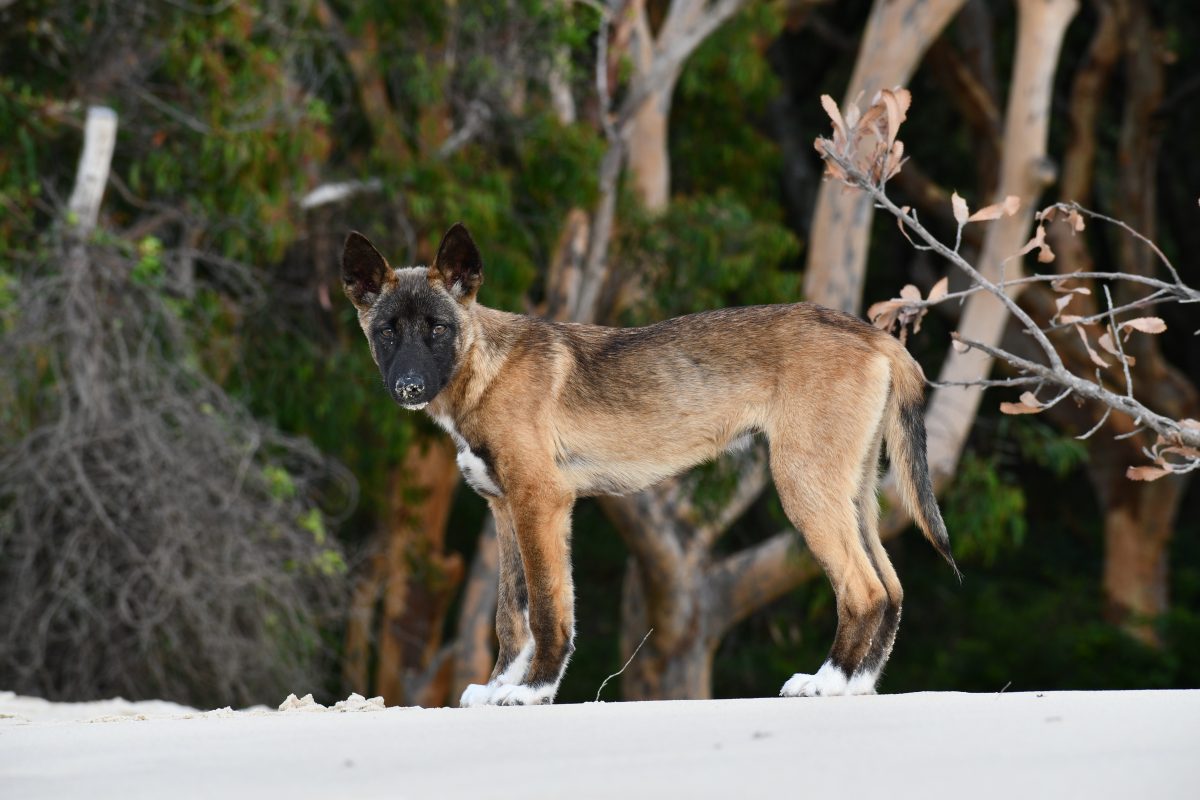
A dingo male pup. Photo: Chontelle Burns, Nouveau Photography, NSW.
Dr Cairns advocates stopping or limiting poison baiting of dingoes.
She said it was often done during the dingo breeding season so if there were not enough dingoes they would breed with dogs.
“There is little evidence that baiting improves the outcomes for livestock or wildlife,” Dr Cairns said.
The most effective way to protect livestock from dingoes is five wires of electric fencing. Guardian animals such as dogs and donkeys can also work, but it is expensive and takes time.
A short-term fix during lambing and calving season is fladry, namely hanging strips of brightly coloured material at close intervals on fences.
Also shift animal husbandry practices such as keeping cattle in exterior paddocks, with lambs and calves in interior paddocks.
Dr Cairns is among a group of scientists advocating that the term wild dog be dropped and dingo be used instead.
Calling them dingoes enables more informed and evidence-based conversations.
She said in the ACT, dingoes were no longer on the list of pests and it was on the cusp of referring to dingoes instead of wild dogs, following the lead of Victoria.
Dr Cairns encouraged people to report dingo sightings on sites such as Atlas of Life and BioNet, and not FeralScan.
“We want dingoes left in national parks for the benefits to the ecosystem and not living on farms where they can do damage.”
Original Article published by Marion Williams on About Regional.