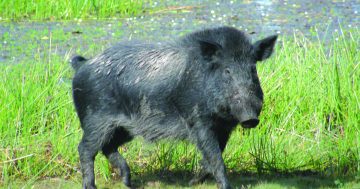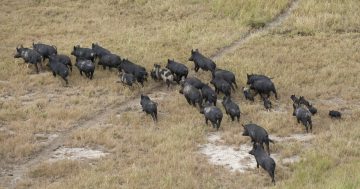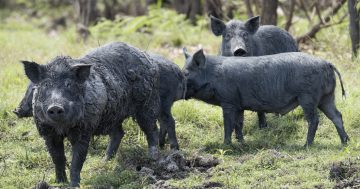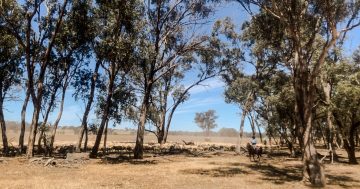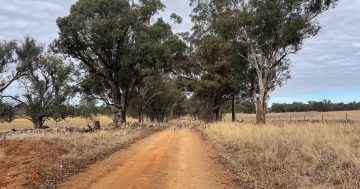

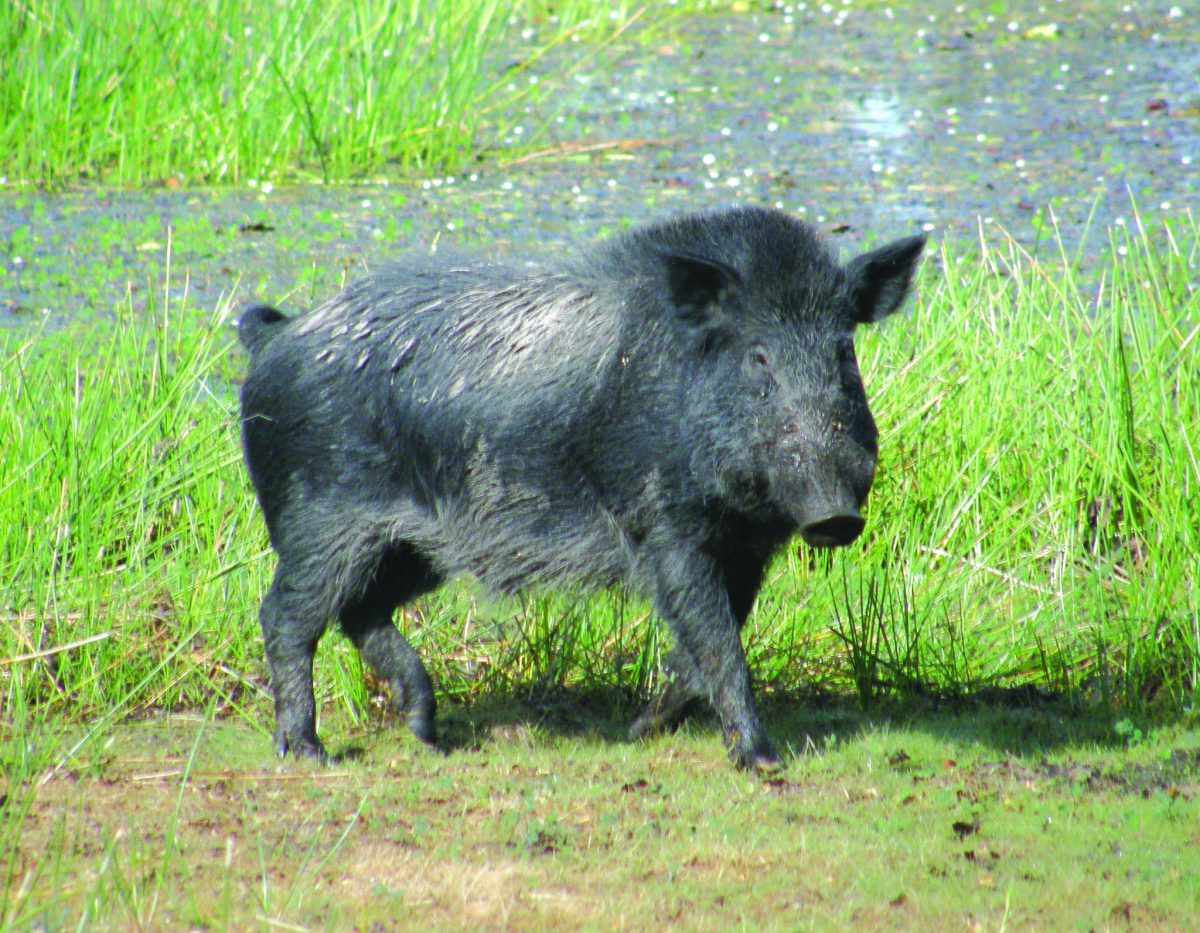
There could be as many as 100 million feral pigs across Australia, says a national feral pig coordinator. Photo: Biosecurity Queensland.
A NSW Government program has helped eradicate 223,000 feral pigs over the past three years, but farmers warn this is merely a “drop in the ocean” as millions of the animals continue to “wreak absolute havoc” on properties across the Riverina and the rest of the state.
While there is no reliable estimate on the number of domestic pigs that live and breed in the wild in NSW, the Federal Government’s national feral pig coordinator Bec Gray says there could be as many as 100 million across Australia. Some pigs can weigh as much as 100 kg and reach a height of one metre.
Peak body NSW Farmers urged policymakers to invest more resources to combat the feral pig outbreak in 2024, but says not enough was done and the problem is worse than ever.
“I’m now fielding reports from members daily on this problem and they’re seeing pigs in numbers like never before,” NSW Farmers president Xavier Martin said.
“If they’re not trashing the countryside, they’re wrecking fences, killing lambs and calves, or finding other ways to wreak absolute havoc.”
The NSW Government says it has committed more than $40 million over the past three years to initiatives aimed at supporting landholders to control feral pig and pest animal populations.
“Late last year, the government encouraged landholders across NSW to take advantage of the offer of $850,000 worth of free grain and bait to be used on their land as part of a statewide crackdown on feral pigs,” a Local Land Services (LLS) spokesperson said.
“This is the third year the government has provided free grain and bait to landholders and farmers have acknowledged this initiative by fully taking up the offer across the state.
“So far this financial year, Local Land Services has distributed more than 252,000 kg of free grain to landholders through this initiative to help manage feral pigs.”
LLS says the greatest success is achieved when landholders work with their neighbours using a combination of control methods and strategic timing and that the current hot and dry conditions provide an opportunity to target feral pig populations while water and feed are less abundant.
But Mr Martin wants to see more from government.
“The resources we need to get on top of the problem simply don’t exist right now, and we need a variety of tools – not just bacon bits – to make a real difference. To get on top of this problem, we’ve been calling for a multi-pronged control strategy that’s supported on local, state and federal government levels,” he said.
Cootamundra MP Steph Cooke agreed that the current response is inadequate.
“I am still receiving regular complaints from landholders about feral pigs and other animals and in many cases the situation has worsened since NSW Farmers first sounded the alarm in 2024,” she said.
“The Government points to Local Land Services programs and short term grants for free grain and bait, but the reality on the ground is that these measures are fragmented, reactive and completely inadequate for the scale of the problem we are facing.
“There is no properly funded, long term, coordinated strategy to deal with feral pigs and other animal pests across landscapes, and farmers are paying the price for that failure… trapping and baiting alone is not enough.”
The NSW Farmers president is concerned recent law changes that limit the number and type of guns farmers can own will make the problem worse.
“Rushed changes to firearm laws are only going to restrict our ability to tackle these pests, and the government will pay for it in productivity losses down the track unless they step up and start taking this seriously,” he said.
Murray MP Helen Dalton, an irrigator who has also had to deal with the issue herself, also wants more action.
“A single sow can have up to 10 piglets and breed twice a year. They’re mini bulldozers, tearing up paddocks, riverbanks and crops, smashing fences, destroying pasture and hurting landholders’ incomes,” she said.
“They’re also a major biosecurity risk, spreading disease to livestock and wildlife — and a serious danger on our roads, where hitting a feral pig can cause major vehicle damage, injuries, or worse.
“This is no longer just an environmental issue — it’s a public safety, economic and biosecurity emergency.”
Landholders can contact their nearest Local Land Services office on 1300 795 299 for advice on tackling feral pigs.