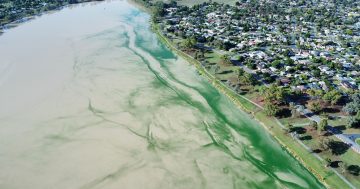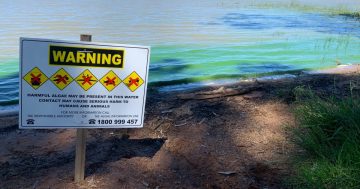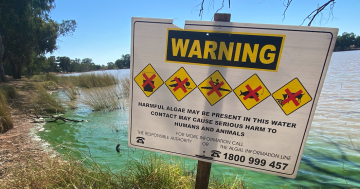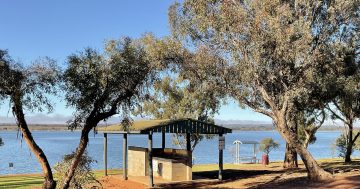


For the first time in 18 months, a blue-green algae alert has been called at Lake Albert. Photo: Wagga Wagga City Council.
Wagga Wagga City Council (WWCC) has issued its first blue-green algae warning for Lake Albert since 2024, just days after one of the pumps used to mitigate outbreaks within the lake was vandalised.
WWCC issued the warning on Wednesday morning (14 January) after taking a reading on Tuesday afternoon and is advising people to steer clear of the water, stating it is unsuitable for any water-based activities.
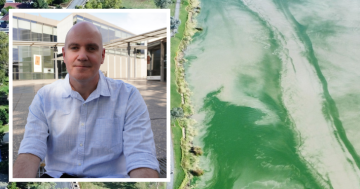
WWCC General Manager Peter Thompson confirmed the reading was made following one of the pumps used to clear algae blooms being vandalised.
While he said there was no indication the vandalised pump was the cause of the bloom, he did state that heightened temperatures unseen in Wagga for the past few years would have contributed.
“We discovered recently that some idiots have damaged one of the pumps, which there aren’t many of; they cost money, and they damage the pump house and cut a pipe,” he said.
“We’re repairing that. But obviously, that restricts the effectiveness of those pumps, because they’re distributed across the lake in order to get the maximum benefit we can.
“The fact that one of them has been out of action through vandalism is a real shame and will impact what it’s genuinely doing to restrict the algae population.”
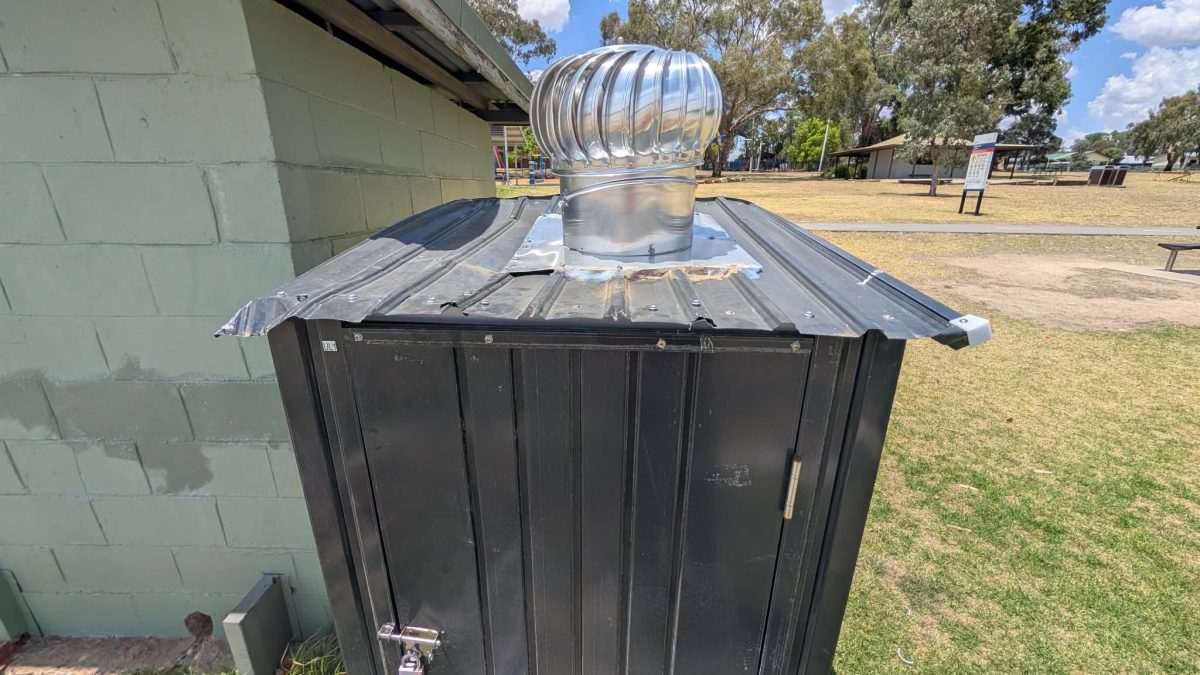
The pump closest to Apex Park was recently vandalised. It is still subject to ongoing repairs. Photo: Jarryd Rowley.
Mr Thompson also stated that despite the alert, the council had pushed on with the trial of the Hydro2050 water cleaning product.
Hydro 2050 uses the aforementioned pumps to push trillions of tiny nanobubbles into the affected areas of the lake to destroy toxic algae and bacteria.
The trial will continue until at least the end of summer.
Mr Thompson said while there hadn’t been any scientific results, the Hydro2050 trial had shown promise that it had contributed to the lengthy gap between BGA alerts.
“If you’re at a local Wagga residence and you’re familiar with the behaviour of the lake in times of hot temperature and reducing lake volume, we would have expected to have had health alerts prior to this, even with our previous trials of various things to try and control the algae, we wouldn’t have probably made it to mid January before we had our first algae alert,” he said.
“Of all the things we’ve tried, this seems to be relatively positive, but we’ll wait till we get to the end of summer before we review the results and come forward with our view as to whether we continue with this particular product or whether we don’t.”