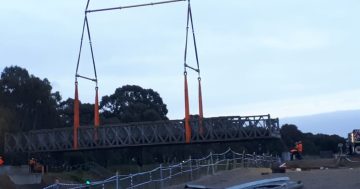

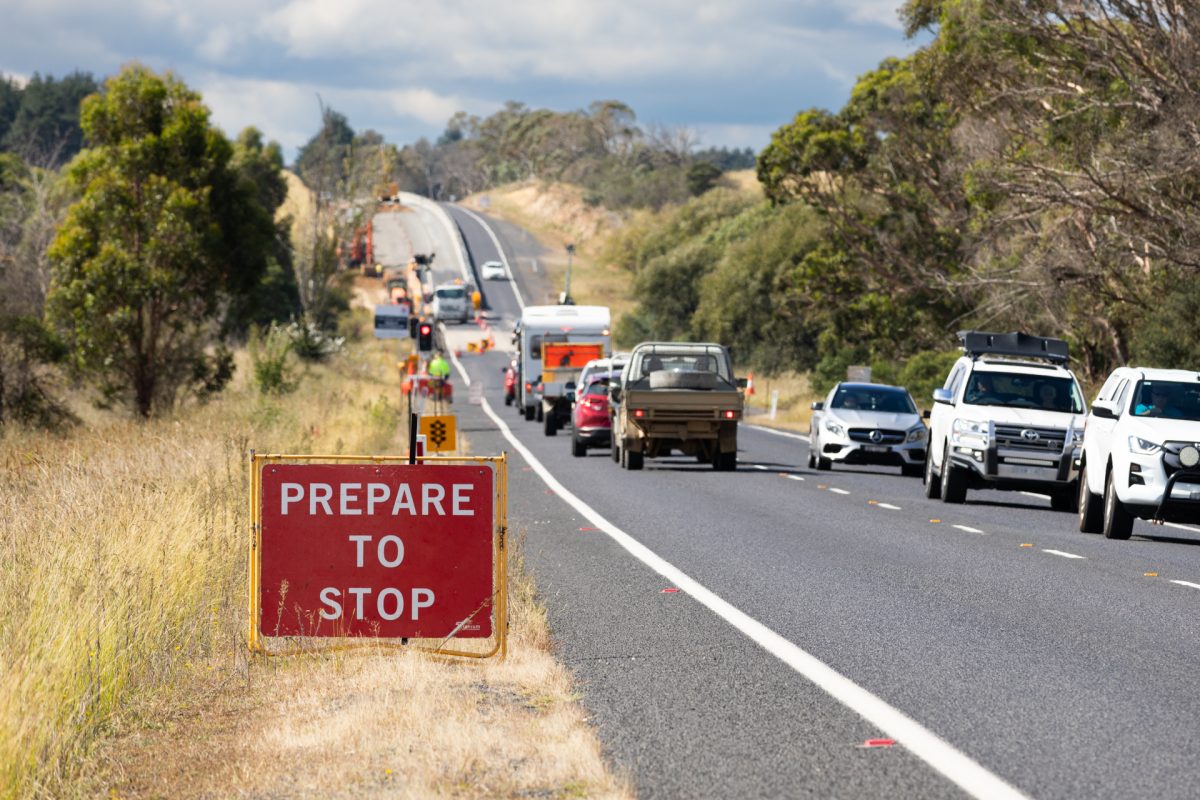
The report notes critical east-west routes are vulnerable to closures, disrupting freight and essential services. Photo: Michelle Kroll.
Limited east–west road connections and long-standing gaps in rail integration have been identified as some of the most significant transport challenges facing Southern NSW and the ACT, according to a new report released by Regional Development Australia Southern NSW & ACT (RDASNA)
The ACCESS: Transport Report – Southern NSW & ACT provides an evidence-based overview of regional transport priorities across southern NSW and the ACT, designed to support coordinated planning, investment and advocacy across jurisdictions.
The report highlights nationally significant assets, including Canberra Airport, the Port of Eden, and major highway corridors, including the Hume, Barton, Princes, Snowy Mountains, and Kings Highways, while also identifying persistent constraints.
Among the most pressing constraints flagged in the report is east–west connectivity, with escarpment crossings including Clyde Mountain, Brown Mountain, Macquarie Pass and the Nerriga–Tarago corridor repeatedly identified as safety and reliability risks.
The report notes these routes are vulnerable to closures during bushfires, floods and alpine weather, often leaving communities isolated and disrupting freight and essential services.
Freight efficiency is also affected, particularly on east–west routes linking inland centres with the South Coast.
The report points to operational constraints on the Snowy Mountains Highway, where heavy vehicles are required to decouple before descending Brown Mountain, increasing travel times, costs and safety risks.
More broadly, first- and last-mile freight bottlenecks through towns such as Yass, Cooma and Braidwood continue to limit productivity.
RDASNA Chief Executive Officer Olivia West said the report was designed to provide a shared evidence base for future decisions across jurisdictions.
“Transport is the connective tissue of our region – linking people to jobs, education and health services, and enabling freight, tourism and essential supply chains to move efficiently,” Ms West said.
The report is one of three to be delivered by the expanded RDASNA. In 2024, Regional Development Australia Southern Inland (RDASI) changed its name to Regional Development Australia Southern NSW & ACT (RDASNA).
This change followed a boundary expansion that now includes the ACT and additional NSW local government areas including Eurobodalla and Bega Valley. This expanded footprint means the committee now represents a larger and more diverse region across Southern NSW and the ACT.
A state of the workforce report was delivered in November and a regional housing report is due soon.

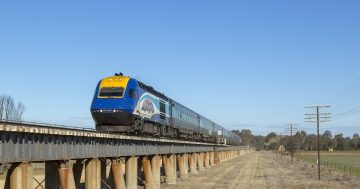
The report highlights rail as a critical, but underutilised, part of the regional transport system. Photo: Lachlan Grame.
Ms West said the reports will now be produced annually.
“The reports are a tool allowing us to identify what our region needs and follow delivery of projects in our region,” Ms West said.
“This is about working with state, territory and local governments, how we see the region operating in the future and, putting in infrastructure requests.
“By producing an annual snapshot we can report on how things are going and, in the case of transport, we can monitor how Transport for NSW is delivering on their Strategic Regional Integrated Transport Plan.
“We can make sure we are thinking regionally not just how NSW or the ACT works but how the whole region works and make sure the right co-ordination is in place.”
The report also highlights rail as a critical, but underutilised, part of the regional transport system.
While ongoing upgrades to the Southern Highlands Line are noted as a strength, rail services across southern NSW remain largely disconnected from other transport modes, limiting their ability to reduce pressure on road corridors.
Longer term, the report identifies the proposed Sydney–Canberra–Melbourne high-speed rail corridor as a potentially transformative opportunity, with planned alignments through southern NSW and possible stations at Goulburn and Yass.
Beyond faster travel times, the report suggests high-speed rail could reshape settlement patterns, expand labour catchments and support transit-oriented development, provided planning and investment are coordinated.
However, the report stresses that no single project will resolve the region’s transport challenges. Instead, it calls for staged upgrades to high-risk east–west corridors, improved cross-border coordination and better integration between road, rail and public transport systems.
“This report is not about a single project – it’s about setting shared priorities and a clear line of sight from evidence to implementation,” Ms West said.
The ACCESS framework underpinning the report sets out six pillars to guide future investment, including connectivity, safety and resilience.
RDASNA says the framework will be used to support coordinated advocacy and track progress over time as population growth, climate pressures and cross-border travel continue to intensify.
“As our region grows and faces increasing climate risk, we need coordinated, place-based action to strengthen safety, resilience, accessibility and cross-border connections,” Ms West said.
Original Article published by Karyn Starmer on Region Canberra.